

Poor office lighting causes eye strain, low morale, and declining productivity, which quietly drains performance and increases energy costs. The right office lighting design fixes these problems and transforms how people work.
Office lighting plays a critical role in employee health, productivity, and energy efficiency. Well-designed lighting reduces eye strain, improves comfort, and helps people stay focused throughout long workdays. Modern LED office lighting, combined with smart controls, delivers uniform illumination, minimizes glare, and lowers operating costs. By matching lighting design to different office layouts and functions, businesses can create healthier, more efficient, and more enjoyable work environments that support both people and performance.
If you want a practical, modern office lighting guide that actually works in real projects, keep reading.
Table of Contents
Why Does Lighting Matter in the Office?
Lighting is not just a background utility in an office—it’s a performance driver. I’ve seen firsthand how the right lighting can completely change how people feel and work. From small office lighting design projects to large corporate headquarters, lighting decisions directly influence employee well-being, productivity, and long-term operating costs.
Healthier Working Environment
Poor lighting is one of the fastest ways to create physical discomfort at work. In offices with uneven brightness, glare, or the wrong color temperature, employees often suffer from headaches, eye strain, and mental fatigue. Over time, this can disrupt circadian rhythms, affect sleep quality, and increase sick days.
Good office lighting design focuses on uniform illumination, controlled glare, and appropriate brightness levels for screen-based work. When light is distributed evenly across desks and workstations, employees don’t need to constantly adjust their eyes. This reduces visual stress and supports long-term eye health, especially in environments where people spend eight or more hours per day under artificial light.
Happier Employees
Lighting has a powerful psychological effect. I’ve walked into offices that felt cold, harsh, and draining simply because the lighting was poorly designed. On the flip side, offices with balanced, comfortable lighting feel welcoming and energizing.
Modern office lighting that blends sufficient brightness with the right color tone creates a more pleasant atmosphere. Employees feel less stressed, more comfortable, and more positive about their workspace. When people enjoy the environment they work in, engagement improves and turnover naturally decreases.
Increased Productivity
There’s a direct link between lighting quality and productivity. In well-lit offices, employees focus longer, make fewer mistakes, and maintain higher energy levels throughout the day. Inadequate lighting forces the brain to work harder just to process visual information, which leads to faster mental exhaustion.
That’s why any serious office lighting guide connects lighting quality with performance metrics. When lighting supports visual clarity and comfort, employees can concentrate on their tasks instead of fighting their environment. The result is better output, higher accuracy, and improved overall efficiency.
Reduced Energy Consumption
Traditional fluorescent lighting systems consume excessive energy and require frequent maintenance. From a business perspective, this adds unnecessary cost year after year. LED-based office lighting design dramatically reduces power usage while delivering better light quality.
LED fixtures last longer, use less electricity, and generate less heat, which also reduces the load on HVAC systems. When combined with smart lighting controls like occupancy sensors and daylight harvesting, offices can eliminate wasted energy in unused spaces. Over time, this translates into significant cost savings and a more sustainable operation.
Lighting Styles for Different Office Layouts
Not all offices are built the same, and from my experience, lighting that works perfectly in one layout can completely fail in another. Office size, layout, work style, and even company culture all influence how lighting should be designed. That’s why a one-size-fits-all approach never works for office lighting.
Open-Plan Office Lighting
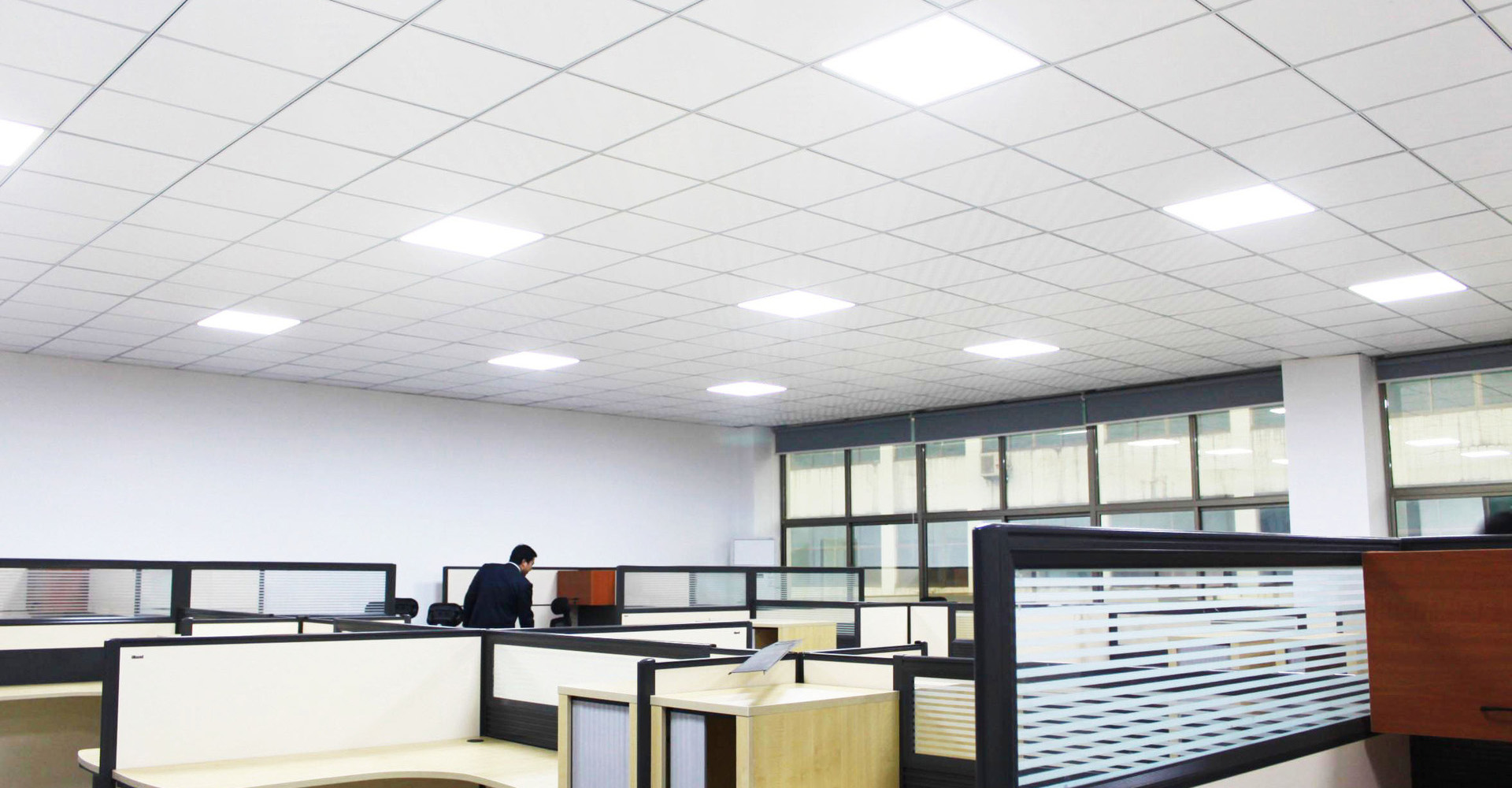
Open-plan offices need balance more than anything else. Too much light creates glare and visual fatigue, while too little light leads to eye strain and poor focus. I always recommend a combination of uniform ambient lighting and localized task lighting.
LED panel lights or linear fixtures work well as the main ambient source, providing even coverage across large areas. Desk lamps or integrated task lights then give employees control over their personal workspace without over-lighting the entire floor. This approach reduces energy waste and improves comfort, especially in offices with long screen-time hours.
Private Office Lighting
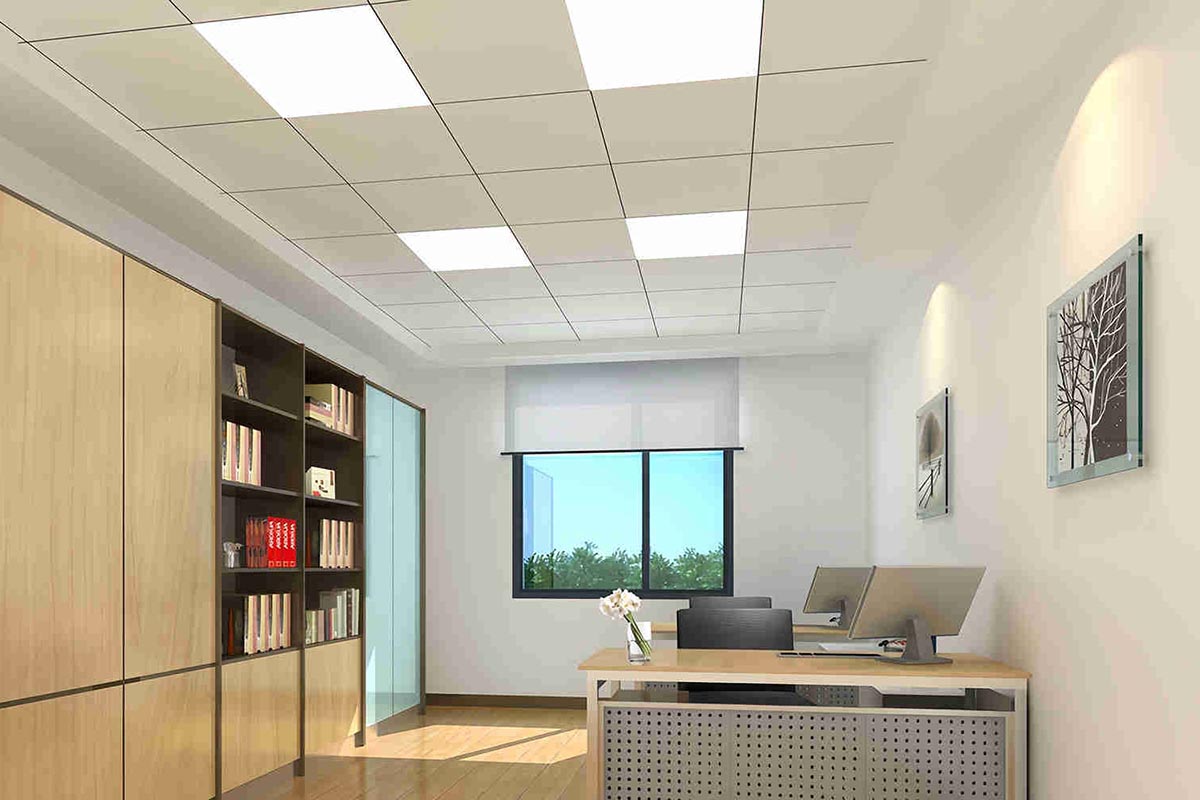
Private offices offer more flexibility and personalization. Here, layered lighting works best. I usually design these spaces with three layers: ambient lighting for general visibility, task lighting for desk work, and accent lighting to add warmth and character.
This setup allows executives or managers to adjust lighting based on meetings, focused work, or video calls. Proper private office lighting feels less institutional and more human, which makes a big difference in how the space is perceived and used.
Home Office Lighting
Home office lighting is one of the most underestimated areas, especially with the rise of remote and hybrid work. Many home offices are set up in spare rooms, basements, or corners with limited natural light. In these cases, flexibility is critical.
I always suggest adjustable desk lamps, indirect ambient lighting, and neutral color temperatures that support focus without feeling harsh. Glare control is especially important for video calls and screen work. A well-lit home office improves productivity and reduces fatigue, even in small or unconventional spaces.
Hybrid and Flexible Workspaces
Hybrid offices and co-working spaces demand adaptable lighting systems. These environments change constantly—today it’s individual work, tomorrow it’s collaboration or presentations. Static lighting simply can’t keep up.
This is where modern office lighting guide principles really shine. Dimmable fixtures, modular layouts, and smart controls allow lighting to adjust instantly based on how the space is used. Occupancy sensors and zoned controls also help reduce energy consumption in areas that aren’t always occupied.
The Big Picture
Across all office layouts, adaptability is the common thread. Lighting should support how people actually work—not force them to adapt to poor design. When lighting is flexible, comfortable, and thoughtfully planned, offices become more productive, more efficient, and far more enjoyable places to work.

What Are Office Lighting Standards and Requirements?
Office lighting standards exist for one simple reason: people work better, feel better, and stay healthier when lighting is done right. In my experience, offices that ignore lighting standards almost always pay for it later through lower productivity, higher complaints, and unnecessary energy costs.
Most office lighting guidelines focus on a few core elements: illumination level (measured in lux), uniformity, glare control, and color quality. These are not abstract technical terms—they directly affect how employees see, concentrate, and perform throughout the day.
For general office work such as typing, reading, and computer use, lighting levels typically fall between 300 and 500 lux on the work surface. This range provides enough brightness for clarity without causing eye strain. Tasks that require higher visual precision, like drafting, technical drawing, or inspection work, often need higher illumination to maintain accuracy and reduce fatigue.
Different areas within an office have different lighting needs. Conference rooms benefit from adjustable lighting that can shift between bright, even illumination for meetings and lower levels for presentations. Corridors, break rooms, and circulation areas usually operate at lower lux levels while still maintaining safety and visibility. Reception areas often require balanced lighting that feels welcoming while remaining functional.
Glare control is one of the most overlooked office lighting requirements. Offices today rely heavily on screens, and poorly positioned fixtures can cause reflections and discomfort. Effective office lighting design takes into account fixture placement, beam angles, diffuser quality, and even wall and desk surface reflectance. When glare is controlled properly, employees experience less eye strain and can focus longer without discomfort.
Color rendering is another critical requirement. High-quality lighting allows colors to appear natural and accurate, which is important not just for design teams, but also for general visual comfort. Poor color quality makes spaces feel dull and can subtly affect mood and alertness.
Uniformity also matters more than people realize. Large differences in brightness across a workspace force the eyes to constantly adjust, leading to fatigue. A good office lighting design guide always emphasizes even light distribution across desks, walkways, and shared spaces.
At the end of the day, office lighting standards are not about hitting a number on a checklist. They are about creating environments where people can work comfortably, safely, and efficiently for long hours. When lighting meets these standards, offices simply function better—both for the people inside and for the business running them.

What Lighting Fixtures Should I Use to Light My Office?
When clients ask me this question, my answer is always the same: there is no single “perfect” fixture. Good office lighting comes from choosing the right combination of fixtures that work together to deliver comfort, efficiency, and a clean professional look. Below are the fixtures I most often recommend, and why they work so well.
LED Flat Panel Light
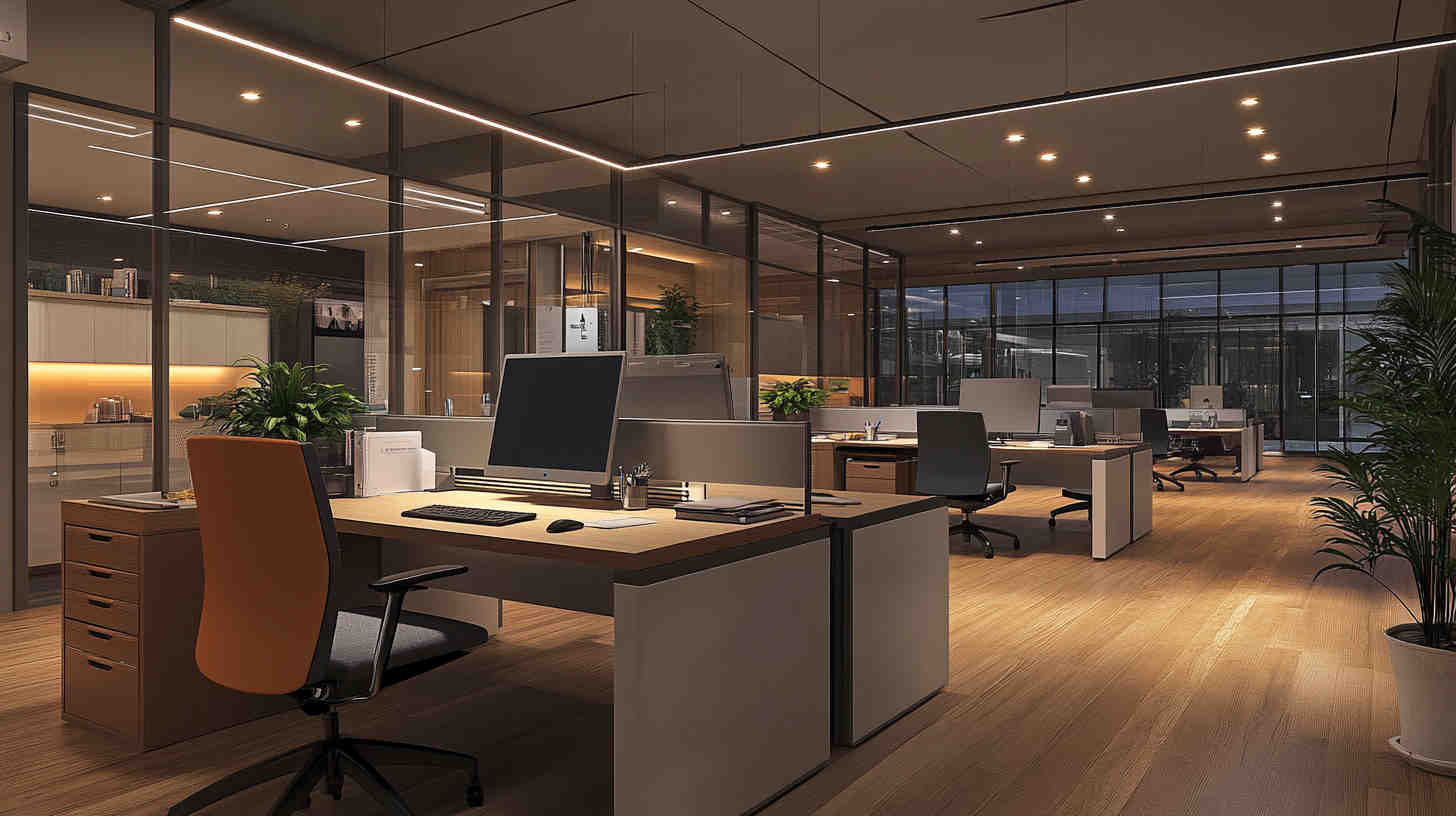
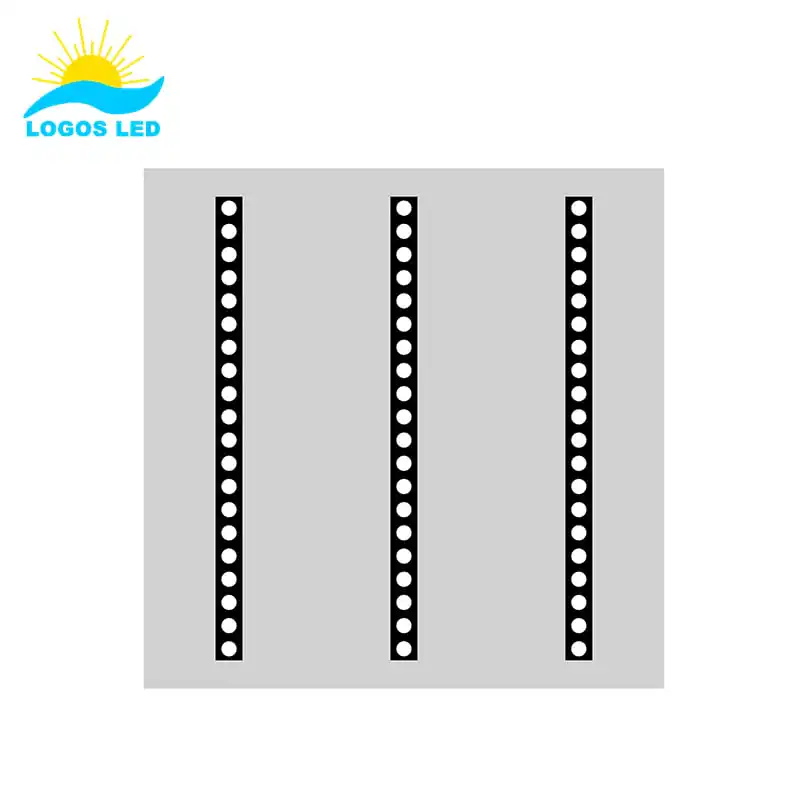
LED flat panel lights are the backbone of modern office lighting design. I use them in the majority of projects because they deliver soft, uniform illumination that’s easy on the eyes. The wide light distribution eliminates harsh shadows and dark spots, which is critical in open-plan offices where many people share the same visual environment.
These panels fit seamlessly into suspended or grid ceilings, making installation straightforward and cost-effective. Low glare diffusers help reduce reflections on computer screens, which directly improves employee comfort and focus. From an energy standpoint, LED flat panels are extremely efficient and have long lifespans, so they keep operating and maintenance costs under control.
Suspended Linear LED Lighting
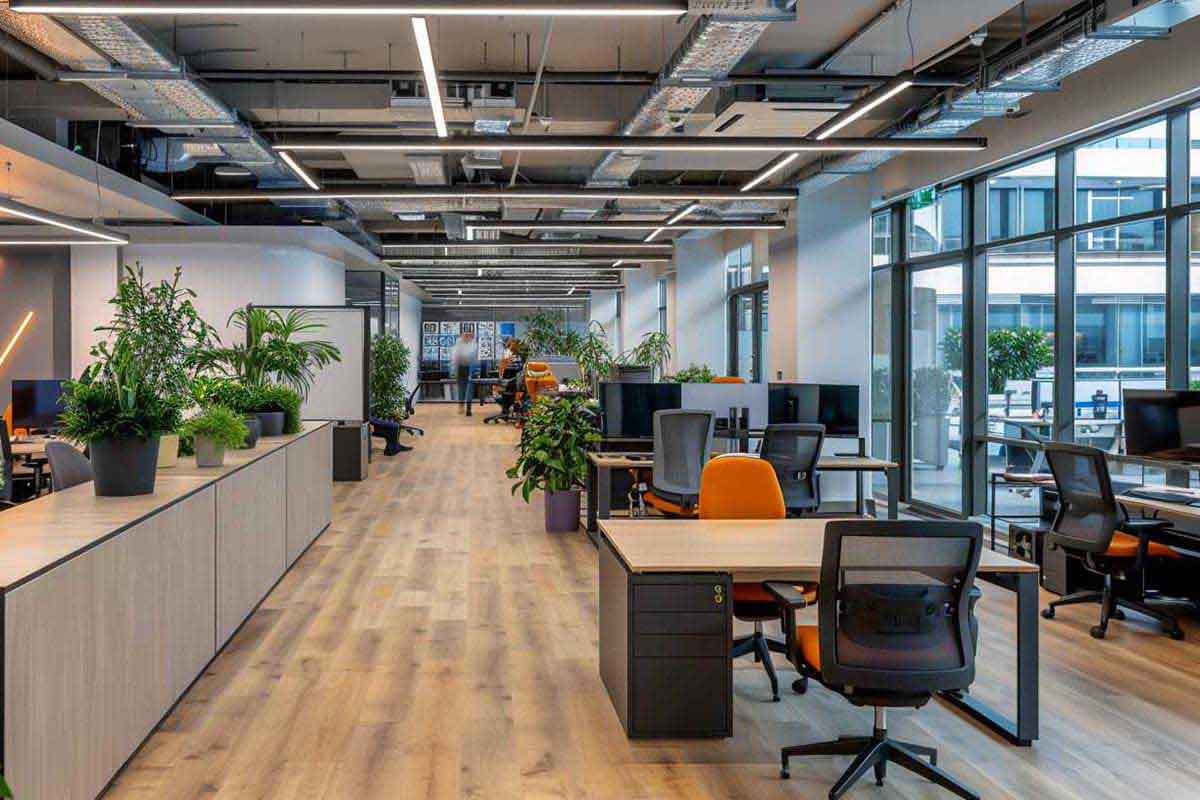
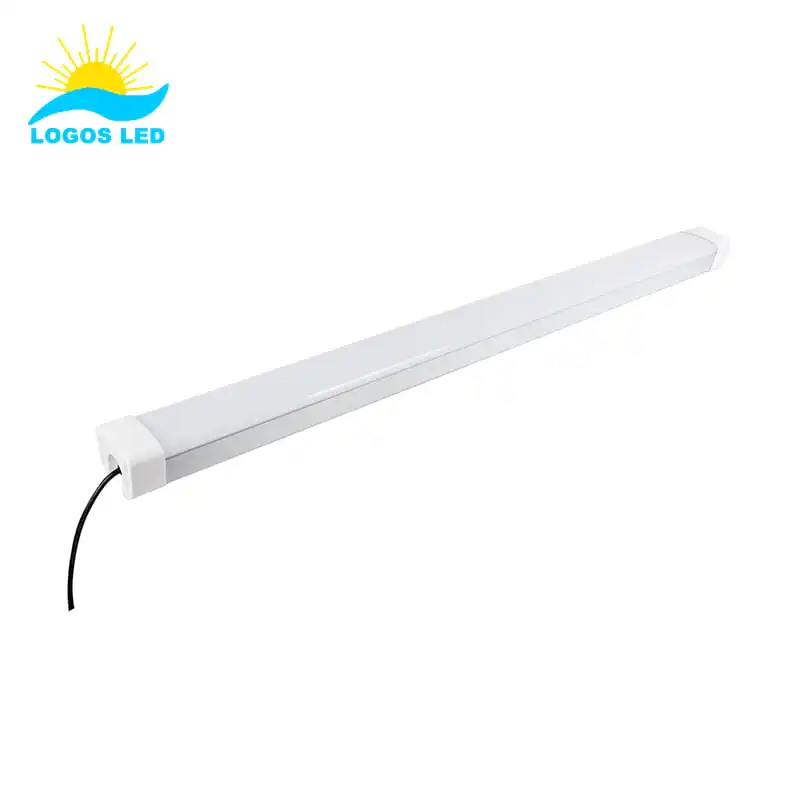
Suspended linear LED lighting is my go-to choice when an office wants a more modern, architectural feel. These fixtures work especially well in open offices, collaboration zones, and creative workspaces where design matters as much as performance.
What I like most about linear fixtures is their flexibility. They can provide direct light for work surfaces, indirect light that reflects off the ceiling for visual comfort, or a combination of both. This layered approach reduces glare and creates a more balanced, pleasant environment. Linear LEDs also align well with desks, conference tables, and circulation paths, giving the space a structured and intentional look.
Recessed Office Overhead Lighting
Recessed lighting is ideal when a clean, minimalist ceiling is the priority. I often recommend recessed fixtures for offices with lower ceiling heights or for executive offices and meeting rooms where visual simplicity matters.
These fixtures sit flush with the ceiling, keeping the space uncluttered while still delivering effective illumination. The key with recessed office lighting is proper layout. Spacing, beam angle, and lumen output must be carefully planned to avoid uneven lighting or shadowing. When done right, recessed lighting creates a calm, professional atmosphere without drawing attention to the fixtures themselves.
From my experience, the best office lighting designs don’t rely on just one fixture type. Combining flat panels for general lighting, linear fixtures for visual interest and comfort, and recessed lights for clean detailing creates a balanced system that supports productivity and well-being. When fixtures are chosen with purpose, office lighting stops being a cost and starts becoming an asset.
Best Practices for Office Lighting
From my experience, effective office lighting design never happens by accident. It follows clear principles that balance visual comfort, performance, and long-term efficiency. When these best practices are applied correctly, lighting becomes a productivity tool rather than just a utility.
Selecting High-Quality Fixtures
One of the biggest mistakes I see is cutting corners on fixture quality. Low-quality lights may look fine at first, but they often flicker, shift color, or lose brightness far earlier than expected. This leads to employee complaints, frequent replacements, and higher long-term costs.
High-quality LED fixtures deliver stable light output, consistent color temperature, and long service life. They also perform better thermally, which protects internal components and ensures reliability. In an office environment where lights run for long hours, quality always pays for itself.
Maximizing Natural Light
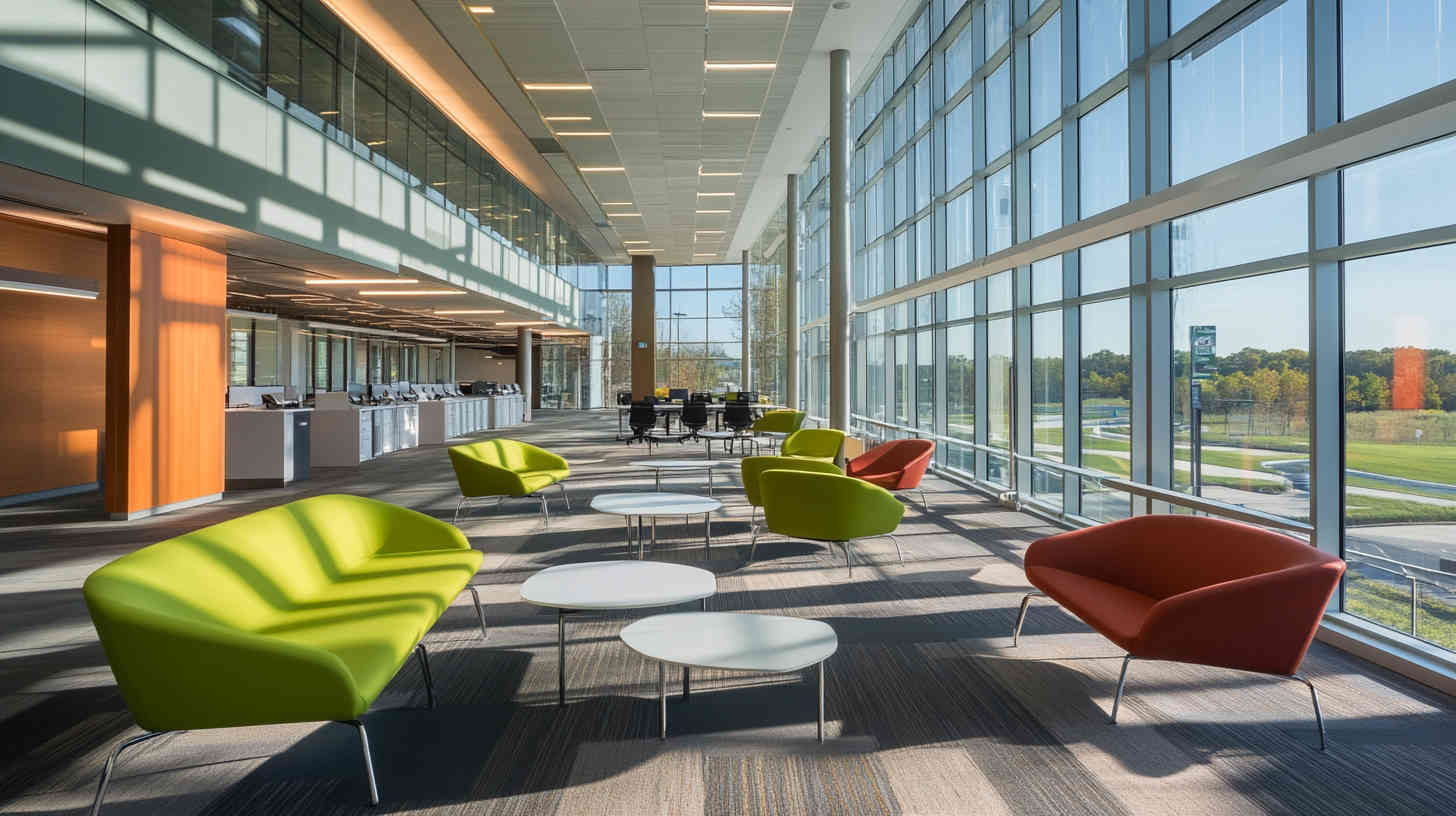
Natural daylight is one of the most valuable resources in any office. It improves mood, supports circadian rhythms, and reduces dependence on artificial lighting. I always recommend designing office layouts that allow daylight to penetrate as deeply as possible.
Using glass partitions, open layouts, and light-colored finishes helps reflect daylight across the space. For offices with limited or no windows, artificial lighting must be carefully designed to replicate balanced daylight conditions, ensuring comfort and alertness throughout the day.
Balancing Efficiency and Sustainability
Energy efficiency should never come at the expense of comfort. Modern LED office lighting makes it possible to achieve both. Efficient fixtures reduce power consumption while maintaining high-quality illumination.
When efficiency is combined with smart lighting controls, offices can significantly reduce energy waste. This not only lowers operating costs but also supports sustainability goals that many companies now prioritize.
Using Multiple Lighting Sources
Relying on a single lighting layer creates flat and uncomfortable environments. I always recommend layered lighting that includes ambient, task, and accent sources.
Ambient lighting provides overall brightness, task lighting supports focused work at desks, and accent lighting adds depth and visual interest. This layered approach improves comfort, reduces eye strain, and allows lighting to adapt to different activities throughout the day.
Choosing the Right Color Temperature
Color temperature has a direct impact on alertness and comfort. In most office environments, neutral white lighting around 4000K provides the best balance between focus and visual comfort.
Warmer tones work better in break rooms and informal spaces where relaxation is the goal. For home offices or flexible workspaces, adjustable color temperature systems are especially useful, allowing lighting to shift throughout the day to match natural rhythms.
Using Energy-Efficient Lighting Controls
Lighting controls are no longer optional in modern office design. Dimming systems, motion sensors, and daylight harvesting reduce unnecessary energy use without affecting user comfort.
These controls ensure lights operate only when needed and at the right brightness level. In large offices, this can result in substantial energy savings while extending fixture lifespan.
Managing Screens and Glare
Glare is one of the most common complaints in office environments, especially in spaces with extensive screen use. Poorly placed fixtures or unmanaged daylight can reflect directly off monitors, causing discomfort and reduced productivity.
Proper fixture placement, diffusers, indirect lighting, and thoughtful screen orientation are essential. When glare is controlled correctly, employees experience less eye strain and can work comfortably for longer periods.
In my experience, offices that follow these best practices don’t just look better—they perform better. Good lighting supports people, productivity, and long-term operational efficiency all at once.
Different Lighting Requirements for Various Areas in Office Design
From my experience, one of the biggest mistakes in office lighting is treating every space the same. Each area serves a different purpose, and lighting should support how people actually use that space. When lighting matches function, comfort and efficiency improve immediately.
Reception Area
The reception area sets the tone for the entire office. This is where first impressions are formed, often within seconds. Lighting here should feel welcoming, professional, and intentional.
I like using a combination of track lights and LED strip lighting to highlight architectural details, company logos, and feature walls. This layered approach adds depth and visual interest while ensuring the space feels bright and inviting. The goal is to make visitors feel confident they’ve walked into a well-organized, professional environment.
Workplace
Workstations are where people spend most of their day, so lighting must support focus and visual comfort over long periods. Uniformity is critical here. Uneven lighting creates eye strain and fatigue faster than most people realize.
LED panel lights, recessed downlights, and linear LED fixtures work extremely well for work areas. They deliver consistent brightness across desks, reduce harsh shadows, and minimize glare on screens. When designed correctly, employees don’t think about the lighting at all—which is exactly the goal.
Conference Room
Conference rooms need adaptable lighting. A room used for brainstorming sessions, video conferences, and presentations cannot rely on a single lighting mode.
I usually recommend a combination of LED downlights for general illumination and adjustable spotlights for focal lighting. Dimming capability is essential. This allows lighting to be softened for presentations, brightened for discussions, or balanced for video calls where facial clarity matters.
Corridors
Corridors are transition spaces, but they still require safe and consistent illumination. Over-lighting these areas wastes energy, while under-lighting creates safety risks.
Low-power LED downlights paired with motion sensors are a smart solution. Lights activate only when needed, maintaining visibility while significantly reducing energy consumption. This approach keeps pathways safe without running lights unnecessarily all day and night.
When each office zone is lit with intention, the entire workplace feels more comfortable, efficient, and professional. Good office lighting design is never one-size-fits-all—it’s always purpose-driven.
FAQs for Office Lighting
What is the recommended brightness level for office lighting?
From my experience, most office environments perform best when general lighting levels fall between 300 and 500 lux. This range supports reading, computer work, and meetings without causing eye strain. For more detailed tasks, such as technical drawing or precision work, higher brightness may be needed, but for standard office work, this range strikes the right balance between comfort and productivity.
How do I calculate the lumens needed for my office space?
The simplest way is to multiply the room’s floor area by the target lux level. For example, if an office is 100 square meters and you aim for 400 lux, you’ll need roughly 40,000 lumens in total. From there, you divide that number by the lumen output of each fixture to determine how many lights are required. I always recommend adding a small buffer to account for losses from ceiling height and surface reflectance.
What color temperature is best for office lighting?
Neutral white lighting around 4000K is my go-to recommendation for offices. It keeps people alert without feeling harsh or clinical. Cooler light can feel overly stimulating, while warmer light may reduce focus. A neutral tone supports long working hours and maintains visual comfort across the day.
Are there energy-efficient office lighting options?
Absolutely. LED lighting paired with smart controls is the most energy-efficient solution available today. LEDs consume significantly less power than fluorescent systems and last much longer. When you add occupancy sensors, daylight harvesting, and dimming controls, energy savings increase even further without sacrificing lighting quality.
How can I maximize natural light in my office?
The key is to let daylight travel as far as possible into the space. Open layouts, glass partitions, and light-colored walls help reflect sunlight deeper into the office. Positioning workstations near windows and avoiding heavy obstructions makes a noticeable difference. Artificial lighting should support daylight, not compete with it.
What are the best lighting fixtures for suspended ceilings?
LED flat panel lights and recessed fixtures work exceptionally well with suspended ceilings. They provide uniform illumination, fit cleanly into ceiling grids, and reduce glare. In my projects, panel lights are often the most reliable choice for consistent, low-maintenance office lighting.
How do I get an office lighting plan or layout?
A professional lighting supplier or lighting engineer can create a customized lighting plan based on room dimensions, usage, and standards. I always advise clients to request a proper lighting layout instead of guessing fixture placement. A good plan prevents over-lighting, under-lighting, and costly changes later.
How much does office lighting cost?
Office lighting costs vary depending on fixture quality, control systems, and project size. While LED systems may cost more upfront, they deliver substantial long-term savings through lower energy use and reduced maintenance. In most cases, the return on investment makes LED office lighting the most cost-effective option over time.
Conclusions
Office lighting is a strategic investment, not a decoration. The right office lighting design improves health, productivity, and energy efficiency while supporting modern workstyles. Whether you are planning a small office lighting design or a full commercial project, choosing the right fixtures and layout makes all the difference.
If you need expert advice or customized LED office lighting solutions, contact Logos Lighting today and let us help you design a brighter, more productive workspace.
Featured Products

Request A Free Quote Now!
Send us a message if you have any questions or request a quote. We will get back to you ASAP!



Leave a Reply
Your email is safe with us.