

Poor lighting at a gas station scares customers away, increases safety risks, and damages your brand image. Bad visibility leads to accidents and lost sales. The fix? Choosing the right LED gas station lighting.
Choosing lighting for a gas station requires understanding canopy lights, pole lights, and area lighting, along with color temperature, brightness, energy efficiency, durability, and safety standards. LED gas station lighting offers superior visibility, improved security, and lower long-term costs. By selecting the right canopy LED lights, outdoor canopy lights, and commercial canopy fixtures designed for harsh environments, gas stations can enhance customer experience, reduce accidents, save energy, and strengthen branding.
Let’s break it down clearly so you make the right lighting choices.
Table of Contents
Understanding the Importance of Gas Station Lighting
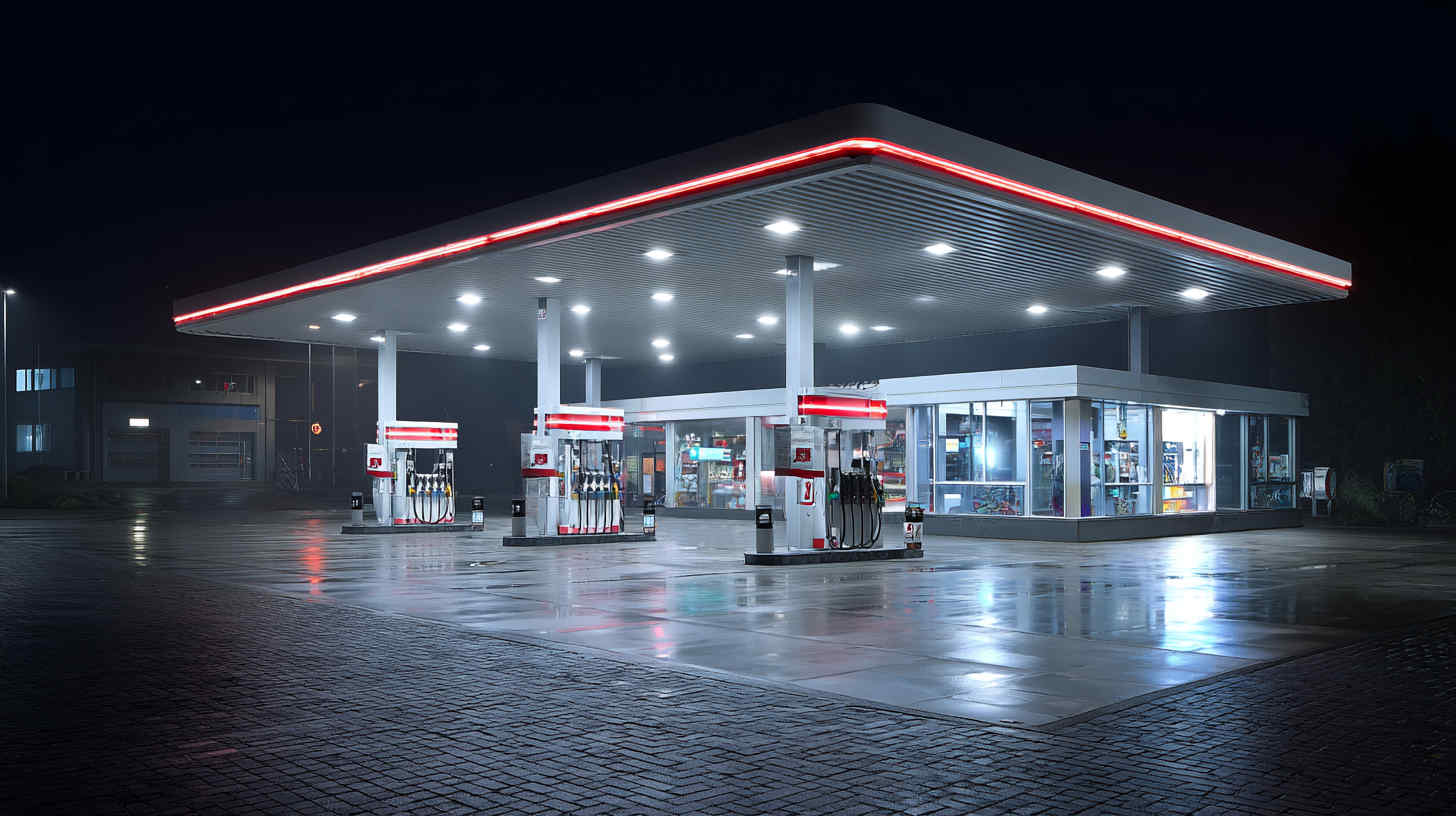
Gas station lighting plays a major role in customer perception and overall station profitability. When a station is brightly and uniformly lit, customers immediately feel safer and more comfortable pulling in—especially during nighttime hours. Good visibility reduces the chances of slips, collisions, or fueling mistakes, making the environment safer for both drivers and pedestrians.
Strong, consistent lighting also improves the effectiveness of surveillance cameras by reducing dark areas, which helps deter theft, vandalism, and other security issues. Beyond safety, good lighting enhances the station’s appearance. A well-lit canopy and forecourt create a clean, professional, and inviting look, which directly influences whether drivers decide to stop or keep going.
Inside the convenience store, proper lighting helps boost product visibility and encourages customers to spend more time browsing, which can increase sales. Stations with poor or dim lighting often give off an unsafe or neglected impression—leading customers to avoid them altogether.
This is why LED gas station lighting has become the modern standard. LEDs deliver bright, uniform light, reduce energy costs, last much longer than traditional fixtures, and improve the visual appeal of the entire site. In today’s competitive market, high-quality lighting isn’t optional—it’s a key part of running a successful, customer-friendly gas station.
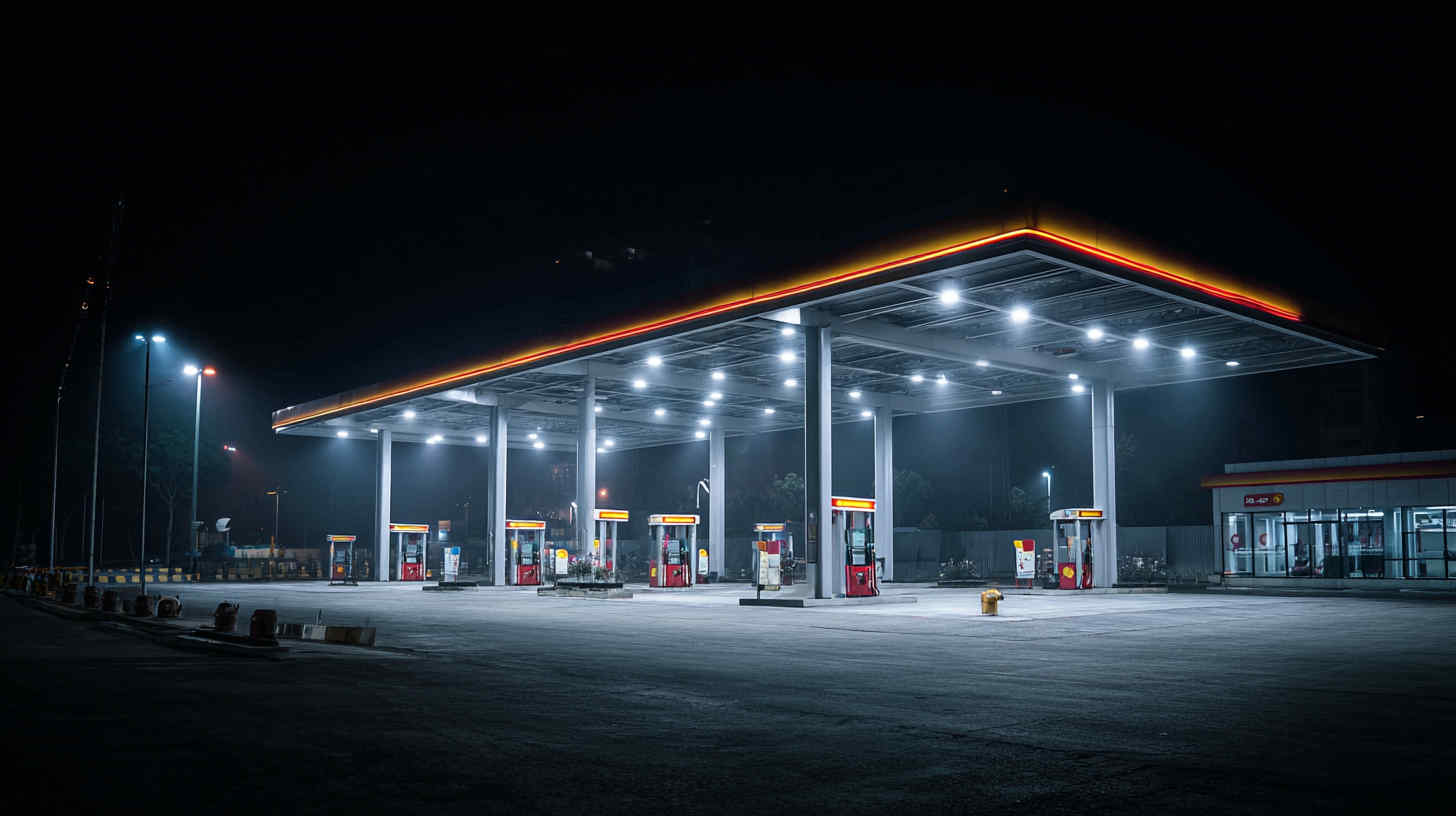
What kind of lights do gas stations use?
Gas stations rely on a combination of specialized lighting fixtures to illuminate the fueling area, surrounding driveways, and customer pathways. Each fixture type serves a different purpose to ensure safety, visibility, and an inviting atmosphere for customers.
Canopy Lights
Canopy lights are mounted directly under the gas station canopy, positioned above the fuel pumps. Their job is to provide bright, uniform illumination so customers can see clearly while fueling, reading instructions, or using payment terminals. Modern LED canopy lights are designed with features such as anti-glare lenses, slim housings, and sealed waterproof construction to handle outdoor conditions. LEDs also maintain consistent brightness and color, improving both safety and the station’s overall appearance.
Area Lights
Area lights illuminate the broader station environment—the drive lanes, walkways, building entrances, and parking zones. These fixtures are typically mounted on nearby walls or poles and use optics that spread light wide across open spaces. Proper area lighting reduces shadows, improves navigation for drivers, and enhances security by increasing visibility around the station perimeter. LED area lights are preferred because they offer strong output with lower energy use, helping gas stations manage operating costs.
Pole Lights
Pole lights are installed on tall poles positioned around the lot or along the station boundaries. Their height allows them to cast light over large sections of the property, improving visibility for vehicles entering or exiting the station. They also support safety in parking spaces and along circulation routes. Pole-mounted LEDs often work together with canopy lights to create balanced lighting across the entire site, ensuring drivers can see clearly from the moment they approach until they leave.
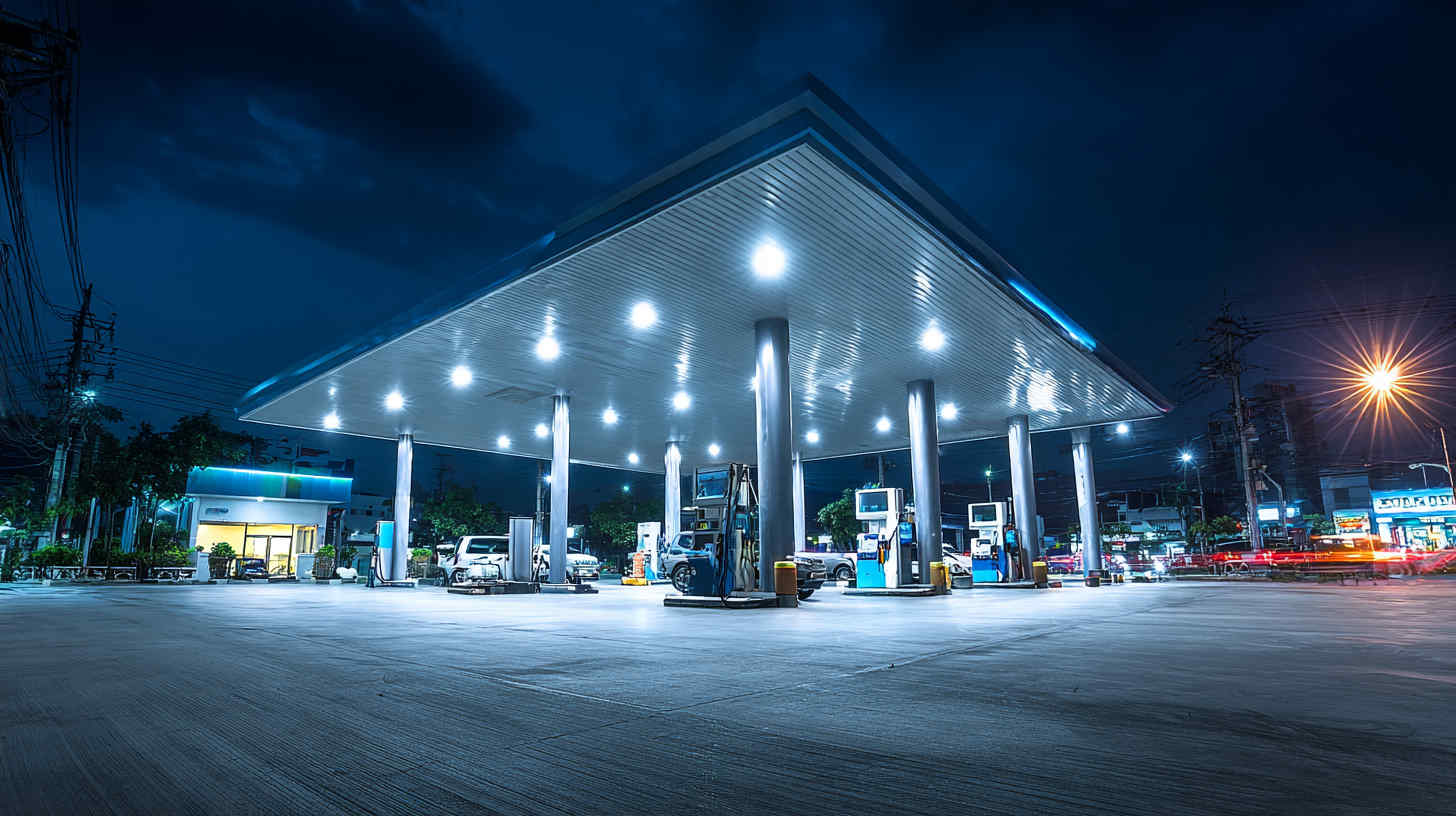
What is the best color for a gas station?
The most effective color temperature for gas station lighting is usually between 5000K and 5700K. This daylight-white range provides strong visual clarity, making it easier for customers to read pump screens, see their surroundings, and feel safe—especially at night. The crisp, cool tone also gives the station a modern, clean appearance that positively influences customer perception. Some gas stations may opt for 4000K if they want a slightly softer and warmer look, but 5000K is still the preferred choice for fueling areas because it enhances visibility, improves color accuracy, and helps security cameras capture clearer images.
Benefits of LED Lighting for Gas Stations
LED lighting offers a wide range of advantages for gas stations compared to older HID, metal halide, or fluorescent systems. One of the biggest benefits is energy efficiency—LED fixtures can lower electricity usage by up to 70%, which directly reduces operating costs every month. This makes a noticeable difference for stations that keep lights running for long hours.
Another major advantage is the quality of illumination. LEDs produce bright, uniform light with excellent color clarity, helping customers feel safe and making the entire fueling area appear cleaner and more professional. This improved visibility also enhances security camera performance, allowing clearer footage at night.
LEDs last significantly longer than traditional lights, meaning fewer replacements and less downtime for maintenance. Because they switch on instantly without flickering or warming up, they provide reliable lighting whenever needed, even during cold weather or power fluctuations.
Modern outdoor canopy LED fixtures are also designed to withstand harsh environmental conditions such as rain, dust, and temperature changes. This durability ensures consistent lighting performance and reduces the risk of unexpected failures.
Overall, LED lighting creates a safer, more inviting environment for customers while lowering long-term operating costs for gas station owners.
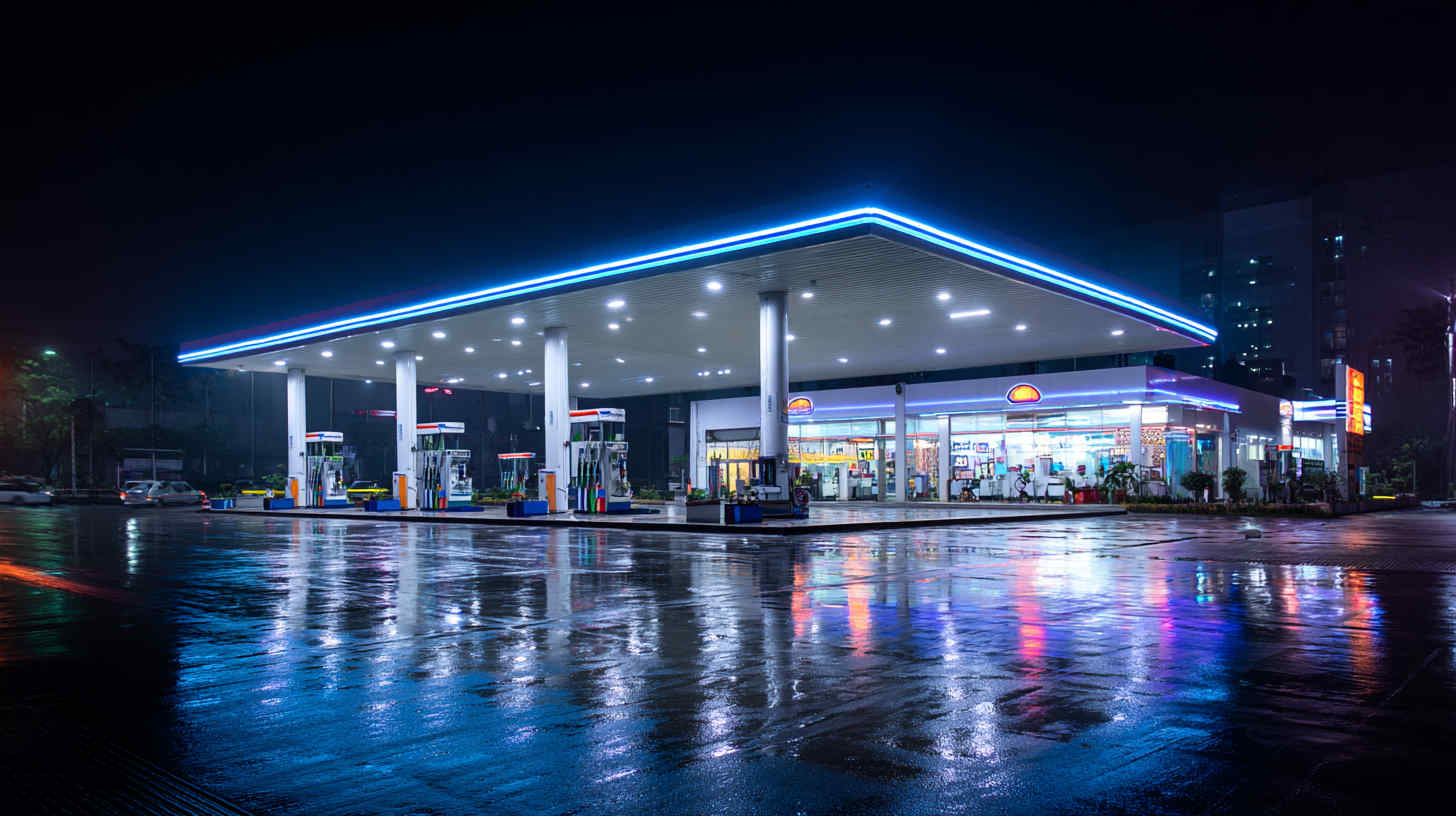
What to Consider Before Buying LED Gas Station Lighting?
Energy Efficiency and Sustainability
When choosing LED canopy lights, focus on fixtures with high luminous efficacy, meaning they produce more light per watt of electricity. This directly lowers utility costs, especially since gas stations operate lighting for long hours every day. High-efficiency LEDs also reduce carbon emissions, helping stations meet sustainability targets and comply with modern energy guidelines.
Brightness and Uniformity
Gas stations must avoid dark spots around pumps, parking areas, and walkways. Uniform lighting makes the fueling area look safe and professional while helping drivers navigate easily. Look for fixtures with well-designed optics to distribute light evenly across the entire canopy and forecourt.
Color Temperature and Quality of Light
A daylight-white color temperature between 5000K and 5700K provides excellent clarity for night-time visibility. High CRI (color rendering index) lighting helps customers see fuel pump labels, credit card readers, and vehicle details clearly. It also improves the quality of security camera footage, which is essential for monitoring and incident recording.
Durability and Weather Resistance
Gas station environments expose lights to constant heat, moisture, dust, and fuel vapors. Outdoor canopy fixtures should be built with corrosion-resistant housings and rated IP65 or higher to ensure reliable long-term performance. Durable construction minimizes failure risks and keeps the station brightly lit in all weather conditions.
Installation and Maintenance
Choose LED fixtures designed for quick installation to reduce downtime and labor costs. Many modern canopy lights include retrofit kits or surface-mount frames that simplify upgrades from older systems. Long LED lifespans, often between 50,000 and 100,000 hours, reduce maintenance frequency and prevent service interruptions.
Lighting Control Systems
Smart lighting systems allow automatic scheduling, dimming, and motion-based activation. These controls cut energy use during low-traffic hours without compromising safety. Advanced systems can integrate with building management software for even better efficiency and monitoring.
Enhancing Security
Bright, consistent illumination creates a safer environment for customers and employees. Well-lit pump areas discourage theft, tampering, and vandalism. High-quality lighting also improves the accuracy of surveillance cameras, making it easier to identify vehicles and individuals at night.
Aesthetics and Branding
Lighting is a major part of a gas station’s visual identity. Bright, clean lighting makes the station look modern and well-maintained. Matching color temperature and uniform illumination across the site strengthens brand consistency and helps attract passing drivers.
Cost Considerations
The upfront cost of LED gas station lighting varies by wattage, optics, and fixture quality. While LEDs may cost more initially than older technologies, they deliver significant long-term savings through lower energy consumption and reduced maintenance needs.
Regulatory Compliance
Lighting must meet local safety codes, environmental guidelines, and brightness requirements for commercial fueling stations. Ensuring compliance prevents legal issues, supports safety standards, and guarantees optimal illumination performance in all conditions.
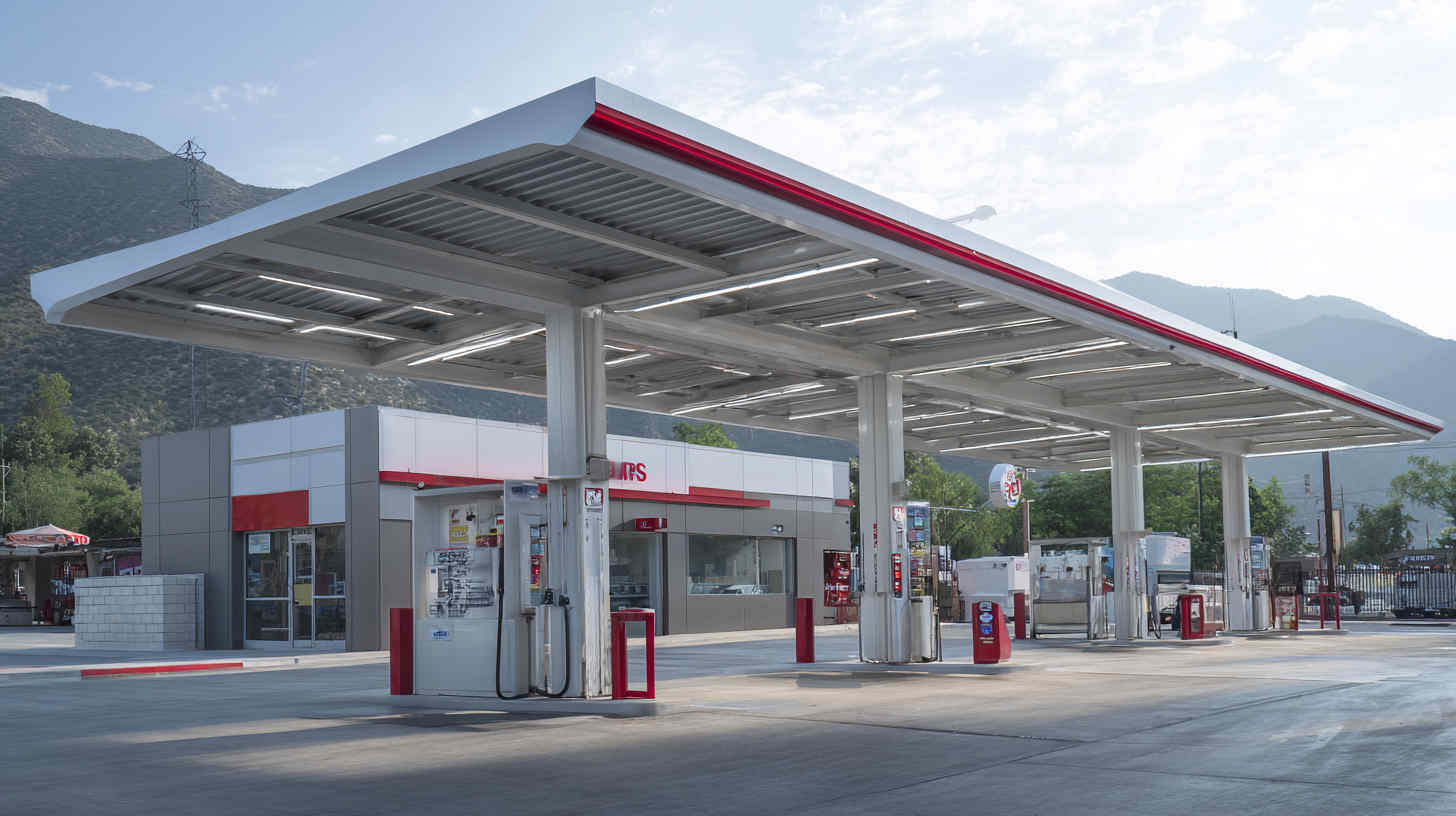
FAQs About LED Gas Station Lighting
Why is gas station lighting important for business?
Lighting plays a major role in how customers perceive a gas station. Bright, uniform lighting makes customers feel safer when fueling at night and encourages them to visit the convenience store. Good illumination also reduces accidents, improves visibility for staff, and supports better surveillance footage. When lighting is poor, customers often choose a different station.
What types of lighting are suitable for gas stations?
Gas stations typically use a combination of canopy lights, area lights, pole lights, and outdoor canopy LED fixtures. Canopy lights brighten the fueling zone, area lights illuminate drive lanes and parking areas, and pole lights secure the outer perimeter. The right mix ensures full coverage with no dark spots.
What color temperature is best for gas station lighting?
The ideal color temperature is between 5000K and 5700K. This daylight-white tone provides exceptional clarity, enhances security, and gives the station a clean, modern look. It also helps customers read pump screens, payment terminals, and product labels easily.
How many lumens for a retail store?
A typical retail store needs around 2000–5000 lumens per fixture, depending on ceiling height, store layout, and the type of merchandise displayed. Higher ceilings or detailed product areas may require brighter fixtures for proper visibility and presentation.
Conclusion
Choosing the right lighting for a gas station comes down to balancing safety, visibility, energy efficiency, and brand perception. When customers approach a well-lit station, they immediately feel safer and more confident about fueling, paying, and visiting the convenience store. High-quality LED canopy lights and outdoor LED fixtures ensure bright, uniform illumination that reduces shadows, improves camera performance, and enhances the overall look of the station.
LED lighting also helps lower operational costs through reduced energy use and longer lifespans, making it a smart long-term investment. With durable construction and reliable performance in all weather conditions, LEDs support both day-to-day operations and your business reputation. A properly illuminated gas station not only attracts more customers but also strengthens trust, encourages repeat visits, and supports a more professional, modern brand image.
If you’re planning a gas station lighting upgrade or new installation, feel free to contact us directly—we’re here to help you choose the perfect solution.


Leave a Reply
Your email is safe with us.