

Dim, outdated church lighting weakens the worship experience, creates shadows, and distracts attendees. Poor lighting damages the atmosphere and makes services feel dull. The solution is choosing the right LED church lighting that enhances beauty, clarity, and emotion.
LED church lighting requires understanding sanctuary lighting needs, color temperature, beam control, energy efficiency, dimmability, and fixture placement. Modern church lighting combines ambient, accent, and stage illumination to enhance worship, highlight architectural elements, reduce glare, and improve visibility. From Catholic church lighting design to modern church stage lighting ideas, the goal is to create a comfortable, inspiring, and visually balanced environment for congregations of all sizes.
Let’s walk through everything step by step.
Table of Contents
Understanding the Importance of Lighting for Church
Lighting in a church influences how people feel, worship, and engage during services. It ensures the congregation can see clearly, read hymnals comfortably, and move safely throughout the space. In a sanctuary, well-planned LED lighting enhances focal points such as the altar, pulpit, choir area, and stained-glass windows, bringing out architectural beauty that might otherwise go unnoticed.
Proper lighting also supports the emotional tone of worship. Bright, uniform illumination works well for regular services and community gatherings, while softer, warmer lighting helps create a peaceful atmosphere for prayer, reflection, or evening worship. Different lighting layers can guide attention, highlight important elements, and strengthen the overall spiritual experience.
When lighting is poorly designed, even a beautifully built church can feel flat or disconnected. Shadows, glare, or dim areas can distract worshippers and make the space feel less welcoming. Thoughtful church lighting design transforms the environment, helping people feel comfortable, focused, and spiritually connected from the moment they enter.
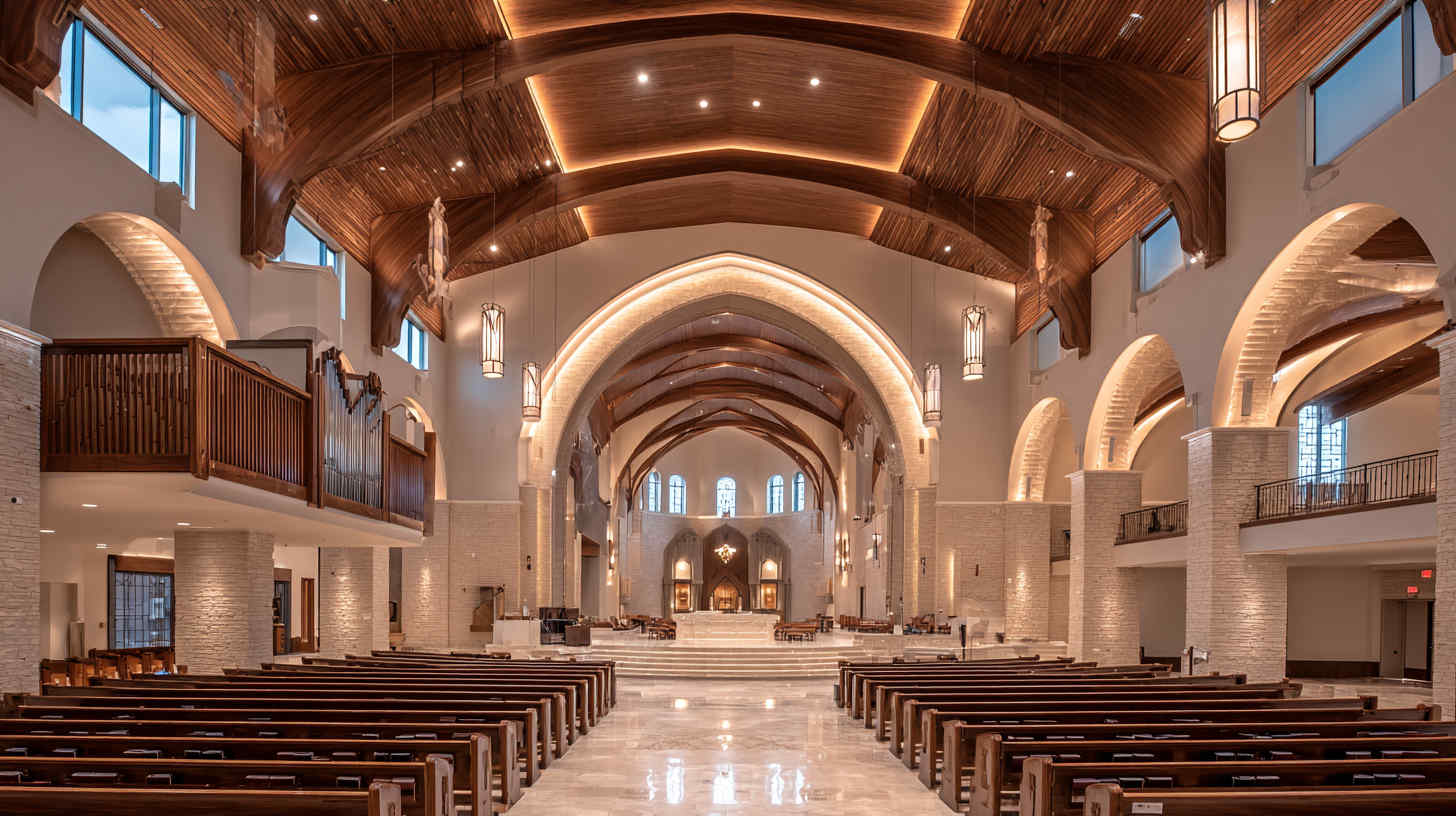
Considerations for Church Lighting Design
Church Auditorium Lighting
The auditorium needs clear, even illumination that supports visibility for sermons, choir presentations, and large gatherings. Brightness should be uniform across all seating areas to avoid distractions caused by dark patches or harsh glare. LED flat panels or high bay fixtures are commonly used because they provide broad coverage and stable light output, especially in larger auditoriums with higher ceilings. The goal is to create a comfortable, welcoming environment where everyone can see and participate without visual strain.
Church Sanctuary Lighting
Sanctuary lighting is more focused and intentional. This area requires lighting that enhances the emotional and spiritual atmosphere while clearly illuminating key focal points such as the altar, pulpit, choir section, and stage. Warm, high-CRI LED lighting helps bring out the natural beauty of wood, fabrics, and stained glass. Accent lights can draw attention to symbolic elements, while spotlights ensure speakers and performers remain clearly visible. Sanctuary lighting should balance reverence with clarity, supporting both worship and aesthetics.
Indoor Church Lighting
Indoor lighting covers hallways, classrooms, fellowship halls, prayer rooms, and lobbies. These spaces must feel inviting, safe, and functional. LED downlights, panels, and wall-mounted fixtures are ideal for maintaining consistent brightness while matching the church’s interior style. Smooth uniformity is especially important so visitors can move comfortably through the building. Each area may require its own lighting level—for example, meeting rooms often need brighter lighting for reading, while prayer spaces may prefer softer illumination.
Outdoor Church Lighting
Outdoor lighting enhances both safety and architectural beauty. Flood lights and wall packs illuminate entrances, parking lots, walkways, and gathering areas, helping visitors navigate at night. Warm white LEDs are commonly used to highlight steeples, stone facades, cross structures, and signage, bringing out the church’s character and making it easy to locate after dark. Exterior lighting should also support security by eliminating dark corners and improving visibility for surveillance systems. A well-lit exterior creates a welcoming first impression for all who approach the property.
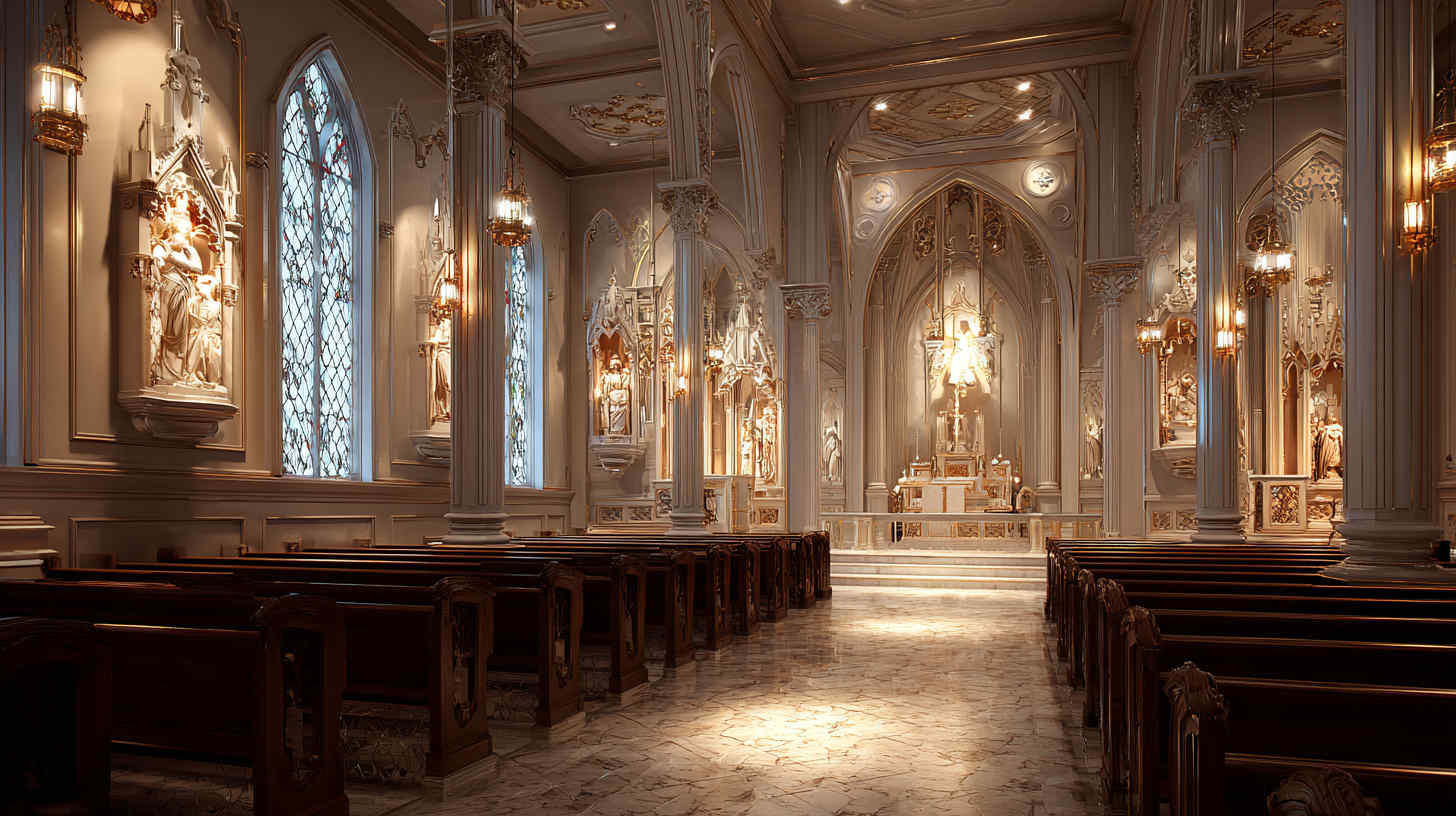
Best Practices for Church Lighting
Use a Combination of Lighting Types
A well-lit church relies on multiple lighting layers working together. Ambient lighting provides overall visibility, task lighting helps focus on functional areas like the pulpit or choir stands, and accent lighting highlights architectural or spiritual elements. Combining these layers ensures the space feels balanced, inviting, and visually dynamic.
Ensure Adequate Illumination
Different zones require different brightness levels. The altar, pulpit, and stage areas should be brighter to keep attention focused, while seating zones benefit from softer, more comfortable illumination. Proper lighting levels support reading, singing, and engagement without causing glare or eye strain.
Use Dimmable Lighting
Dimmable LED systems allow churches to adjust light levels depending on the occasion. Bright, clear lighting works for sermons or community events, while softer settings enhance weddings, candlelight services, and quiet prayer times. This flexibility improves the worship experience and helps set the right emotional tone.
Incorporate Natural Lighting
Natural light can transform a sanctuary when used effectively. Windows, skylights, and stained glass soften the atmosphere and create warmth. LED fixtures should blend with daylight, filling in darker areas without overpowering natural brightness. This creates harmony between artificial and natural light sources.
Maintain and Clean Lighting Fixtures Regularly
Dust and debris gradually reduce brightness and create uneven lighting. Regular maintenance, especially for high-mounted fixtures, keeps illumination consistent. Churches should schedule periodic cleaning and inspection to preserve lighting quality and extend fixture lifespan.
Consider Energy Efficiency
Energy-efficient LED lighting is essential for managing operational costs, especially in large auditoriums or buildings with frequent service schedules. LEDs consume far less power, generate less heat, and last significantly longer than older technologies. This reduces both monthly expenses and maintenance needs.
Consult with Lighting Professionals
Sanctuaries and altars often have complex visual and architectural needs. Working with lighting professionals ensures correct beam angles, color temperatures, and fixture placements. Expert design helps avoid common issues like glare, shadows, or uneven brightness, resulting in a more visually cohesive worship environment.
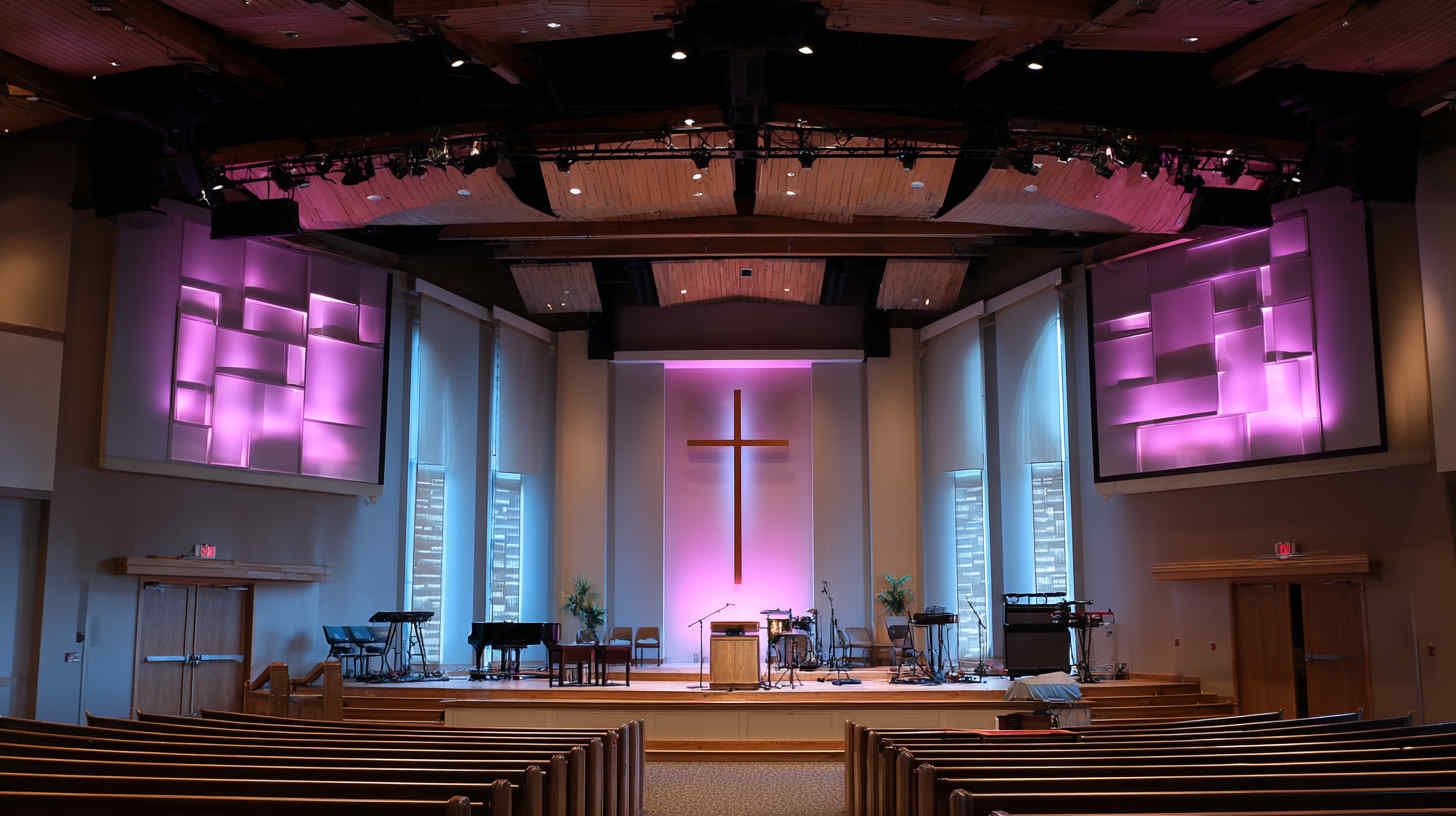
FAQs for Church Lighting
What lighting color is best in church?
Warm white in the range of 3000K–3500K works best for most sanctuaries because it creates a calm, inviting atmosphere that supports worship and reflection. This color temperature also enhances natural materials like wood and stone. For performance stages or areas where visibility and clarity are crucial, a cooler white may be used to improve contrast and visibility.
How do you reduce glare from lights in church?
Glare can be minimized by using indirect lighting methods, anti-glare lenses, and diffusers. Properly choosing beam angles ensures that light is directed where it’s needed without causing discomfort to the congregation. Positioning fixtures carefully and avoiding overly bright or poorly aimed lights also helps maintain visual comfort throughout the space.
Can I upgrade existing lighting fixtures?
Yes. Most churches can upgrade to LED lighting through simple retrofit solutions. These allow you to replace outdated fluorescent or halogen systems with modern LED fixtures using the same mounting points and wiring. This upgrade improves brightness, reduces energy consumption, and lowers long-term maintenance costs without requiring large-scale renovations.
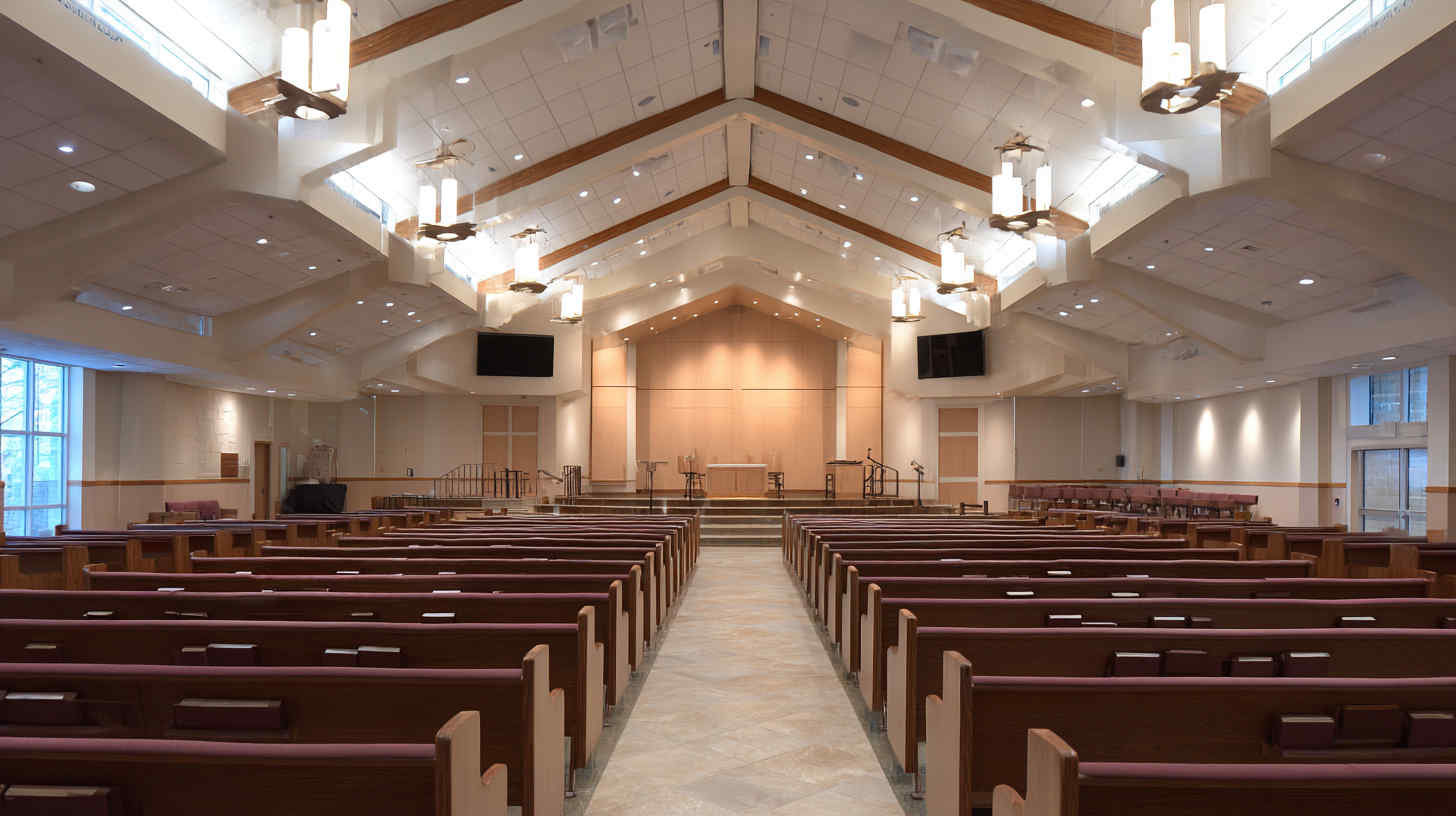
Conclusion
In any church—traditional, modern, large, or small—lighting shapes emotion, visibility, and the entire worship experience. By combining the right LED fixtures, design principles, and professional planning, churches can create inspiring spaces that feel warm, sacred, and visually uplifting.
If you need help choosing LED lighting for your church, reach out to us—we’re here to assist with your project.




Leave a Reply
Your email is safe with us.