
Dim lighting ruins gameplay. Shadows confuse players. Bad lights mean angry customers and shorter match times. Let’s fix it with proper LED padel court lighting.
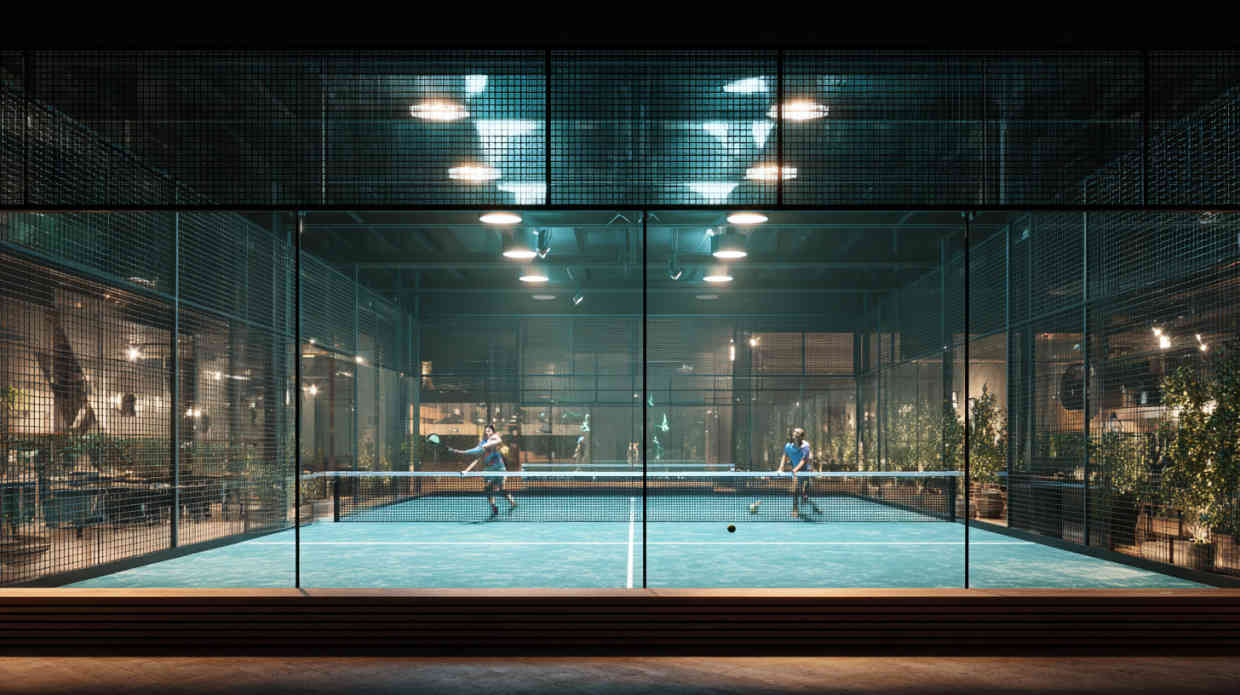
Padel court lighting is critical for safe, fair, and enjoyable matches. Whether indoors or outdoors, the right lights prevent glare, boost visibility, and ensure compliance with official sport lighting standards. Using LED lights designed for padel courts delivers consistent illumination, long lifespan, and energy savings. Mounting height, beam angle, color temperature, and UGR all matter to get it right. Follow this guide to choose lights that make padel courts shine at their best.
Lighting shouldn’t be a guess—here’s what you really need to know.
Table of Contents
What is padel court lighting?
Padel court lighting is the professional lighting system set up around a padel court to make sure the game can be played clearly and safely, even at night or in indoor settings. This isn’t just a matter of adding some flood lights around the perimeter. The lighting has to meet specific requirements for sports—like how bright the court is, how evenly the light is spread, and how well it controls glare.
A standard padel court is 20 meters long and 10 meters wide. To light that properly, the fixtures must cover the entire surface without leaving dark spots or creating intense glare that distracts players. If the lighting is uneven, players can miss the ball, misjudge distance, or simply lose focus.
The goal is to create a consistent and comfortable visual environment for both players and spectators. That means the lights need to be carefully positioned and matched with the right beam angles, brightness levels, and mounting heights. And since padel is a fast-paced game, every second counts—poor lighting can ruin the flow and energy of the match.
When done right, padel court lighting transforms an ordinary game into a high-level experience, making evening matches just as exciting and clear as those played under daylight.
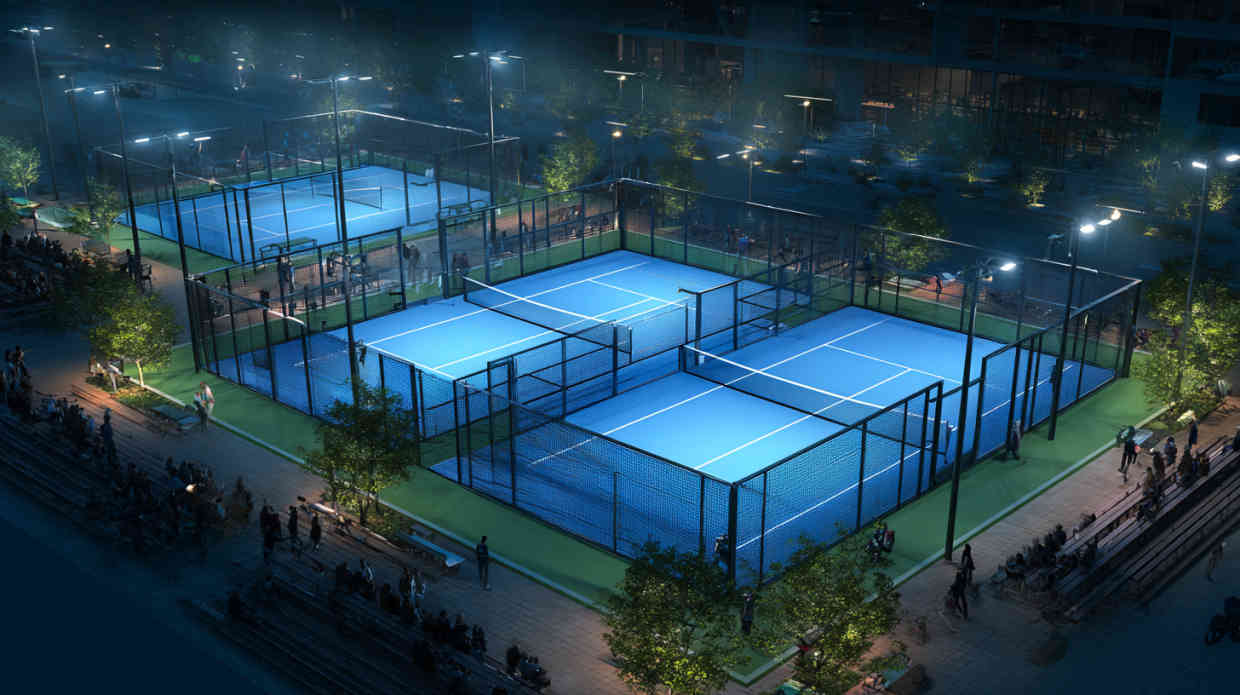
LED Padel Court Lighting Standards & Requirements
Proper lighting is critical to delivering a safe, enjoyable, and competitive padel experience—especially when games are played at night or indoors. Lighting isn’t just about brightness. It’s about how evenly the light is spread, how colors appear, how well movement is tracked, and whether players get blinded or distracted mid-play.
Here’s what most international sports lighting guidelines—including European standards—recommend for padel courts:
- Average horizontal illuminance: Depending on the level of play, recreational courts need at least 300 lux, while professional tournaments often require 500 to 750 lux. This ensures the entire court is brightly and evenly lit.
- Uniformity ratio (min/avg): A minimum of 0.7 is ideal. This means there shouldn’t be big swings in brightness between the center and corners of the court. The ball should stay visible and clear no matter where it moves.
- Color temperature: Recommended range is between 4000K and 6000K. This gives a crisp, neutral-to-cool white light that mimics daylight and supports player focus.
- Color Rendering Index (CRI): A CRI of 80 or higher ensures that colors on the court—like the ball, players’ outfits, and court lines—look natural and easy to distinguish.
- Glare Rating (UGR): Lower is better, with a target below 19 to reduce eye strain and distraction for both players and spectators.
- Flicker-free performance: Essential for high-definition video recording or broadcasting. Flickering can ruin slow-motion replays or visual clarity during matches.
- Anti-glare optics: Proper lenses and beam angles help prevent players from being blinded by direct light when they look up or track a high ball.
These lighting specs exist for good reason. When they’re met, players enjoy smoother, safer matches and better visibility. Spectators and cameras also get a clearer, more professional-looking game. So whether you’re lighting a community court or preparing for a televised match, hitting these targets is a must.
What are the Benefits of Using LED Padel Court Lights?
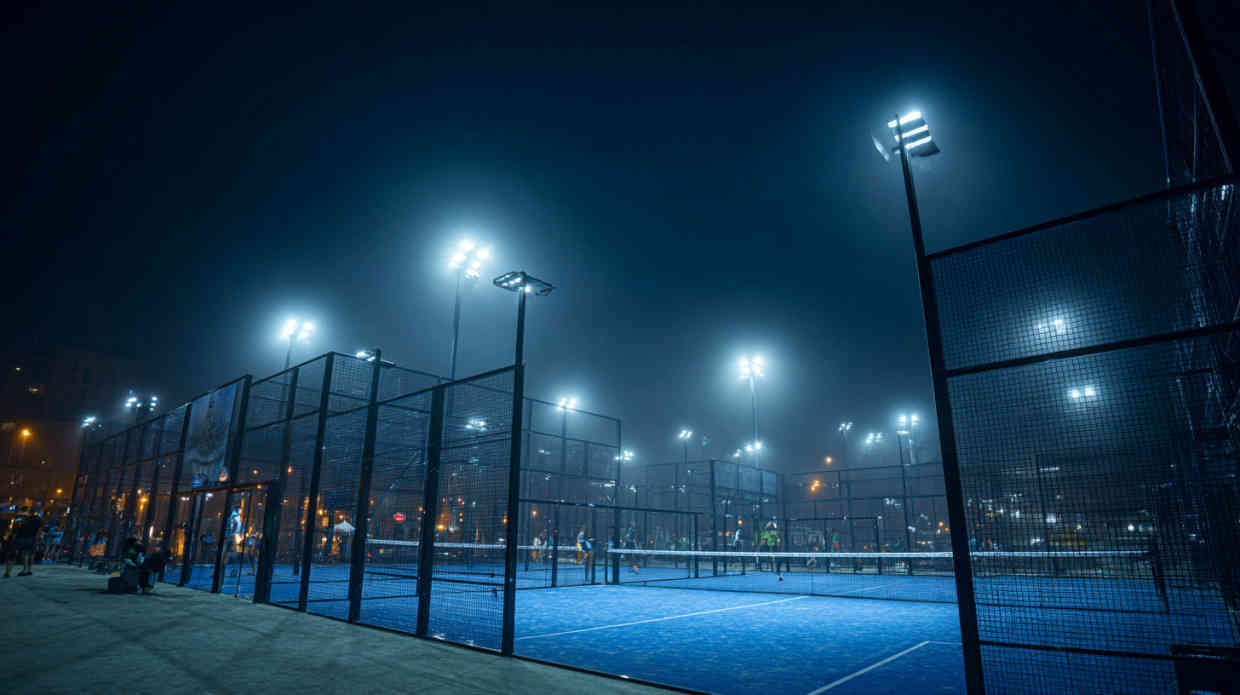
Upgrading padel court lighting to LEDs is more than just a trend—it’s a practical decision that delivers long-term benefits across the board. Whether you’re managing a single recreational court or a multi-court facility, here’s why LEDs make a difference:
- Massive energy savings: LEDs use up to 70% less power than older lighting systems like metal halide or halogen lamps. That means lower electricity bills month after month, with no sacrifice in brightness.
- Instant illumination: Unlike metal halide lamps that take several minutes to reach full brightness, LED lights switch on immediately. This is critical for sports facilities where games run on tight schedules or when motion sensors are used.
- Long operating life: High-quality LED padel lights can last over 50,000 hours. That reduces the need for constant bulb changes and cuts down on maintenance costs—especially useful in outdoor setups where accessing high fixtures is a chore.
- Better beam control: LEDs offer directional lighting, which means you can aim light exactly where it’s needed without wasting it. That improves brightness on the court and reduces light spill into surrounding areas.
- Weather-resistant design: Most LED padel fixtures come with high IP66 ratings, which makes them dust-tight and resistant to strong jets of water. They can handle rain, wind, and other outdoor challenges with ease.
- Custom optics and low glare: LED fixtures can be built with specialized lenses that reduce glare and ensure even light distribution. That means fewer shadows, less eye strain, and better visibility—especially for fast-paced padel games.
Bottom line? LEDs make your padel court look better, play better, and cost less to run. It’s an upgrade that pays off in performance, aesthetics, and efficiency.
What are the Best Types of LED Lighting for Padel Ball Courts?
When it comes to lighting a padel court properly, not just any LED fixture will do. You need something that delivers strong, uniform light without blinding the players or flooding the neighborhood with unwanted glare. Over the years, I’ve found two types of LED lights that consistently get the job done: asymmetric flood lights and high mast lights.
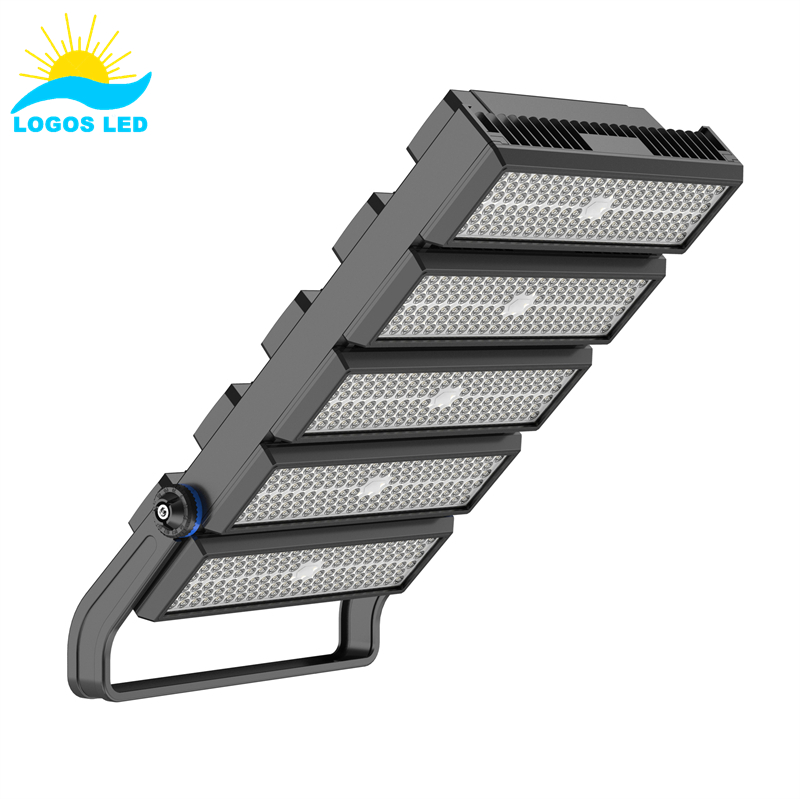
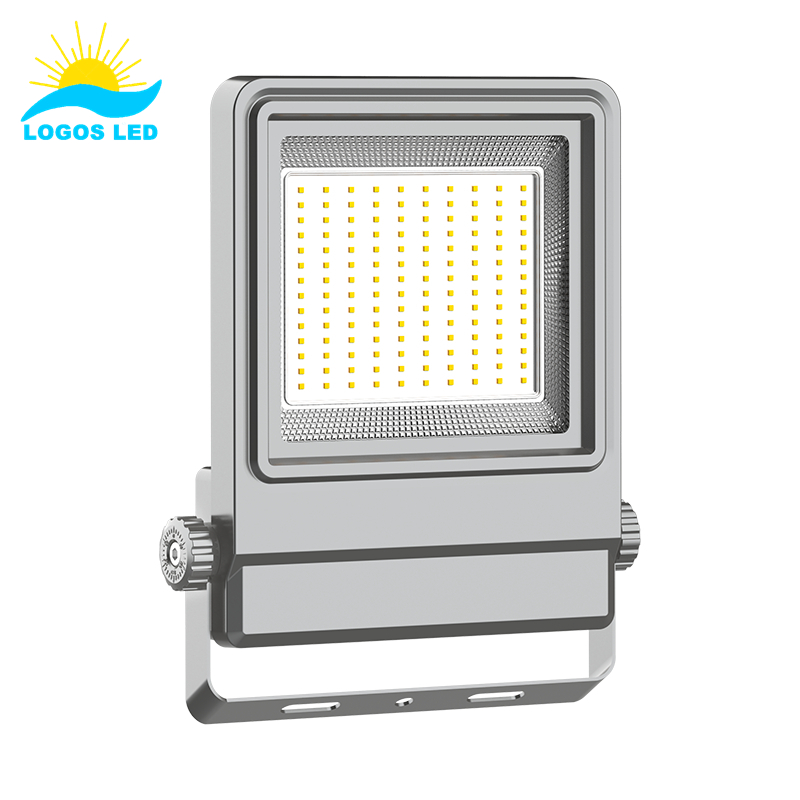
Asymmetric flood lights are designed to throw light forward in a specific direction. This makes them perfect for padel courts because you can light up the whole playing surface evenly without wasting light outside the boundaries. High mast lights, on the other hand, offer more flexibility for larger or multi-court installations. Their multiple modules can be angled individually, allowing you to dial in the exact coverage you need.
Here are a few things to keep in mind when picking LED lights for your padel court:
- Beam angle: Go for a narrow beam angle between 30° and 60°. This focuses light more effectively across the playing area.
- High efficiency: Choose fixtures with a high lumen output, ideally between 120 and 160 lumens per watt. This ensures you’re getting strong brightness without wasting power.
- Flicker-free performance: Especially important if you’re planning to stream or record games. Look for drivers that guarantee zero flicker under high-speed cameras.
- Durable housing: You want fixtures rated at least IK08 for impact resistance and IP66 or higher for protection against dust and water. Outdoor courts face weather, balls, and accidental hits—your lights need to withstand all of it.
- Glare control: Optional visor shields or anti-glare lenses can help cut down on stray light and make gameplay more comfortable for the eyes.
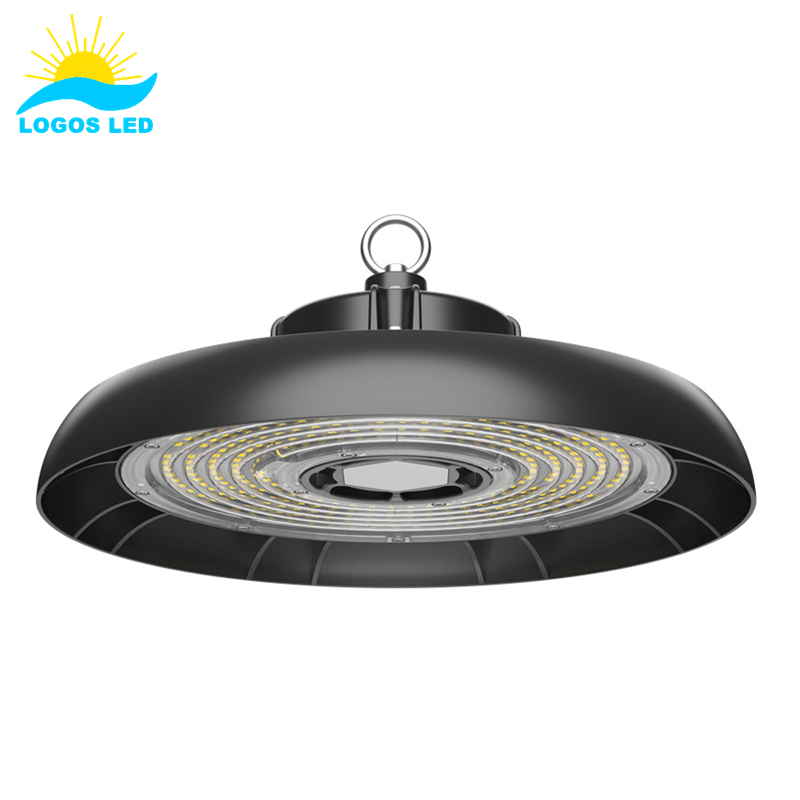
If your padel court is indoors, linear LED fixtures can be a solid option. Just make sure the ceiling is high enough to provide even coverage and prevent shadows. Diffused lenses help soften the light, making it easier on the eyes without sacrificing brightness.
The right LED fixture makes a big difference in visibility, performance, and energy savings. Don’t cut corners here—your court and your players will thank you.

What is the best color for a padel court?
Lighting color temperature and surface color go hand in hand. Most padel courts are green or blue, but the best lighting color is 5000K to 5700K. It gives a cool daylight look, helps players see the ball clearly, and improves visual contrast. For televised events, stick with 5000K. Warmer tones like 3000K tend to feel dimmer and aren’t ideal for fast-paced sports.
What’s the Best Way To Light an Outdoor Padel Court at Night?
Lighting an outdoor padel court properly at night isn’t just about making it bright—it’s about making sure every inch of the playing surface is visible, while also protecting players’ eyes from glare and avoiding wasted light.
From my experience, the most effective layout uses either 4 or 6 LED flood lights mounted on poles that are between 6 to 8 meters high. These poles should be placed just outside the corners of the court. This placement provides wide coverage while keeping the lighting out of the players’ direct line of sight.
Asymmetric optics are the real game changer here. They’re engineered to project the light forward and sideways instead of straight down. This helps spread the brightness evenly across the court and avoids that harsh, blinding effect that can happen with standard flood lights. The right beam angles also minimize light spillage beyond the fences, keeping neighbors happy and energy waste low.
Another key point: don’t just bolt the lights up and hope for the best. The beam angle must be carefully adjusted to hit the court surface evenly, especially around the net and corners. A proper lighting simulation or layout plan is always worth doing ahead of time.
If you want to maximize efficiency, I highly recommend installing dimmable drivers or lighting controllers. During off-peak hours or practice sessions, you can dial down the brightness and save on power without sacrificing usability.
And since this is an outdoor setup, waterproofing and surge protection are non-negotiable. Go with IP66-rated fixtures and make sure all wiring is sealed tight against rain and dust. Also, include surge protectors to shield your investment from lightning strikes or power spikes.
In short, a well-planned outdoor lighting system for padel courts combines precision optics, smart placement, and rugged durability. Get those three right, and your court will be ready for peak performance every night.
What is the Best Height to Mount LED Lights for a Padel Court?
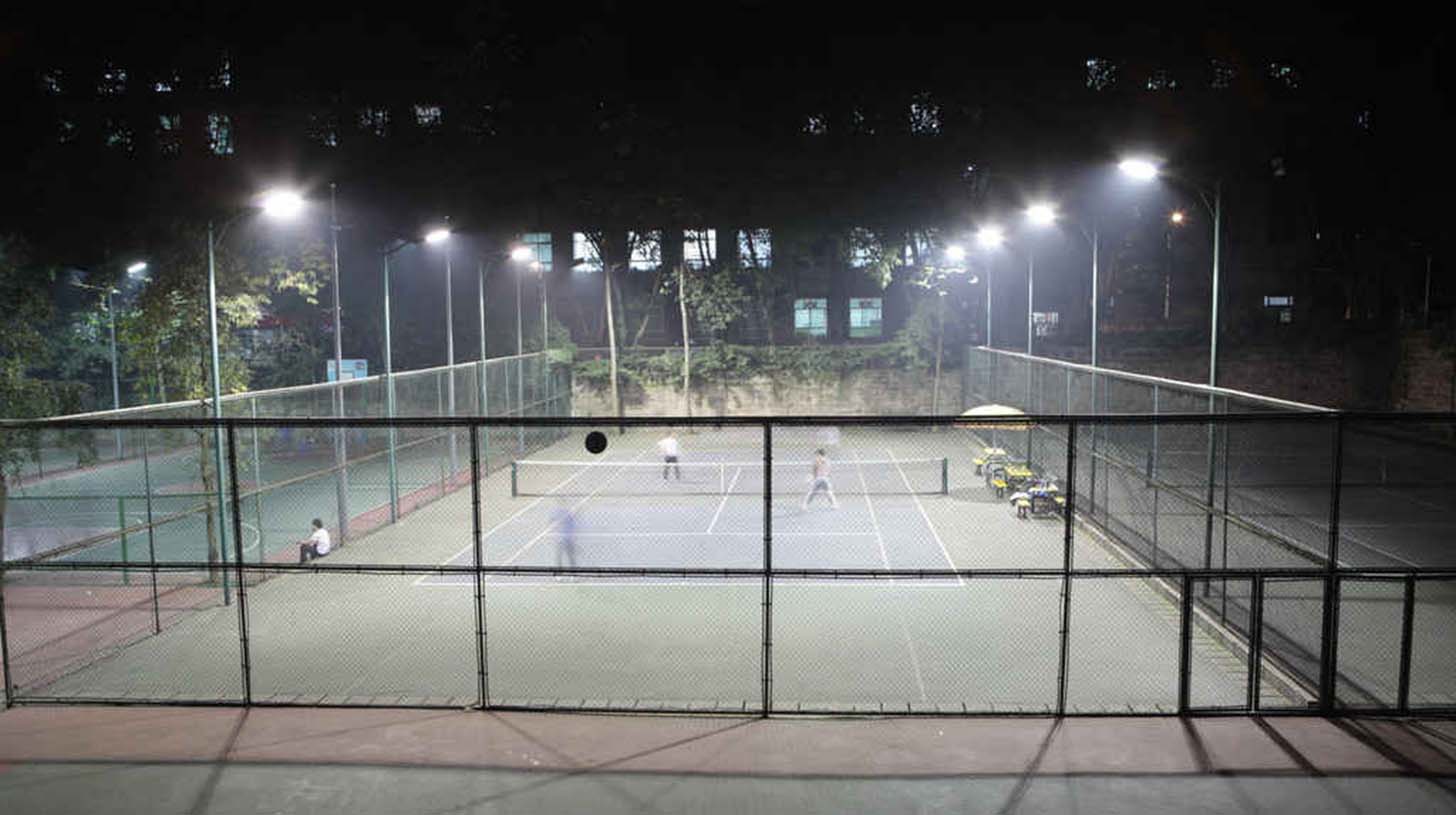
Getting the mounting height right is one of the most important steps in padel court lighting. Go too low, and you risk creating glare and uneven shadows that throw off gameplay. Go too high, and you lose light intensity where it’s needed most, wasting energy and reducing visual comfort.
From my experience, the standard mounting height that works for most outdoor padel courts is 6 meters. It strikes a solid balance between coverage and intensity. However, if you want even better light distribution and have the room in your layout, 8-meter poles deliver superior results. That extra elevation lets the light spread out more smoothly, especially when using asymmetric beam angles.
Here’s a good rule of thumb to guide your selection:
- For 6-meter poles, use LED lights in the 200 to 240-watt range. These provide strong coverage without being overpowered for the height.
- For 8-meter poles, step up to 300 to 400-watt LED lights. These are designed to throw light farther and more evenly from greater heights.
Just as critical as the height is the placement of the poles themselves. Always position them outside the corners of the padel court fencing. This keeps them out of the players’ sightlines, eliminates visual obstructions, and ensures the full light beam reaches across the playing surface.
Remember, it’s not just about mounting lights high—it’s about placing them smartly and matching them with the right optics and wattage. Done right, this setup provides clean, uniform lighting that enhances gameplay, reduces glare, and saves energy.

How to Reduce Glare With LED Lights on the Padel Court?
Glare can ruin a good match in seconds. I’ve seen players stop mid-rally because they were blinded by a poorly placed light. Reducing glare is all about smart fixture choice, correct positioning, and proper beam control.
Here’s how to do it right:
- Use asymmetric optics. These direct the light across the court instead of straight into players’ eyes. They’re designed to light the surface evenly while keeping beams low on glare.
- Choose LED fixtures with built-in visor hoods or anti-glare shields. These physical additions block unwanted spill and help shape the beam more precisely.
- Mount your lights higher—6 to 8 meters works best—and angle them properly. The goal is to flood the court with light, not blast players with it.
- Pick fixtures with low UGR values. A Unified Glare Rating below 19 is usually recommended. That means the fixture is designed to minimize visual discomfort.
- Don’t over-light the court. More brightness isn’t always better. Too much light leads to bounce-back, reflections, and glare—especially if the surface is glossy.
One last tip: avoid fixtures with exposed LED diodes or cheap lenses. They scatter light and create harsh hotspots that are hard to play through. Go with quality LED floodlights designed for sports lighting—they give players the visual clarity they need without the glare that ruins the game.
How Much Does It Cost to Install LED Lighting for a Padel Court?
If you’re budgeting for LED lighting on a padel court, there are a few major cost components to keep in mind. The total can vary based on where you’re located, whether it’s an indoor or outdoor setup, and what level of lighting performance you’re aiming for.
Here’s a rough breakdown for a standard outdoor court:
- LED floodlights (4 to 6 units): Expect to spend around $1,800 to $3,000. This depends on the brand, wattage, optics, and if they come with built-in visors or surge protection.
- Poles, mounting brackets, wiring, and junction boxes: This typically adds another $1,000 to $2,000. Pole height, material, and wind resistance ratings can influence this part of the cost.
- Installation labor and electrical work: Including mounting, wiring, and connection to the electrical panel, this usually ranges between $1,000 to $2,000. Prices may rise depending on how remote or complex the setup is.
All in, most standard installations come in between $4,000 to $7,000 per court.
While the initial investment might sound high, it pays off over time. LEDs cut electricity use by up to 70% compared to metal halide systems, and they last over 50,000 hours. That means fewer replacements, less maintenance, and lower monthly bills.
And if you’re setting up a court in a remote area, solar-powered LED systems are another option. They’re a bit more upfront, but you eliminate the need for underground wiring and grid power—great for rural clubs or temporary venues.
Conclusion
Great padel court lighting isn’t just about brightness—it’s about control, comfort, and efficiency. The right LED system keeps players focused, reduces operating costs, and meets every lighting standard with ease.
Need help finding the perfect padel light for your next project? Contact us and let’s light up your court the right way.
Featured Products



Request A Free Quote Now!
Send us a message if you have any questions or request a quote. We will get back to you ASAP!