

Poor outdoor lighting leads to dark zones, safety risks, security issues, and unhappy users. In large areas, weak lighting causes accidents and poor visibility. High power flood lights solve this with strong, wide, and reliable illumination.
High power flood lights are engineered to illuminate vast outdoor spaces with intense, uniform brightness where ordinary fixtures fall short. Using advanced LED technology, they deliver extremely high lumen output with precise optical control, long lifespan, and excellent energy efficiency. Designed for harsh environments, these robust fixtures play a vital role in improving safety, visibility, and operational efficiency across large-scale commercial and industrial applications.
If you’re planning a large outdoor lighting project, understanding high power flood lights will help you choose the right solution with confidence.
Table of Contents
What are High Power Flood Lights?
High power flood lights are heavy-duty outdoor lighting fixtures designed to deliver extremely high brightness across wide and open areas. Their primary purpose is to provide strong, uniform illumination where standard lighting solutions are insufficient. These lights are commonly used in environments that demand high visibility, enhanced safety, and dependable performance under continuous operation.
High power flood lights typically operate at much higher wattages than residential or decorative flood lights. Most models range from 200W to 1000W or more, producing tens or even hundreds of thousands of lumens. This level of output allows them to illuminate large surfaces such as sports fields, industrial yards, ports, highways, construction sites, and large parking areas without dark spots or uneven coverage.
Modern high power flood lights are almost exclusively LED-based. High power LED flood lights use advanced LED chips with high luminous efficacy, allowing them to generate more light while consuming less energy than traditional metal halide or high-pressure sodium fixtures. These LEDs are paired with professional-grade drivers that ensure stable current, flicker-free operation, and protection against voltage fluctuations.
Optical control is a key feature of high power flood lights. Precision lenses and reflectors shape the beam to match specific applications, whether that means wide flood coverage, medium-area lighting, or long-throw illumination. Adjustable mounting brackets allow precise aiming, which helps reduce glare, improve uniformity, and minimize light spill outside the target area.
Durability is another defining characteristic. High power flood lights are built with robust housings, usually made from die-cast aluminum, to handle harsh outdoor conditions. Effective heat dissipation systems, such as large heat sinks and airflow channels, prevent overheating and extend fixture lifespan. Most designs include high IP ratings to protect against dust, rain, and extreme weather, making them suitable for year-round outdoor use.
Because of their power, efficiency, and reliability, high power flood lights play a critical role in commercial, industrial, and infrastructure projects. They improve safety, enable nighttime operations, support surveillance systems, and ensure compliance with lighting standards in demanding environments.

How many lumens are the High Power Flood Lights?
Lumens tell you one thing very clearly: how much usable light you’re really getting out of a fixture. When we talk about high power flood lights, we’re talking about serious lumen output. In real commercial projects I work on, lumen requirements usually start around 20,000 lumens and can easily go beyond 150,000 lumens per fixture.
To give you a clear reference, a 200W high power LED flood light normally delivers about 26,000 to 30,000 lumens. Step up to 400W, and you’re looking at roughly 55,000 to 60,000 lumens. Once you move into the 600W to 1000W range, output can exceed 100,000 lumens. With this kind of brightness, you can use fewer fixtures to light large areas efficiently and still meet illumination standards.
When I design lighting solutions, I never look at lumens alone. I always evaluate total lumens together with beam angle and mounting height. High lumen output only works when paired with the right optics. Do it right, and you get uniform lighting with no glare and no dark zones. That’s exactly why high power LED flood lights are rapidly replacing traditional metal halide and HPS flood lights in commercial projects around the world.
Types of High Power LED Flood Lights
From my experience, high power LED flood lights come in several designs, each built for a specific lighting objective, installation condition, and coverage need. Choosing the right type isn’t about looks — it’s about efficiency, glare control, and long-term reliability on site.
Symmetrical High Power LED Flood Lights
Symmetrical flood lights spread light evenly outward from the center of the fixture. This creates a wide, balanced illumination pattern, which is exactly what you want in large open areas where uniform brightness matters most. I typically recommend these for parking lots, industrial yards, storage areas, ports, and public plazas.
Because the light distribution is even, symmetrical flood lights help eliminate dark zones and harsh shadows. They’re usually pole-mounted or wall-mounted and tilted slightly downward to maximize ground coverage. If your project doesn’t require strict control over light direction or spill, this is often the most straightforward and cost-effective solution.
Asymmetrical High Power LED Flood Lights
Asymmetrical flood lights are engineered to push light forward and downward instead of wasting it in all directions. I like this design when lighting efficiency and control are critical. These fixtures are widely used for roadways, building facades, stadium surroundings, and perimeter lighting.
By cutting backward and upward light spill, asymmetrical optics reduce glare for drivers and pedestrians and help projects meet light pollution regulations. They work especially well along edges, walls, or poles where the light needs to be aimed precisely, not scattered.
Modular High Power LED Flood Lighting Systems
Modular high power LED flood lights are built by combining multiple LED modules into one system. Each module works independently, which gives you flexible wattage options and highly customized lumen output. I often specify modular systems for large-scale projects like stadiums, airports, container yards, and sports complexes.
The biggest advantage here is scalability. If you need more light, you add modules instead of replacing the entire fixture. Maintenance is also simpler, since individual modules can be serviced or swapped out. On top of that, modular designs handle heat extremely well, keeping performance stable even at very high power levels.
Pole-Mounted High Power LED Flood Lights
Pole-mounted flood lights are designed for high installation heights, typically from 8 to 40 meters or even higher. I see these used most often on highways, sports fields, industrial plants, and large parking areas. Adjustable brackets make it easier to fine-tune aiming for optimal coverage and uniformity.
Depending on the project, pole-mounted fixtures can use symmetrical or asymmetrical optics. Higher mounting heights reduce glare and allow fewer fixtures to cover larger areas efficiently, which helps control both installation and operating costs.
Wall-Mounted High Power LED Flood Lights
Wall-mounted flood lights are fixed directly onto building exteriors, retaining walls, or structural columns. They’re commonly used for facade lighting, loading docks, entrances, and perimeter security. In most cases, I recommend asymmetrical beam patterns to direct light outward and downward where it’s actually needed.
This approach eliminates the need for poles and integrates lighting cleanly into the building structure, making it both practical and visually tidy.
Waterproof Outdoor High Power LED Flood Lights
Any high power LED flood light intended for outdoor use must be fully waterproof and dustproof. High IP ratings protect the internal components from rain, dust, humidity, and harsh weather. I regularly specify these fixtures for coastal areas, industrial environments, and fully exposed infrastructure.
A proper waterproof design means longer service life, stable lumen output, and far less maintenance — even in tough outdoor conditions.
Every type of high power LED flood light has its role. When you match the right design with the right application, mounting method, and optical requirement, you get maximum performance, higher energy efficiency, and consistently better lighting results.
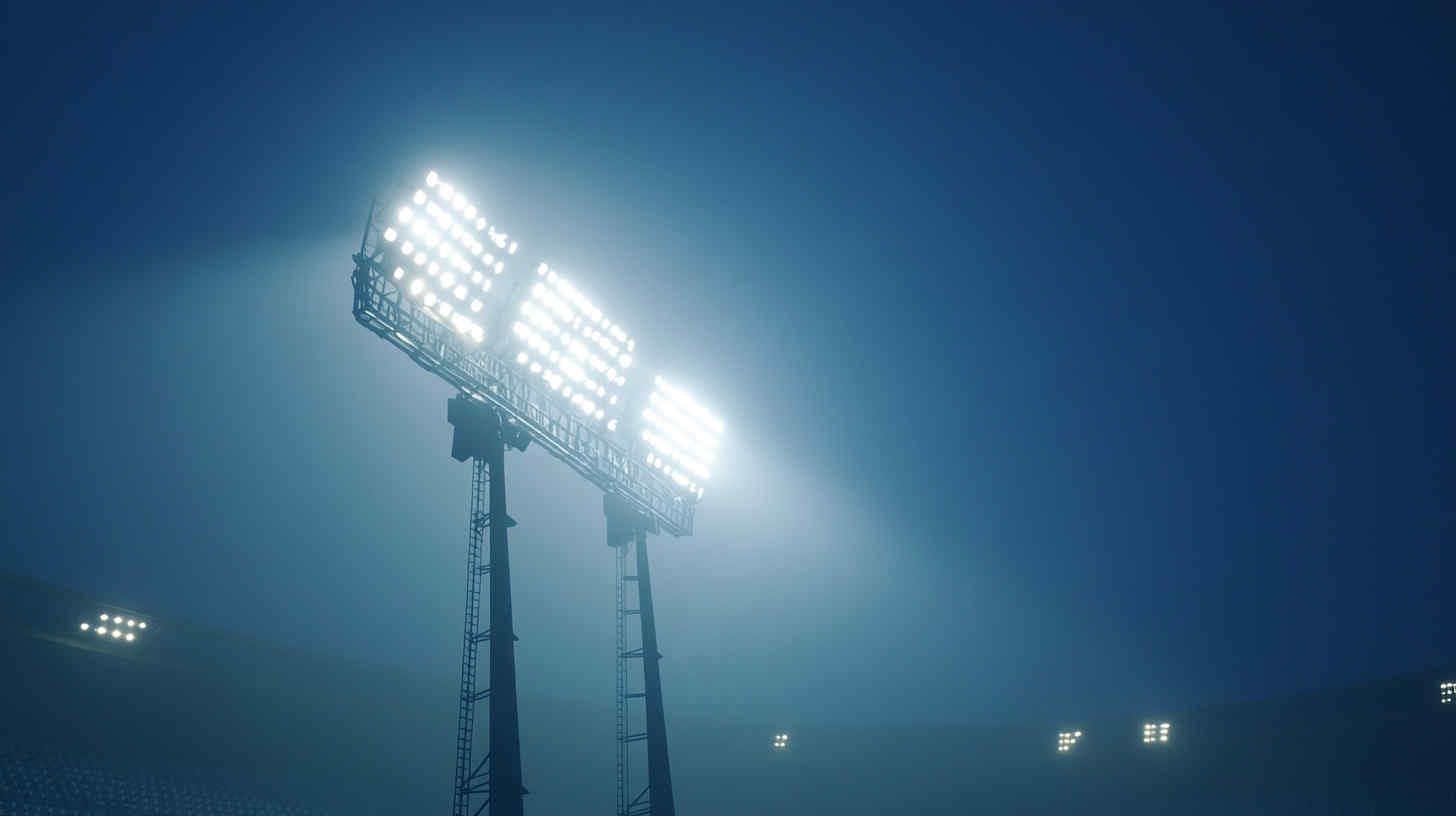
Applications for High Power LED Flood Lights
From what I see in real projects, high power LED flood lights are built for one job: delivering strong, wide-area illumination where normal lighting simply isn’t enough. With high lumen output, rugged construction, and precise optical control, they perform reliably in large-scale and demanding outdoor environments.
Large Parking Lot Lighting
Large parking lots need bright, consistent lighting to keep drivers and pedestrians safe. I usually recommend high power LED flood lights because they cover wide areas with fewer fixtures, which immediately reduces pole quantity and installation complexity. When designed properly, they eliminate dark corners, improve visibility for CCTV systems, and make nighttime navigation much easier.
These flood lights are typically installed on tall poles or building edges, using wide or asymmetrical beam angles to spread light evenly across parking spaces and driving lanes. With waterproof and dustproof construction, they keep performing in rain, snow, heat, and polluted conditions. Compared to traditional HID systems, LEDs significantly cut energy costs and maintenance workload.
Outdoor Sports Field Lighting
Outdoor sports fields demand high brightness, excellent uniformity, and strict glare control. High power LED flood lights deliver exactly that for football fields, soccer pitches, tennis courts, baseball fields, and multi-purpose training areas. Clear, even lighting helps players track fast-moving balls accurately and react faster, while spectators enjoy a cleaner viewing experience.
I also emphasize flicker-free performance, which is essential for professional matches and video recording. High color rendering makes field lines, uniforms, and equipment stand out clearly. Unlike old lighting technologies, LEDs turn on instantly, so there’s no waiting time before the field can be used.
Stadium Lighting
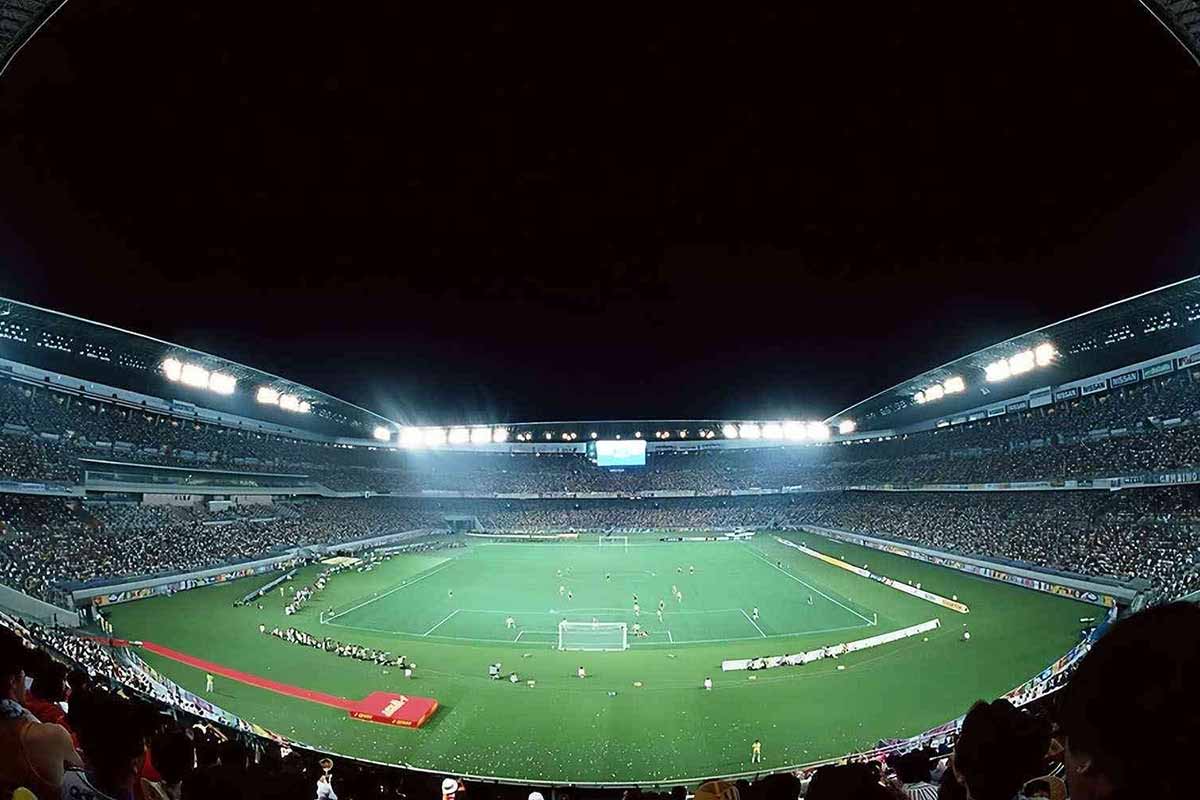
Stadium lighting is one of the toughest applications for any lighting system. It requires extremely high lumen output, tight uniformity control, precise beam aiming, and strong glare reduction to meet competition and broadcast standards.
In stadium projects, high power LED flood lights are mounted on high masts or roof structures and aimed based on detailed lighting simulations. These fixtures are designed to handle wind load, vibration, and long operating hours. Modular designs allow flexible power configurations and make maintenance much easier. With high efficiency and long lifespan, LED flood lights have become the standard choice for modern stadiums.
Airport Lighting
Airports depend on powerful and reliable lighting to keep aircraft and ground operations safe. High power LED flood lights are widely used for aprons, taxiways, terminals, hangars, and perimeter security areas. Clear visibility is critical for pilots, ground crews, and service vehicles working around aircraft.
In these environments, fixtures must resist corrosion, strong winds, and extreme weather. High power LED flood lights with robust housings and sealed designs deliver long-term stability. LEDs also reduce maintenance downtime and energy consumption, which is crucial for airports operating 24/7.
Large Public Square Lighting
Public squares, plazas, and open urban spaces need lighting that balances safety, usability, and visual appeal. High power LED flood lights provide wide-area illumination that supports pedestrian traffic, public gatherings, and nighttime events.
These fixtures can be installed on poles, buildings, or architectural structures to achieve uniform ground lighting while also accenting monuments, landscapes, or nearby architecture. With adjustable optics, light distribution can be precisely controlled to reduce spill into surrounding residential areas. Using LED flood lights, cities can create welcoming, well-lit public spaces without sacrificing energy efficiency or visual comfort.
Across all these applications, high power LED flood lights prove their value by delivering reliable, high-performance lighting that improves safety, visibility, and operational efficiency on a large scale.

Mounting Tips For High Power Flood Lights
From my experience, mounting is what makes or breaks a high power flood light project. Even the best fixture will underperform if the height, angle, or spacing is wrong. A smart mounting plan ensures maximum coverage, controlled glare, and stable performance over the long run.
Choose the Correct Mounting Height
Mounting height has a direct impact on light spread and brightness on the ground. Higher mounting heights give you wider coverage, which works well for stadiums, parking lots, and large public areas. But if you go too high without the right optics, you’ll lose usable light and end up with weak illumination below. Lower mounting heights deliver stronger brightness but cover less area, so spacing becomes much more critical.
In most projects I handle, parking lots are mounted at around 6 to 12 meters, sports fields at 12 to 25 meters, and stadium high-mast systems even higher. The key rule is simple: always match the mounting height to the fixture’s optical design.
Select the Right Beam Angle
Beam angle selection is one of the fastest ways to improve or destroy a lighting layout. Narrow beam angles work best for high mounting positions where light needs to travel farther. Wider beam angles are better for lower heights where you want smooth, even coverage. For perimeter lighting, roadways, and building edges, I almost always recommend asymmetrical optics to push light forward without wasting it behind the fixture.
When beam angle and mounting height are properly matched, you get uniform lighting and often need fewer fixtures overall.
Proper Aiming and Tilt Adjustment
Flood lights should never be mounted flat or aimed randomly. Adjustable brackets exist for a reason. I always set a slight downward tilt to guide light where it’s needed and reduce direct glare into drivers’ or pedestrians’ eyes.
Once installation is done, night-time testing is essential. Fine-tuning the aiming helps eliminate hot spots, shadows, and unnecessary brightness spilling into unwanted areas.
Spacing and Layout Planning
Correct fixture spacing is critical for uniform brightness. If fixtures are spaced too far apart, dark zones appear. If they’re too close, you waste energy and create glare. This is where a proper lighting layout or photometric calculation really pays off.
For large-scale projects, consistent spacing and clean, symmetrical layouts dramatically improve visual comfort and overall lighting performance.
Secure Mounting and Structural Stability
High power flood lights are heavy and constantly exposed to wind, vibration, and harsh weather. The mounting structure must be strong enough to handle both the weight and environmental stress. Poles, walls, and towers should be correctly rated, and all brackets and bolts must be firmly secured.
Using corrosion-resistant materials and vibration-proof hardware increases safety and extends the service life of the entire system.
Electrical Safety and Protection
Electrical safety should never be overlooked. Proper grounding protects both the fixture and the people around it. I also strongly recommend surge protection, especially for outdoor installations where lightning and power fluctuations are common.
Waterproof cable glands, sealed junction boxes, and correct wiring practices are essential to keep the system stable and reduce the risk of early failure.
Professional Installation Recommendation
Because of their power level and installation complexity, high power LED flood lights should always be installed by qualified professionals. Experienced installers ensure safety compliance, correct aiming, and long-term reliability.
When mounted correctly, a high power flood light system delivers exactly what it’s designed for: strong brightness, excellent uniformity, lower maintenance, and dependable performance year after year.

FAQs about High Power LED Flood Lights
Where can outdoor LED flood light fixtures be used?
From my experience, outdoor LED flood light fixtures are built for large, open, and demanding environments. I see them most commonly used in parking lots, logistics yards, ports, sports fields, stadiums, airports, construction sites, industrial plants, and large public squares. Their high lumen output and wide beam coverage make them ideal wherever safety, visibility, and uniform illumination are required across a broad area. Thanks to their weather-resistant design, they operate reliably in rain, wind, dust, and extreme temperatures.
What is the difference between outdoor flood lights and spotlights?
The difference comes down to beam angle and purpose. Flood lights are designed to spread light over a wide area, making them perfect for general illumination and safety lighting. Spotlights use a narrow beam to concentrate light on a specific object or zone, such as signage, statues, or architectural details. Simply put, flood lights focus on coverage and uniformity, while spotlights focus on precision and highlighting.
Do LED flood lights get hot?
Yes, LED flood lights do generate heat, but far less than traditional halogen or metal halide fixtures. High power LED flood lights are engineered with efficient heat sinks and thermal management systems that quickly move heat away from the LED chips. This controlled heat dissipation protects internal components, keeps light output stable, and greatly extends the fixture’s service life.
What is the brightest LED flood light?
The brightest LED flood lights available today can exceed 150,000 lumens per fixture, with some modular, stadium-grade models going even higher. Actual brightness depends on wattage, LED chip efficiency, optical design, and driver quality. These ultra-high-output flood lights are typically used in stadiums, airports, ports, and large industrial facilities where extremely high illumination levels are required.
Can I use your fixtures as a replacement for my old flood lights?
Absolutely. High power LED flood lights are ideal replacements for metal halide, high-pressure sodium, and halogen flood lights. They deliver the same or higher brightness while consuming far less energy. LED upgrades also reduce maintenance costs, eliminate warm-up time, and provide better light quality with improved color rendering and uniformity.
What is 10,000 lumens equivalent to?
In practical terms, a 10,000-lumen LED flood light is roughly equivalent to a traditional 400W halogen or metal halide flood light, depending on the efficiency of the old fixture. The difference is that LEDs achieve this brightness at much lower power, often around 80–100W, which translates directly into energy savings.
How bright is 4000 lumens outdoor?
4000 lumens works well for small outdoor applications such as walkways, entrances, patios, small yards, or residential driveways. It provides clear visibility, but it’s not strong enough for large commercial or industrial areas. For wide-area outdoor lighting, higher lumen outputs are necessary.
Is 1000 lumens bright for outdoor lights?
1000 lumens is suitable for accent lighting, pathways, doorways, or decorative outdoor use. It improves visibility and basic safety in localized areas, but it’s not powerful enough for lighting large outdoor spaces. For parking areas, open yards, or security lighting, I always recommend higher lumen levels.
Conclusions
High power flood lights are essential for large-scale outdoor and commercial lighting projects. With high lumen output, robust construction, and advanced LED technology, they deliver safety, efficiency, and long-term value. From parking lots to stadiums and airports, commercial LED flood lights continue to replace traditional lighting worldwide.
If you are looking for reliable, customizable high power flood lights for sale or need technical support for your project, feel free to contact us directly. Our team is ready to help you choose the right lighting solution.




Leave a Reply
Your email is safe with us.