

Traditional lighting ignores how people actually feel and function, leading to fatigue, poor sleep, and low productivity. Human Centric Lighting solves this by aligning light with our natural biological needs.
Human Centric Lighting is a lighting approach designed around human biology rather than static illumination. It uses intelligent LED systems to adjust brightness and color temperature throughout the day, supporting natural circadian rhythms. Cooler, brighter light enhances alertness and productivity during active hours, while warmer, softer light promotes relaxation and healthy sleep. By aligning artificial light with natural daylight cycles, Human Centric Lighting improves well-being, focus, mood, and energy efficiency in workplaces, homes, healthcare, and educational environments.
If you want lighting that works with people instead of against them, keep reading.
Table of Contents
What Is Human Centric Lighting?
Human Centric Lighting is not just about illumination. It is about designing light around human biology. Our bodies evolved under the natural cycle of daylight and darkness. Traditional artificial lighting breaks this connection by providing static light all day long, regardless of time, task, or environment.
Human Centric Lighting, often implemented through Human Centric LED lighting systems, dynamically adjusts brightness and color temperature to match the time of day. Cooler, brighter light supports alertness and focus during working hours. Warmer, softer light promotes relaxation and prepares the body for rest later in the day.
From my experience working with commercial and industrial clients, Human Centric Lighting is increasingly requested not because it looks better, but because it helps people feel better and work better. Whether delivered through a Human Centric Light Bar or an intelligent lighting control system, the goal is always the same: put humans back at the center of lighting design.
How Does Human-Centric Lighting Work?
Human-Centric Lighting works by aligning artificial light with how the human body naturally responds to daylight. I like to think of it as lighting that follows your biology instead of forcing your body to adapt to static, unnatural light. It combines advanced LED fixtures, intelligent drivers, sensors, and control systems to dynamically adjust both brightness and color temperature throughout the day.
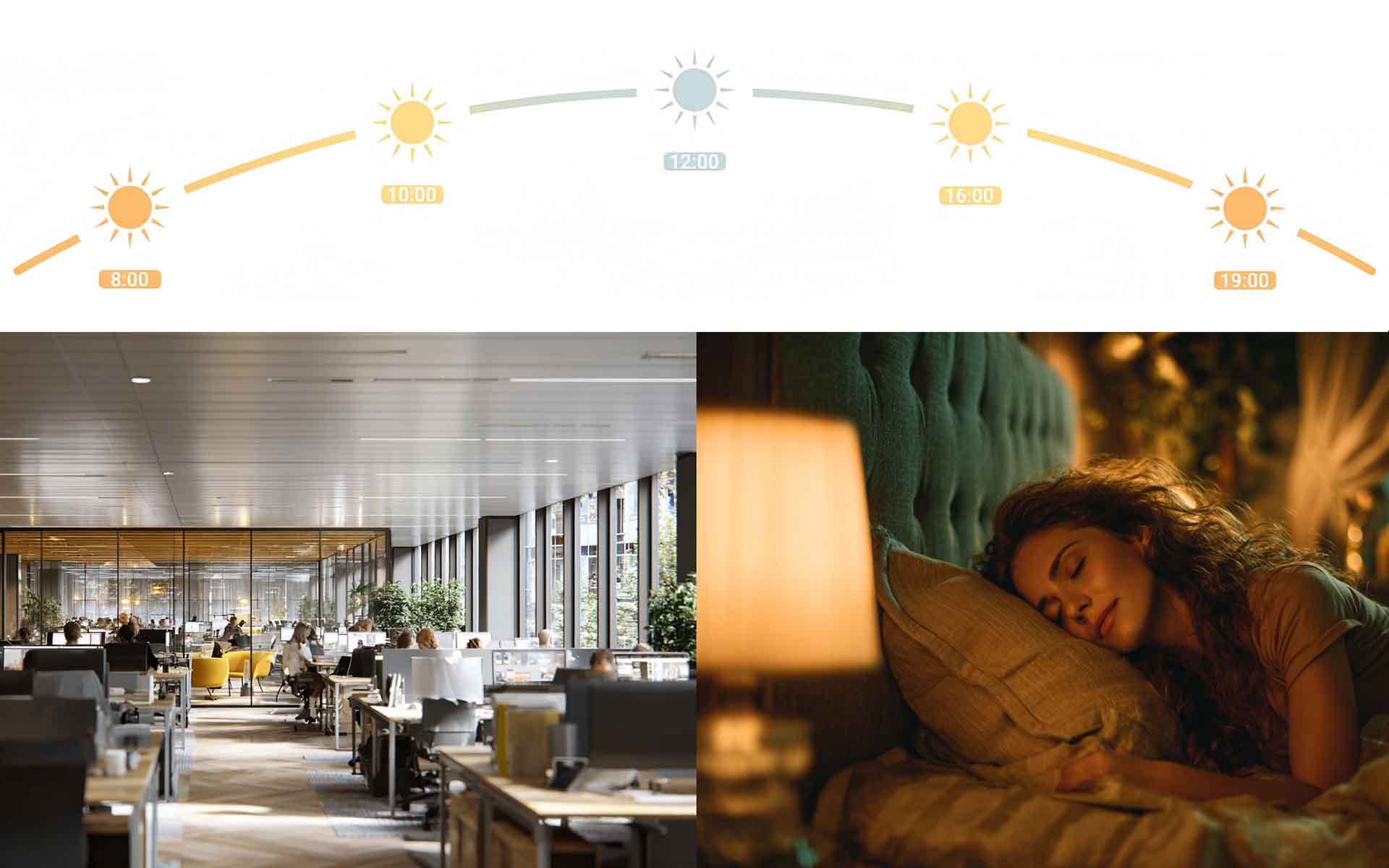
In the morning, Human-Centric Lighting delivers brighter light with a cooler, daylight-like color temperature. This blue-enriched light signals the brain to suppress melatonin production and increase alertness. It helps people wake up faster, feel more focused, and start the day with higher energy levels. In offices, classrooms, and healthcare settings, this morning lighting phase supports concentration, reaction speed, and mental clarity.
As the day progresses, the system gradually shifts. Light intensity is reduced slightly, and color temperature moves toward a more neutral white. This transition supports sustained productivity without overstimulation. Unlike traditional lighting that stays the same all day, Human-Centric LED lighting adapts in small, almost unnoticeable steps, which keeps the visual environment comfortable and natural.
In the late afternoon and evening, the lighting becomes warmer and dimmer. Warmer light contains less blue wavelength, which allows the body to naturally prepare for rest. This helps regulate circadian rhythms, reduces eye strain, and supports healthier sleep patterns. In environments such as hospitals, senior living facilities, and residential spaces, this evening phase is especially important for relaxation and recovery.
What really separates Human-Centric Lighting from conventional systems is intelligence and responsiveness. These systems often integrate with building management platforms and use occupancy sensors, daylight sensors, and time-based controls. Lighting responds to real conditions—who is present, how much daylight is available, and what time it is—rather than fixed assumptions. From my experience, this adaptability is where the real value lies. The result is lighting that feels natural, supports human health, and improves overall well-being while still delivering energy efficiency and precise control.
What Is a Circadian Rhythm?
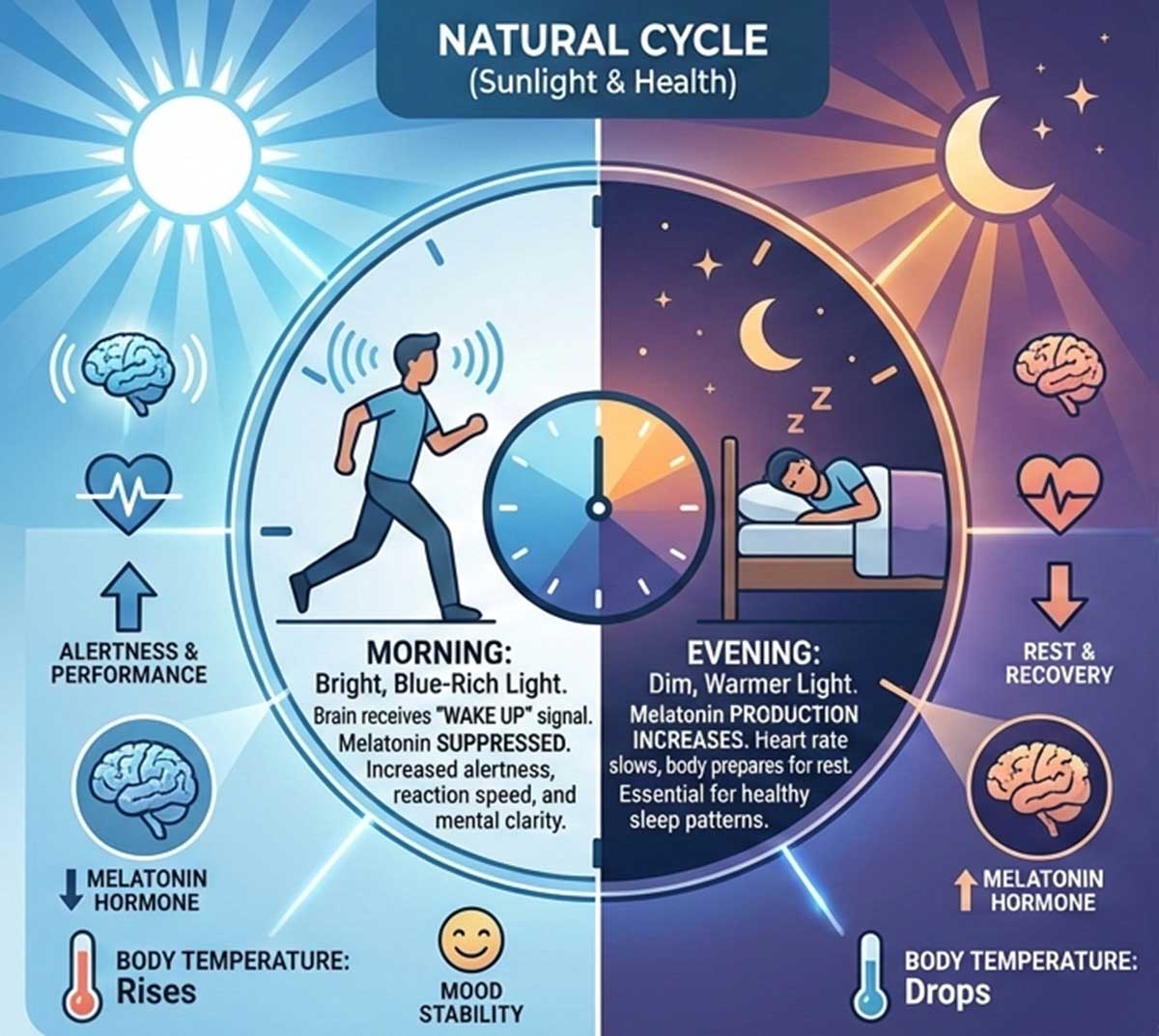
The circadian rhythm is the body’s built-in 24-hour biological clock. It governs far more than just sleep. From my experience working with Human Centric Lighting projects, I’ve learned that this internal clock influences almost everything—sleep and wake cycles, hormone release, body temperature, mood stability, alertness, and overall cognitive performance.
Light is the strongest external signal affecting the circadian rhythm. When our eyes are exposed to bright, blue-rich light—especially in the morning—the brain receives a clear “wake up” signal. This suppresses melatonin, the hormone responsible for sleep, and increases alertness, reaction speed, and mental clarity. This is why natural daylight makes us feel awake and energized.
As light levels drop and color temperature becomes warmer, the opposite happens. Melatonin production increases, heart rate slows, and the body begins preparing for rest and recovery. This natural transition is essential for healthy sleep patterns and long-term well-being.
The problem is that modern indoor environments often ignore this biological process. Traditional lighting systems deliver the same brightness and color temperature all day and night. From offices and classrooms to hospitals and homes, this constant lighting confuses the body’s internal clock. Over time, this disruption can lead to poor sleep quality, chronic fatigue, stress, reduced focus, and lower productivity.
This is exactly why understanding circadian rhythm matters so much in lighting design. Circadian lighting and Human Centric Lighting are built on the idea that light should change throughout the day, just like natural daylight does. When lighting supports the circadian rhythm instead of fighting it, people feel better, think more clearly, and perform at a higher level. For me, this concept is the foundation of truly human-focused lighting design.
How Does Circadian Lighting Work?
Circadian lighting is a key component of Human Centric Lighting. It focuses specifically on supporting the circadian rhythm through controlled light exposure.
Circadian lighting systems adjust both intensity and spectrum. During the day, they emphasize blue-enriched light to stimulate alertness. In the evening, they reduce blue wavelengths and shift toward warmer tones. This helps the body transition naturally toward rest.
In practical applications, circadian lighting is often implemented in offices, healthcare facilities, and schools. In these environments, lighting directly affects performance, recovery, and learning outcomes. Proper circadian lighting design requires careful planning, high-quality LED sources, and reliable control systems.
What Is a Circadian Rhythm and How Does Circadian Lighting Work
What Are the Benefits of Human Centric Lighting?
From my experience, Human Centric Lighting isn’t a “nice-to-have.” It delivers real, measurable benefits that affect how people work, feel, and function every single day. When lighting aligns with human biology, everything improves—from performance to well-being to energy efficiency.
Enhanced Productivity and Focus
People simply work better under lighting that supports their natural rhythms. Brighter, cooler light during active hours improves alertness, concentration, reaction time, and accuracy. I’ve seen teams stay focused longer, make fewer mistakes, and avoid that mid-afternoon crash once Human Centric Lighting is properly implemented. It creates an environment where the brain is naturally primed to perform, not forced to fight fatigue.
Improved Employee Well-being and Health
Traditional static lighting puts constant strain on the eyes and nervous system. Human Centric Lighting reduces that strain by delivering the right light at the right time. Headaches decrease, eye fatigue drops, and overall stress levels are lower. Over time, people feel less drained at the end of the day, which directly improves long-term health and job satisfaction—especially in offices, factories, and control rooms with long shifts.
Energy Efficiency and Sustainability
One of the biggest surprises for many clients is that Human Centric Lighting doesn’t mean higher energy use. In fact, it often reduces it. Advanced LED technology combined with smart controls ensures lights are only as bright as needed, when needed. Daylight harvesting, dimming schedules, and occupancy sensing cut waste dramatically. You get better lighting quality while lowering operating costs and environmental impact.
Improves Sleep Quality
Lighting doesn’t stop affecting us when we leave work. Exposure to harsh, blue-heavy light late in the day disrupts sleep cycles. Human Centric Lighting reduces blue wavelengths in the evening and shifts toward warmer tones, helping the body produce melatonin naturally. Better sleep leads to better mood, stronger immunity, and higher performance the next day. This benefit alone makes Human Centric Lighting a game changer.
Boosts Mood and Emotional Comfort
Light has a powerful emotional impact. Balanced lighting that changes naturally throughout the day reduces stress and creates spaces that feel more comfortable and human. I’ve seen workplaces become calmer, healthcare environments feel more supportive, and learning spaces feel more engaging simply by improving how light interacts with people. When lighting feels natural, people feel better—plain and simple.
In short, Human Centric Lighting turns lighting from a basic utility into a performance and wellness tool. When done right, it supports people first—and the business benefits follow naturally.
Where to Use Human Centric Lighting
From my experience, Human Centric Lighting is not limited to one industry or building type. Anywhere people live, work, learn, heal, or even where animals are raised, lighting has a biological impact. That’s why Human Centric Lighting can be applied across a wide range of environments.
Office
Offices are one of the most effective places to implement Human Centric Lighting. I’ve seen firsthand how dynamic lighting improves focus in the morning, sustains energy through the afternoon, and reduces burnout by the end of the day. In open-plan offices, it helps balance uniformity and comfort. In offices with limited natural daylight, it becomes even more valuable by replacing the missing daylight cues that employees’ bodies rely on. The result is healthier staff, better productivity, and fewer complaints about fatigue and eye strain.
Home
At home, Human Centric Lighting turns everyday spaces into healthier living environments. During the day, brighter and cooler light supports alertness for working, studying, or household tasks. In the evening, warmer and dimmer lighting helps the body unwind naturally. I especially recommend it for home offices, bedrooms, and living rooms, where lighting directly affects sleep quality, relaxation, and daily routines.
Education
In schools and universities, lighting has a direct impact on learning performance. Human Centric Lighting helps students stay attentive during lessons and reduces mental fatigue over long school days. I’ve seen how circadian-friendly lighting improves concentration, behavior, and overall classroom atmosphere. For teachers, it also reduces visual strain and supports energy levels throughout the day.
Health Care Facility
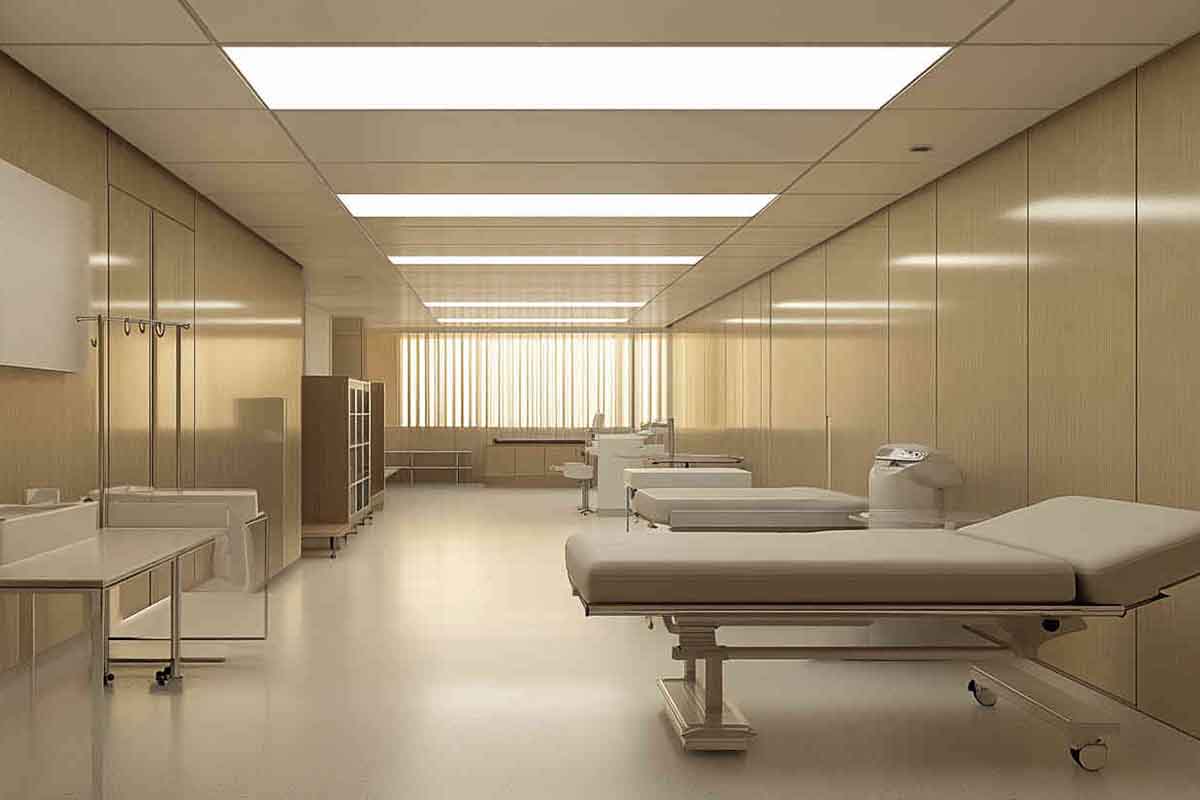
Healthcare is one of the most powerful use cases for Human Centric Lighting. Patients recover better in environments that respect natural light cycles, supporting sleep, mood, and healing. Staff working long or night shifts benefit from lighting that helps maintain alertness without overstimulation. In hospitals, clinics, and care homes, Human Centric Lighting improves both patient outcomes and staff well-being.
Industry
In industrial environments, lighting is directly linked to safety and performance. Human Centric LED lighting helps workers stay alert during critical operations while reducing stress in demanding conditions. I’ve seen it make a real difference in control rooms, production floors, and facilities that operate around the clock. Better lighting means fewer errors, improved safety, and higher productivity.
Animal Welfare
Lighting doesn’t just affect humans—it strongly influences animals as well. In agriculture and animal care facilities, Human Centric Lighting that mimics natural daylight cycles improves animal health, behavior, and productivity. Whether it’s livestock, poultry, or research environments, proper lighting supports natural rhythms, reduces stress, and leads to better overall outcomes.
In short, wherever biology matters—and it almost always does—Human Centric Lighting belongs. It’s one of the few technologies that improves performance, health, and efficiency at the same time.
Should I Buy a Human Centric Light Fixture?
If your goal is simply to illuminate a space, traditional lighting may be sufficient. But if you care about health, productivity, and long-term value, Human Centric Lighting is worth serious consideration.
Human Centric Lighting solutions and complete Human Centric LED lighting systems are ideal for offices, schools, healthcare facilities, and modern homes. The initial investment is higher than basic lighting, but the return comes through improved performance, reduced absenteeism, energy savings, and better user satisfaction.

Conclusions
Human Centric Lighting represents a shift from lighting spaces to lighting people. By aligning artificial light with natural biological rhythms, it improves health, productivity, mood, and sustainability. Whether applied in offices, homes, or industrial environments, Human Centric LED lighting delivers real, measurable value.
If you are considering Human Centric Lighting or need a customized LED solution, contact us today. We are ready to help you design lighting that truly works for people.


Leave a Reply
Your email is safe with us.