

Poor lighting makes spaces feel cramped, outdated, and uncomfortable. Left unchecked, it reduces productivity, hurts aesthetics, and lowers property value. Recessed lighting offers a clean, modern solution that fixes these problems efficiently.
Recessed lighting is a modern, space-saving solution that sits flush with the ceiling to deliver clean, focused illumination without visual clutter. In my experience working with contractors and lighting professionals, it remains one of the most versatile choices for residential and commercial projects alike. When paired with LED technology and designed correctly, recessed lighting offers excellent efficiency, long lifespan, and flexible control. The key isn’t the fixture itself—it’s smart planning, proper spacing, and professional installation that make recessed lighting truly perform.
If you want to understand whether recessed lighting is right for your project, let’s break it down step by step.
Table of Contents
What is Recessed Lighting?
Recessed lighting—also known as can lights or downlights—is one of the cleanest and most effective lighting solutions. These fixtures are installed directly into the ceiling, sitting flush so they don’t stick out like traditional mounted lights. The light is directed downward or angled for precision, making it perfect for general illumination, task lighting, or creating a sleek accent effect.
Having worked closely with lighting wholesalers, contractors, and engineers, I can confidently say recessed lighting is a must-have in modern buildings. Whether it’s for offices, schools, hospitals, retail environments, or homes, it fits seamlessly. When you combine it with LED technology, you get high efficiency, longer lifespan, and fantastic light quality without breaking the bank.
But here’s the thing: recessed lighting isn’t a “set it and forget it” kind of installation. It requires a bit of planning. The housing has to fit above the ceiling, and the depth, insulation, and spacing all come into play. When designed and installed right, it offers flexibility and style without sacrificing performance or aesthetics.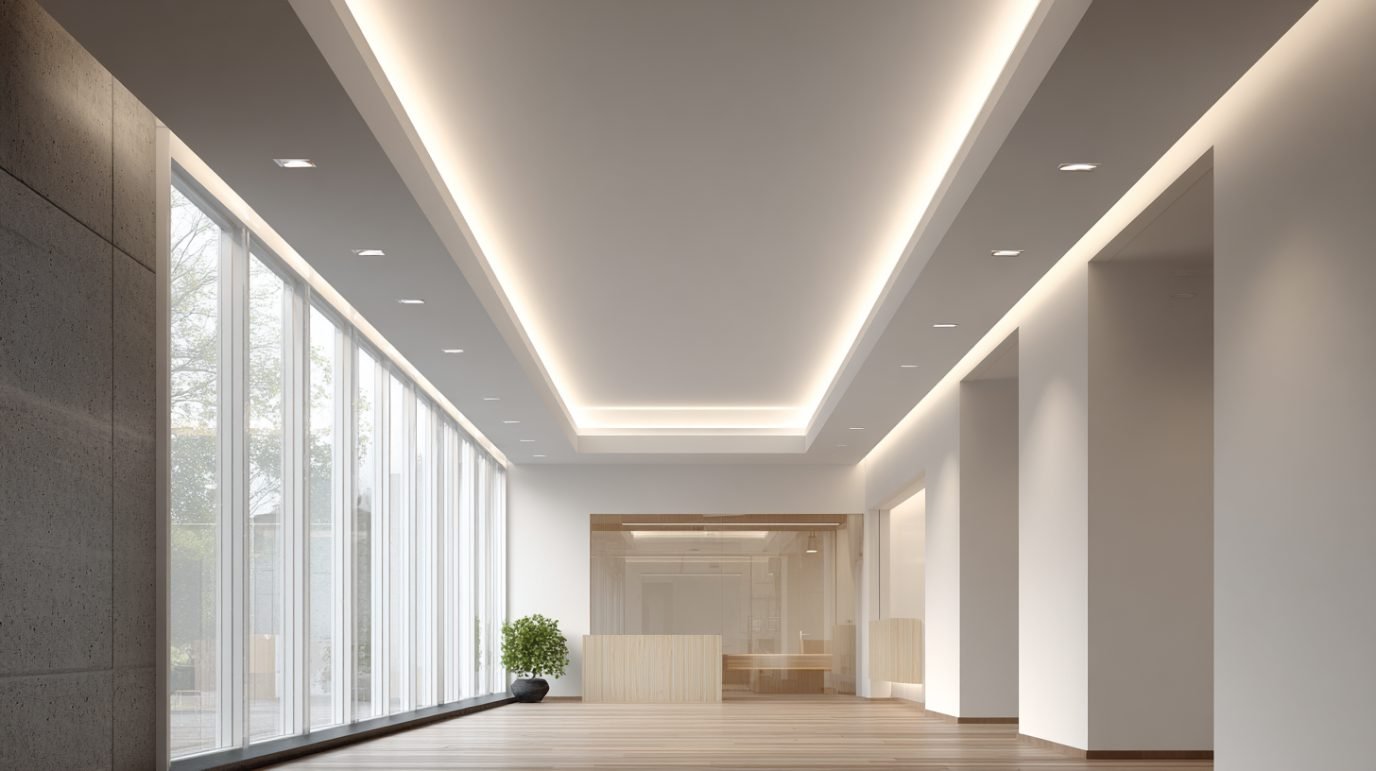
Is Recessed Lighting Outdated?
I hear this question all the time from buyers and designers, so let me be direct: recessed lighting is not outdated. Bad recessed lighting design is. The problem was never the concept—it was how it was executed.
Back in the day, recessed fixtures depended on halogen or incandescent bulbs. They ran hot, wasted energy, and caused real maintenance headaches. That’s where the “outdated” label came from. Today, most recessed lighting replacement projects use modern LED technology, and that completely changes the game.
Modern recessed LED fixtures are slim, efficient, and flexible. You get adjustable beam angles, tunable color temperatures, and full smart control integration. Used correctly, recessed lighting works beautifully in minimalist interiors and high-end architectural spaces alike. The real secret isn’t the fixture—it’s choosing the right model, spacing it properly, and dialing in the correct color temperature.
What Are the Common Problems with Recessed Lights?
From what I’ve seen on real projects, recessed lighting only becomes a problem when the design or installation is rushed. One of the biggest mistakes is poor spacing. Spread fixtures too far apart and you end up with dark patches. Pack them too tightly and you create glare, visual discomfort, and unnecessary energy waste.
Heat was another major issue with older recessed systems. Traditional fixtures trapped heat inside the ceiling, shortening bulb life and raising safety concerns. This is largely a thing of the past. Modern LED recessed lighting runs much cooler and uses proper heat-sink design to manage thermal load safely.
Housing selection is another area where mistakes happen. Using non-IC housings near insulation can break code and create risks. Bathrooms and exterior areas demand moisture-rated housings. In my experience, most recessed lighting problems don’t come from the product—they come from shortcuts during installation.
Can I Put a Regular Light Bulb in a Recessed Light?
Technically speaking, some older recessed housings will accept a standard light bulb—but in practice, it’s almost never the right move. Regular bulbs don’t sit correctly, throw light unevenly, and generate more heat than a recessed fixture is designed to handle.
Modern recessed lighting is built around integrated LED modules or LED-rated bulbs for a reason. They deliver controlled beam patterns, longer service life, and far better efficiency. Dropping a standard bulb into a recessed fixture usually undermines everything recessed lighting is meant to do.
On commercial and industrial projects, I don’t leave this to chance. I always specify purpose-built recessed LED fixtures. They deliver predictable performance, meet safety standards, and dramatically reduce maintenance over the life of the installation.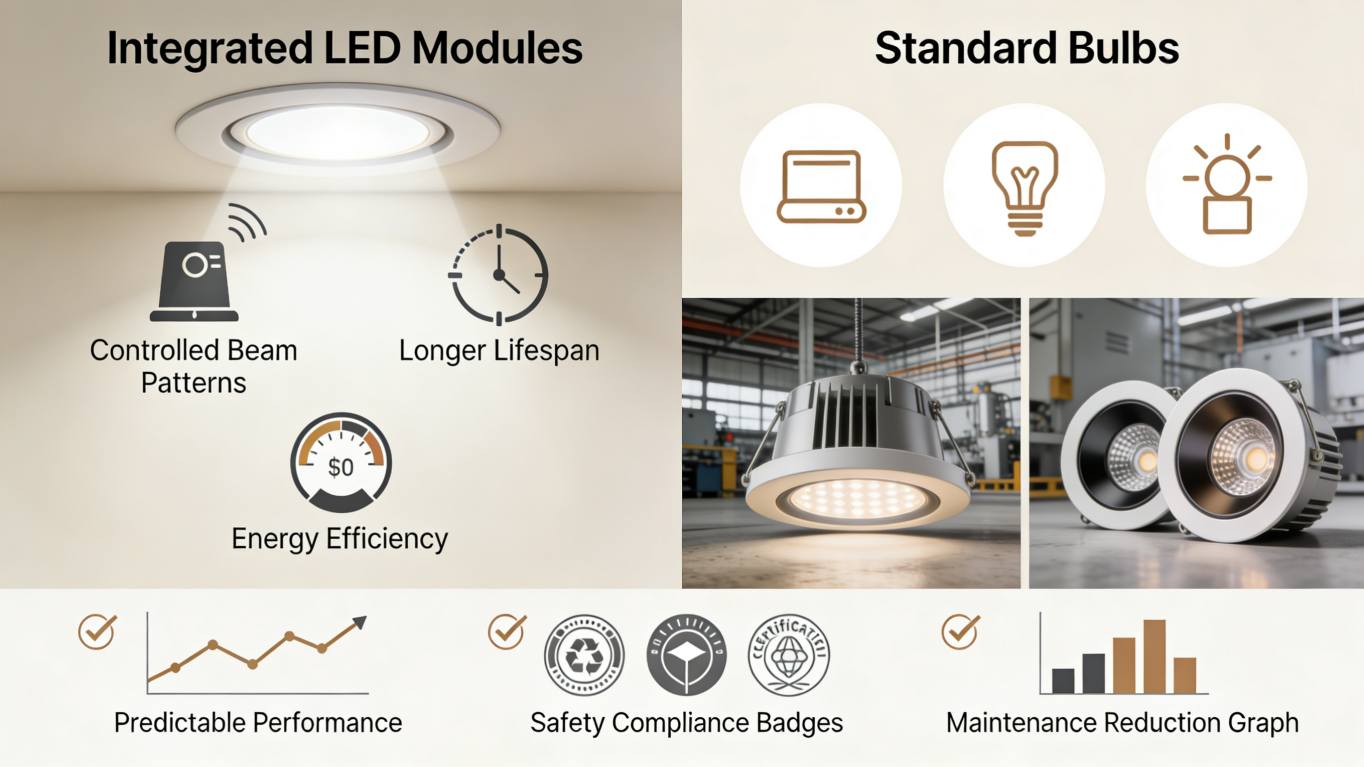
What Kind of Light Bulbs Go in Recessed Lights?
In real-world projects, recessed lights usually take LED modules, GU10 bulbs, or PAR-rated LED bulbs—it all depends on the housing. These days, I see integrated LED recessed lights used the most. They combine the fixture and light source into one unit, which means fewer compatibility issues and more consistent performance.
When I help clients choose LED bulbs for recessed lighting, I always look at beam angle and color temperature first. Narrow beams are great for accent lighting, while wider beams handle general illumination. Lumens, CRI, and dimmer compatibility are non-negotiables if you want lighting that actually performs the way it should.
For upgrade jobs, retrofit LED kits are the go-to solution. They drop right into existing housings and instantly convert outdated recessed lights into efficient, modern LED systems—no need to tear up the ceiling.
Who Should Install Recessed Lighting?
From my experience, recessed lighting should ideally be installed by a qualified electrician or professional contractor. These fixtures sit inside the ceiling, so mistakes can lead to wiring hazards, insulation conflicts, or failed inspections.
In commercial and industrial projects, lighting engineers are critical. They handle layout planning, spacing, and compliance with local codes. As a factory-side supplier, I’ve seen firsthand that professional installation saves time, money, and headaches down the line.
DIY installation can work for small residential projects, but only if you understand electrical safety and local regulations. When in doubt, bringing in a pro is always cheaper than fixing a bad install later.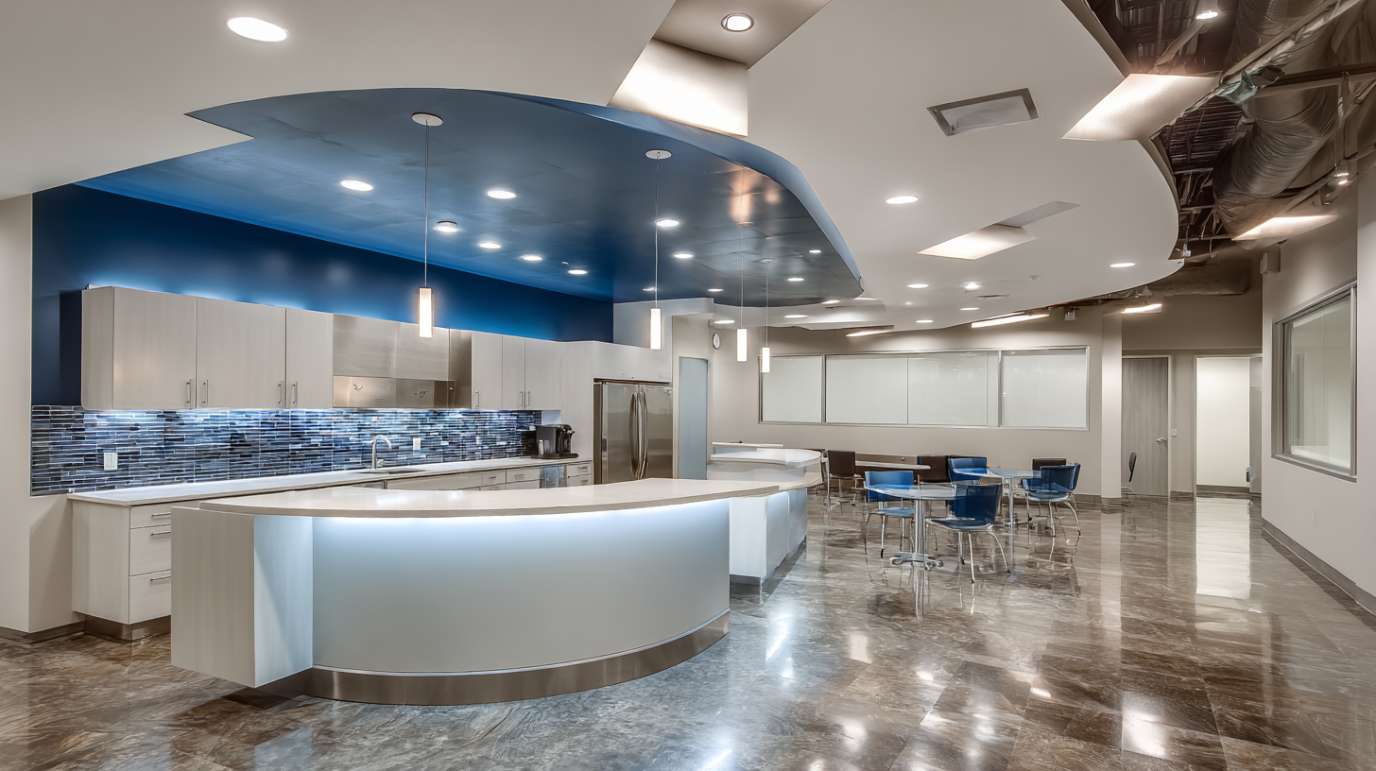
Types & Components
Housing
When it comes to recessed lighting, the housing is the backbone. It’s the part that gets tucked into the ceiling, holding the light source and wiring. You’ve got two main options here: IC-rated (for insulation contact) and non-IC-rated versions, plus new-construction and remodel types. Choosing the right housing isn’t just about fitting—it’s about safety, efficiency, and performance. If you pick the wrong one, you’re looking at potential issues down the road, so don’t skimp here.
Trim
The trim is what’s visible when you look up at the light. It impacts everything from glare control to beam shape and overall aesthetics. There are a few different styles to choose from: baffle trims (good for reducing glare), reflector trims (great for more light output), and adjustable gimbal trims (for flexibility). The trim you pick will affect the comfort and functionality of the room, so choose wisely based on your needs.
Bulbs / LEDs
Here’s where the magic happens—the light source. These days, integrated LEDs are the go-to. Why? They’re energy-efficient, last longer, and eliminate the need for constant bulb changes. With integrated LEDs, you get all the performance with none of the hassle. It’s about cutting down on maintenance and delivering superior lighting with minimal effort.
Configurations
Recessed lights come in all shapes and sizes—literally. Whether you need fixed, adjustable, wall-wash, or directional lighting, there’s a configuration for every job. Fixed lights give you steady, even illumination, while adjustable ones let you direct light where it’s needed. Wall-wash options create a soft, even glow, and directional lights help you highlight specific features or areas. Depending on what you’re trying to achieve, the right configuration will get the job done with precision.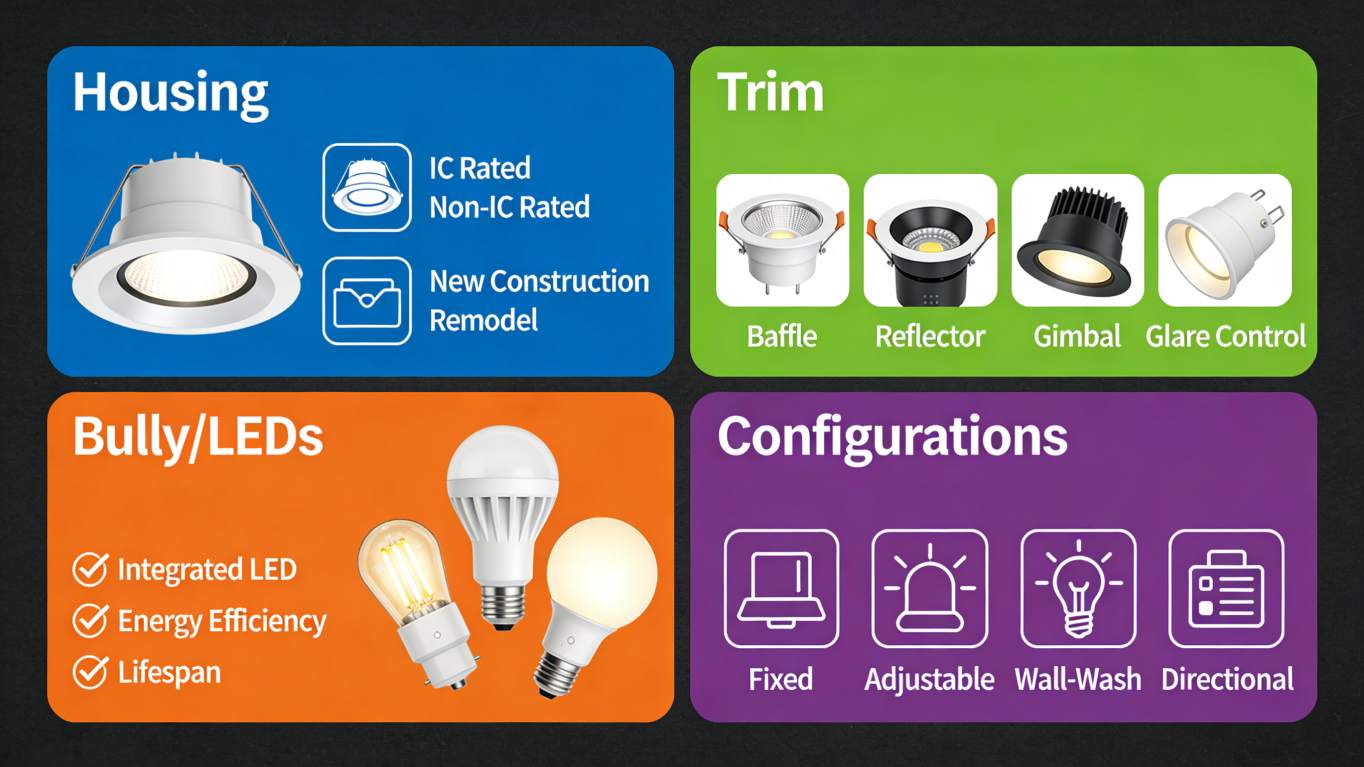
What Are the Benefits of Recessed Lighting?
Sleek, Space-Saving Design
Recessed lighting is a game-changer when it comes to creating a clean, modern look. No bulky fixtures hanging down—just smooth, uninterrupted ceiling lines. This makes a space feel bigger and more open, especially in areas with lower ceilings. It’s a simple way to visually expand a room without any extra effort.
Versatile Lighting Options
One of the best things about recessed lighting? It’s incredibly versatile. Whether you need ambient light for the whole room, task lighting for focused areas, or accent lighting to highlight architectural features, recessed lights can do it all. With a well-thought-out layout, you can mix and match to create the perfect lighting design for any space.
Enhanced Aesthetic Appeal
Here’s the real secret: when you hide the lighting, it lets the room’s design take center stage. Recessed lighting is the choice of top designers because it lets the architecture and décor shine. It’s ideal for modern, high-end spaces where the goal is subtle elegance, not distracting fixtures.
Improved Light Distribution
When installed properly, recessed lights provide even, consistent lighting across the entire space—no more harsh shadows or uneven brightness. This is particularly important in workspaces, classrooms, or commercial settings where you want optimal visibility and comfort. It’s lighting that works for you, not against you.
Energy Efficiency (Especially LED)
If you’re looking for efficiency, recessed LEDs are the way to go. They use far less energy than traditional bulbs, while still providing the same or even better brightness. That means lower energy bills, and the added bonus of supporting your sustainability goals. It’s a win-win situation.
Increased Perceived Ceiling Height
Recessed lights are installed flush with the ceiling, which gives the illusion of more height. This makes rooms feel less cramped and more open. It’s a simple lighting trick, but it’s powerful enough to transform how you experience the space.
Choosing & Using Recessed Lighting
Size
When selecting recessed lights, size matters. Smaller fixtures are perfect for residential spaces or accent lighting, where you don’t need overpowering brightness. But if you’re lighting a commercial space, larger fixtures will provide the necessary illumination for the area. Think about the space you’re working with and pick fixtures that fit both the size and function of the room.
Color Temperature (CCT)
The color temperature you choose makes all the difference in the feel of the space. Warm white light creates a relaxed, cozy atmosphere—ideal for living rooms or bedrooms. On the other hand, neutral or cool white light is best for areas where focus and productivity are key, like kitchens or offices. Picking the right CCT ensures the lighting works for its intended purpose and enhances user comfort.
Dimming
Dimmable recessed lights are an absolute game-changer. They let you control the mood and brightness levels while saving energy when full illumination isn’t necessary. Just make sure that your drivers, controls, and fixtures are compatible. Having dimming capabilities means you can adapt the lighting for every occasion, from bright and focused to soft and ambient.
Placement
Placement is everything when it comes to recessed lighting. It’s not just about slapping lights in the ceiling and calling it a day. Proper spacing, alignment with walls, and the distance between fixtures all play a critical role in how well the lighting performs. Professional design principles should be followed to ensure the light is distributed evenly and effectively across the space.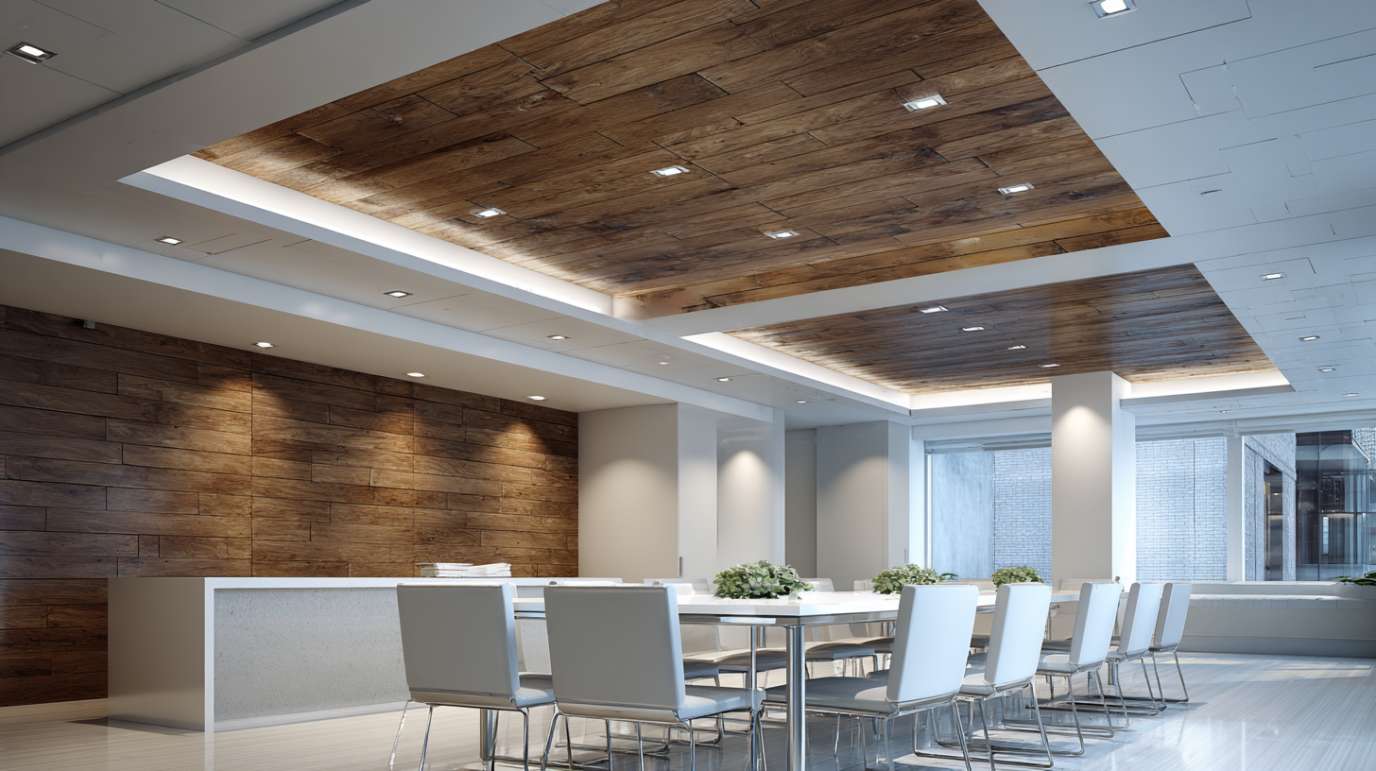
Conclusion
Recessed lighting delivers clean design, efficient performance, and unmatched versatility when done right. With modern LED technology and proper installation, it remains one of the smartest lighting choices for both residential and commercial projects. If you’re planning recessed lighting installation or replacement and want reliable, customizable LED solutions, contact us at Logos Lighting and let’s build the right lighting system together.



Leave a Reply
Your email is safe with us.