

Poor stairway lighting causes trips, falls, and constant safety complaints. When stairs are dark or unevenly lit, accidents increase and properties feel cheap. The right lighting strategy eliminates risks and upgrades both safety and design.
A well-lit stairway blends safety with elegance. Instead of relying on harsh overhead brightness, effective stair lighting uses carefully placed, low-glare LED solutions to guide movement and highlight each step. By combining uniform illumination, proper fixture placement, and the right color temperature, stairways become easier to navigate, visually comfortable, and architecturally appealing—transforming a high-risk transition area into a confident, intuitive pathway.
Let me walk you through everything you need to know about stair lighting so you can make confident decisions.
Table of Contents
How to illuminate stairway?
When illuminating a stairway, the primary goal is safety combined with visual comfort. Stairways are high-risk transition areas where people move between levels, often while distracted or carrying items. Good lighting ensures that every step edge, riser, and landing is clearly visible at all times, reducing the risk of slips and falls.
Effective stairway lighting focuses on direction and placement rather than sheer brightness. Light should guide movement naturally instead of shining directly into the eyes. Side-mounted lighting, low-level wall lights, or illumination integrated into the stair structure works best. Lighting placed at eye level or overhead without proper shielding can cause glare, which is especially dangerous on stairs.
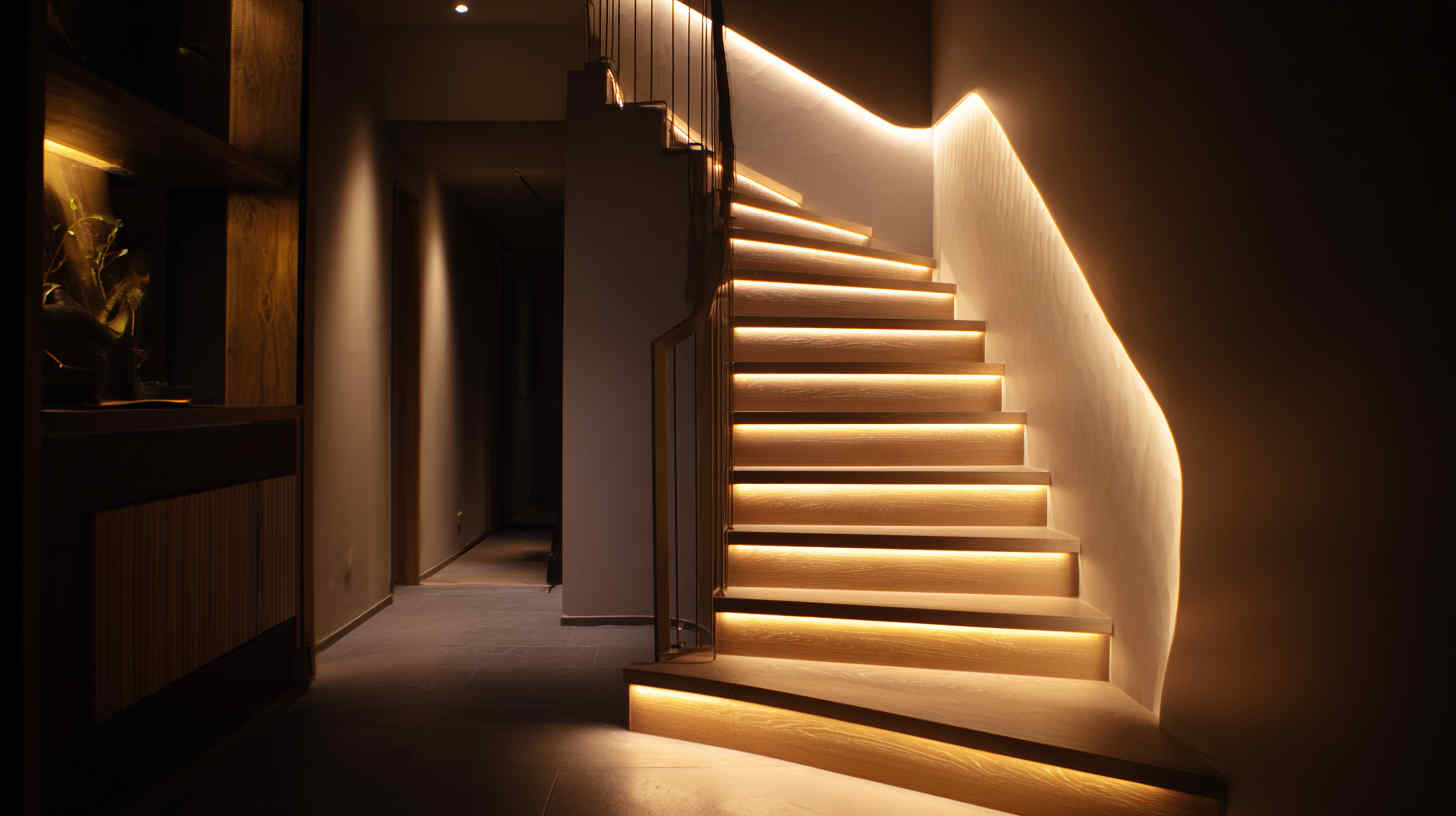
For indoor stairways, LED step lights installed in risers or side walls provide consistent visibility for each step. Recessed wall lights placed 150–300 mm above each tread create soft, directional light that highlights depth and height differences. LED strip lights installed under stair nosings or handrails add a modern look while clearly defining each step edge. Ceiling downlights can be used, but they should be carefully spaced and paired with diffusers to avoid harsh shadows.
Outdoor stairways require fixtures designed to withstand moisture, dust, and temperature changes. Outdoor LED step lights for concrete or stone stairs are commonly recessed into risers or side walls. LED bulkhead lights and low-level bollard-style fixtures work well for garden steps and exterior staircases. All outdoor fixtures should have appropriate weatherproof ratings and sealed housings to ensure long-term reliability.
Uniform lighting is essential. Avoid designs where some steps are brightly lit while others remain dim. Consistent light levels across the entire stairway help the eye adapt naturally and maintain depth perception. A target of soft, even illumination is more effective than high-intensity point lighting.
Motion sensor lighting is a practical addition, especially for residential or low-traffic areas. Sensors automatically activate lights when someone approaches, improving safety while reducing energy use. In commercial or public buildings, stair lighting should remain on continuously during operating hours to meet safety requirements.
Color temperature also plays a role. Warm white light creates a welcoming feel in residential stairways, while neutral white improves clarity in commercial or public spaces. Regardless of the setting, stairway LED lighting should combine proper placement, controlled brightness, and durable fixtures to create a safe, comfortable, and visually intuitive path of movement.
Types of stair lighting?
Choosing the right type of stair lighting depends on the environment, how frequently the stairs are used, safety requirements, and the overall design style. Different staircases serve different purposes, so selecting the appropriate lighting type ensures both functionality and visual appeal. Below are the most effective and commonly used stair lighting options.
LED Vapor Lights
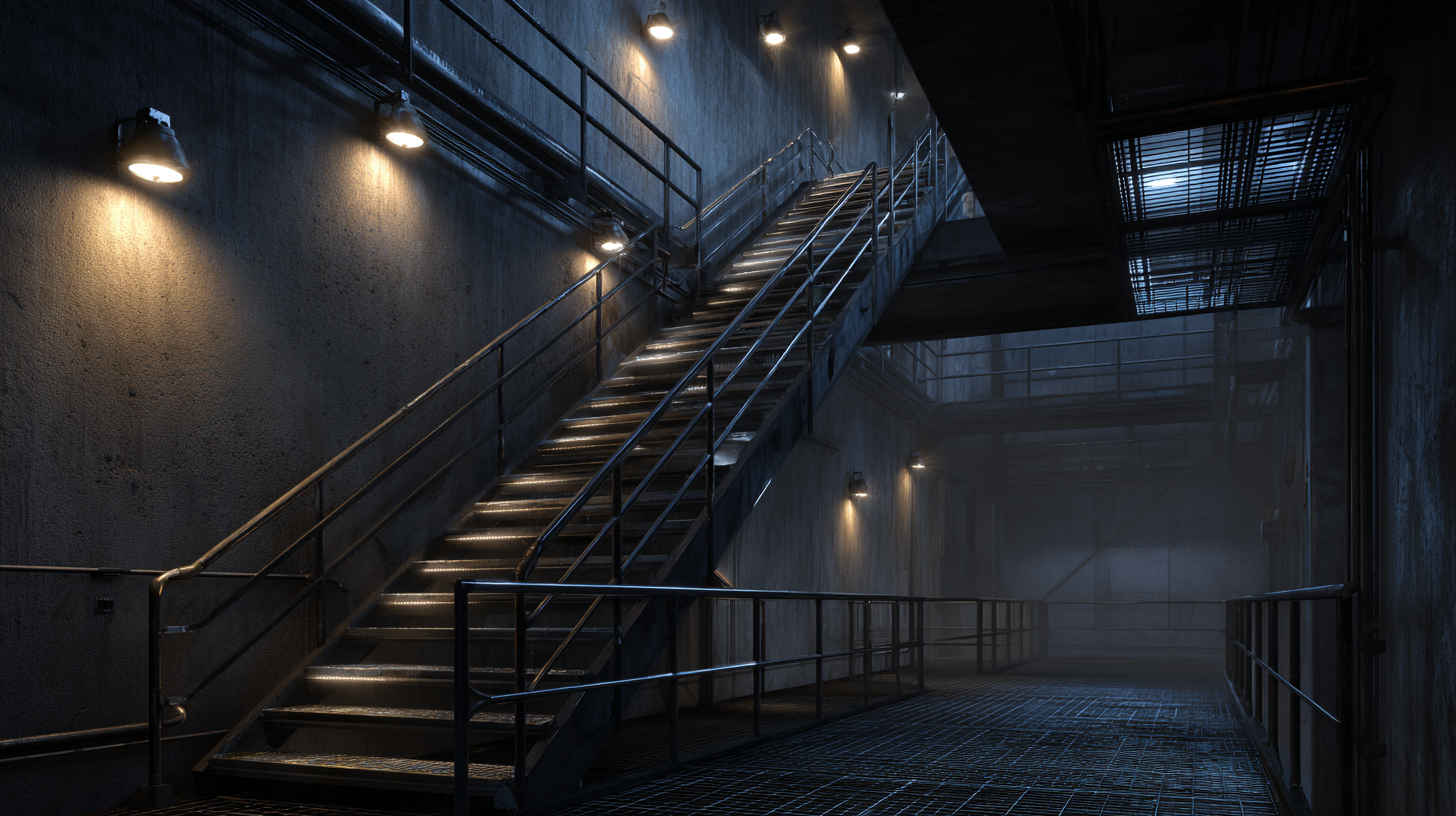
LED vapor lights are fully sealed fixtures designed to withstand moisture, dust, and physical impact. They are especially suitable for industrial stairwells, parking garages, basements, service corridors, and outdoor staircases exposed to rain or humidity. Their rugged construction makes them reliable in environments where standard fixtures may fail.
These lights provide wide, uniform illumination that covers steps, landings, and surrounding areas evenly. Because of their long lifespan and resistance to harsh conditions, LED vapor lights are a practical solution for factories, warehouses, and exterior stair lighting where safety and durability are top priorities.
LED Bulkhead Lights
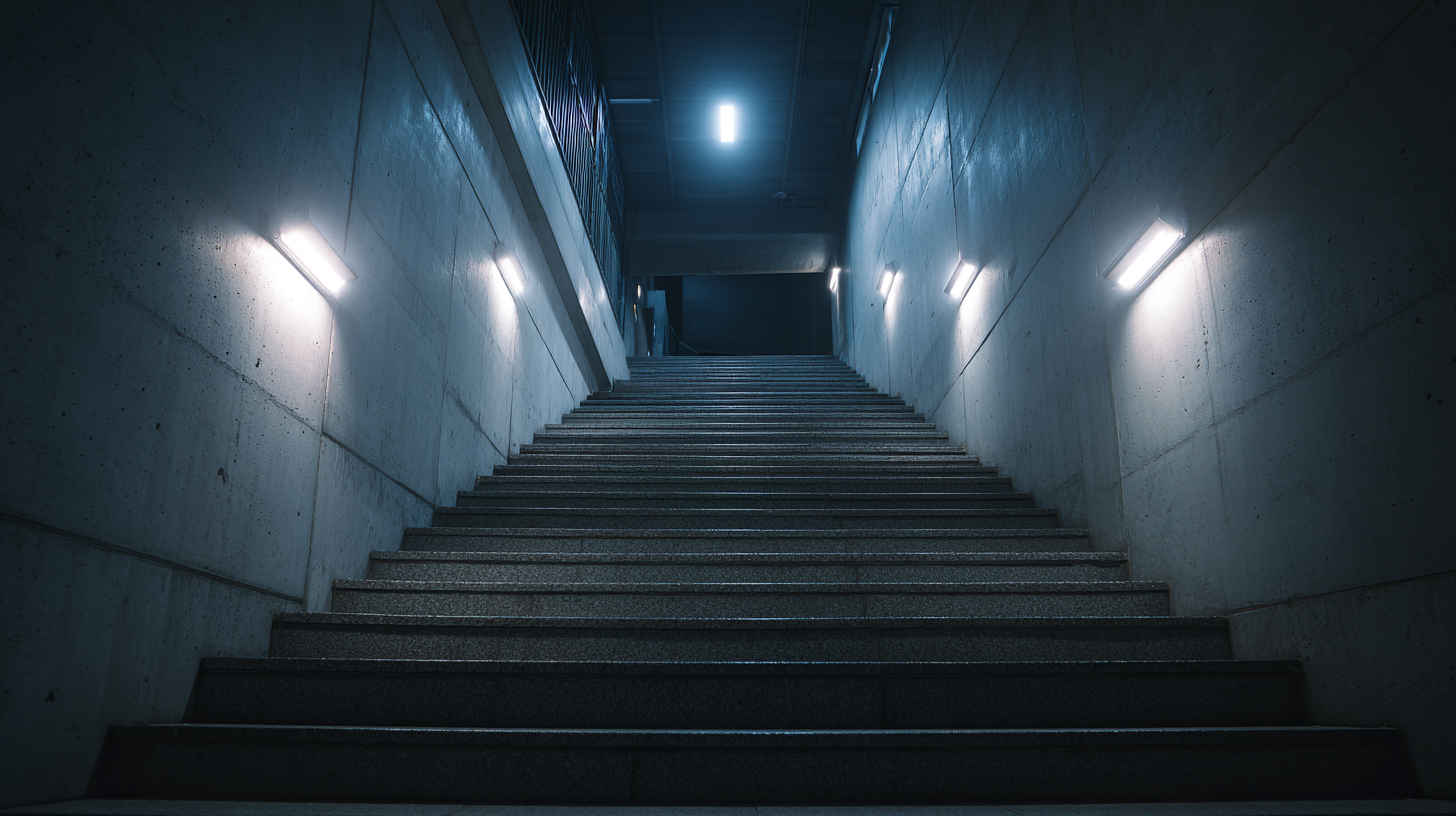
LED bulkhead lights are compact, wall-mounted fixtures commonly used in stairwells, corridors, and building entrances. Their solid housing and protective covers make them suitable for both indoor and outdoor stair lighting applications.
Bulkhead lights distribute light evenly across stair treads and landings, reducing shadows and improving visibility. Many models feature vandal-resistant designs and high ingress protection ratings, making them ideal for public buildings, apartment complexes, schools, and emergency staircases where reliability and security are essential.

LED Step Lights
LED step lights are one of the most effective solutions for precise, low-level stair lighting. These fixtures are installed directly into stair risers or adjacent walls, providing focused illumination exactly where foot placement occurs.
They significantly improve safety by clearly defining each step without producing glare. Under-tread or side-mounted step lights also create a clean, modern visual effect, making them popular in residential homes, hotels, theaters, and contemporary commercial interiors.
LED Strip Lights
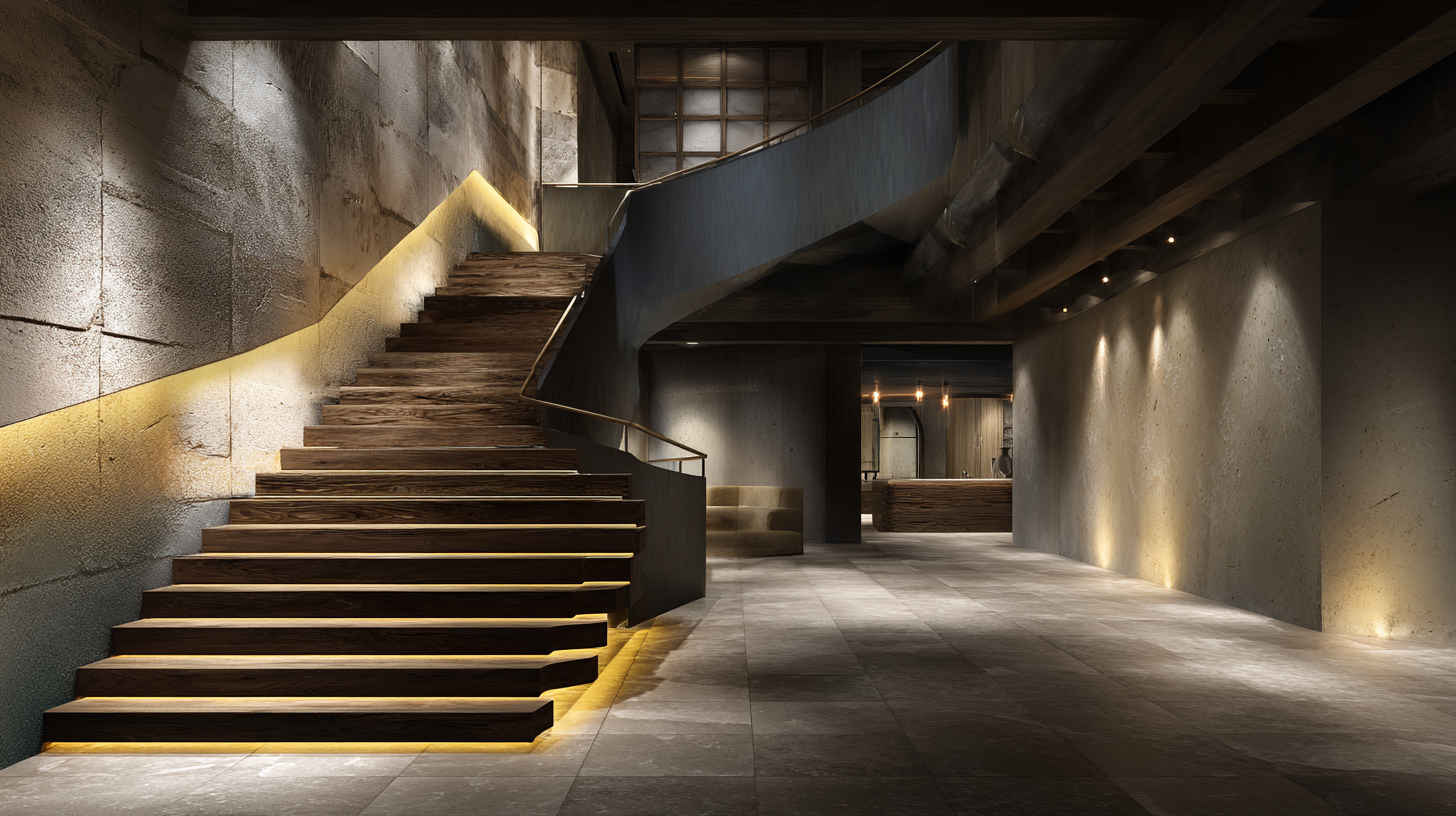
LED strip lights are highly versatile and widely used in modern stair lighting designs. They can be installed under stair nosings, along handrails, beneath wall edges, or recessed into architectural details.
Strip lights provide continuous, even illumination that visually connects each step, enhancing both safety and aesthetics. When installed inside aluminum channels with diffusers, they deliver a professional finish while protecting the LEDs and softening the light output. This option works well in residential, hospitality, and retail environments where design impact is important.
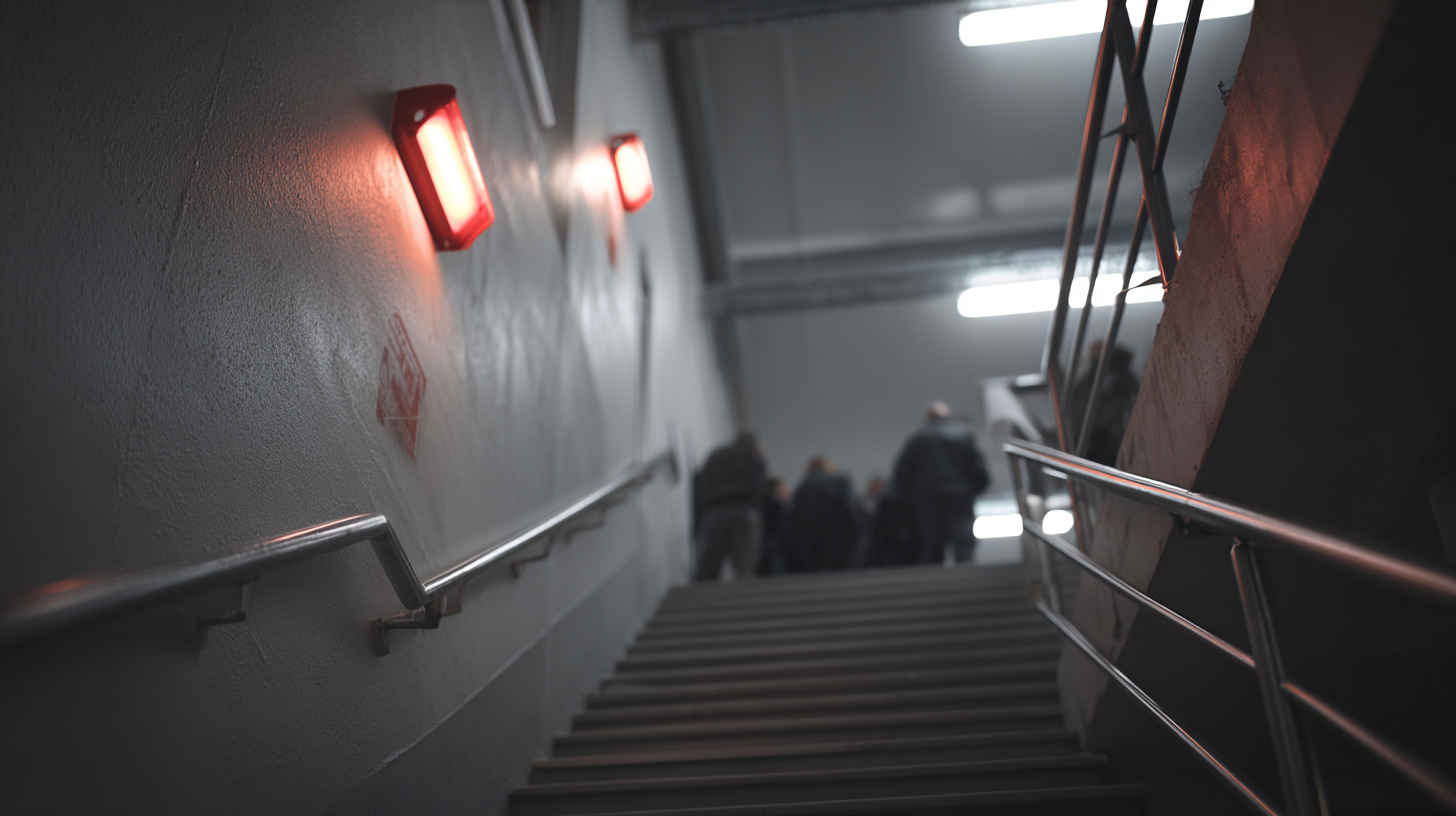
Emergency LED Lights
Emergency LED lights are a critical requirement in many commercial, industrial, and public stairways. These fixtures activate automatically during power failures and provide sufficient illumination to guide occupants safely to exits.
They are commonly integrated into stairwells in offices, factories, hotels, hospitals, and apartment buildings. Battery-backed emergency LED lights ensure stairways remain visible during emergencies while meeting safety and building code requirements.
Motion Sensor LED Lights
Motion sensor LED lights offer both safety and energy efficiency. These fixtures automatically turn on when movement is detected and turn off after a preset time when the area is unoccupied.
They are particularly useful for residential staircases, hotels, storage areas, and low-traffic stairwells. Motion-activated stair lighting ensures steps are never dark when needed while reducing unnecessary energy consumption and extending fixture lifespan.
What is the best type of lighting for stairs?
The best lighting for stairs is lighting that keeps every step clearly visible while remaining comfortable on the eyes and consistent with the surrounding design. Staircases are safety-critical areas, so lighting must reduce the risk of trips and falls without creating glare or harsh shadows.
From a practical standpoint, low-glare LED lighting installed at step level or along side walls performs best. Lighting placed too high often creates shadows on the steps, while lighting placed directly in the line of sight can be uncomfortable. Step-focused illumination helps users instinctively see where to place their feet, even in low-light conditions.
For residential staircases, LED step lights and LED strip lights are usually the most effective solutions. Step lights installed in risers or side walls provide targeted illumination exactly where it’s needed. LED strip lights installed under stair nosings, along handrails, or within wall recesses create continuous, smooth lighting that improves safety while adding a modern design element.
For commercial staircases, durability and compliance become just as important as visual comfort. LED bulkhead lights are commonly used in apartment buildings, offices, and public stairwells because they are robust, wall-mounted, and distribute light evenly across landings and steps. In industrial or outdoor environments, LED vapor tight fixtures are often the best choice, as they resist moisture, dust, and impact while providing reliable illumination.
Indirect lighting is the key principle across all applications. The light should highlight the edge of each step and the walking path without shining directly into the eyes. Using diffused optics, shielded fixtures, or reflected light helps prevent glare and visual fatigue.
In many projects, the best results come from combining multiple stair lighting ideas. For example, step lights can be paired with wall-mounted fixtures or ceiling downlights to provide both guidance and ambient light. This layered approach improves safety, enhances visual comfort, and creates a balanced, well-designed stairway lighting solution.
How much does stair lighting typically cost?
The cost of stair lighting depends on several key factors, including the type of fixtures used, the number of steps, installation method, and whether control systems are included. There is a wide range between simple residential setups and fully compliant commercial installations.
For residential staircases, basic LED step lights or LED strip lighting are generally affordable. Material costs may start from a few hundred dollars for small staircases using plug-and-play strip lights or recessed step lights. Installation costs stay relatively low when wiring is straightforward or when wireless, battery-powered, or low-voltage systems are used. Homes that already have nearby power sources can further reduce labor expenses.
For mid-range residential projects, costs increase when homeowners choose recessed fixtures, aluminum channels for LED strips, dimmers, or motion sensors. Custom carpentry work, wall cutting, or concealed wiring can add to the total budget. However, these upgrades often improve both safety and visual appeal, making them worthwhile investments.
Commercial stair lighting costs are higher due to stricter safety codes, emergency lighting requirements, and professional installation. Commercial projects often require certified fixtures, battery-backed emergency lights, illuminated exit pathways, and compliance testing. Depending on building size and code requirements, costs can range from several thousand dollars to tens of thousands for large facilities such as offices, hotels, or apartment complexes.
Control systems also influence overall cost. Motion sensors, timers, centralized controls, or smart building integration add upfront expense but significantly reduce long-term operating costs. These systems ensure lights operate only when needed, lowering energy use and extending fixture lifespan.
From a long-term perspective, LED stair lighting offers strong value. LEDs consume very little power, last tens of thousands of hours, and require minimal maintenance. Reduced replacement frequency and lower energy bills help offset the initial investment over time. Whether for a home or commercial building, LED stair lighting remains one of the most cost-effective and reliable lighting solutions available.
Modern LED stairs light ideas
Modern stair lighting is all about clean lines, subtle illumination, and purposeful design. Instead of relying on a single overhead light, contemporary designs use layered lighting to guide movement while enhancing the architectural character of the staircase.
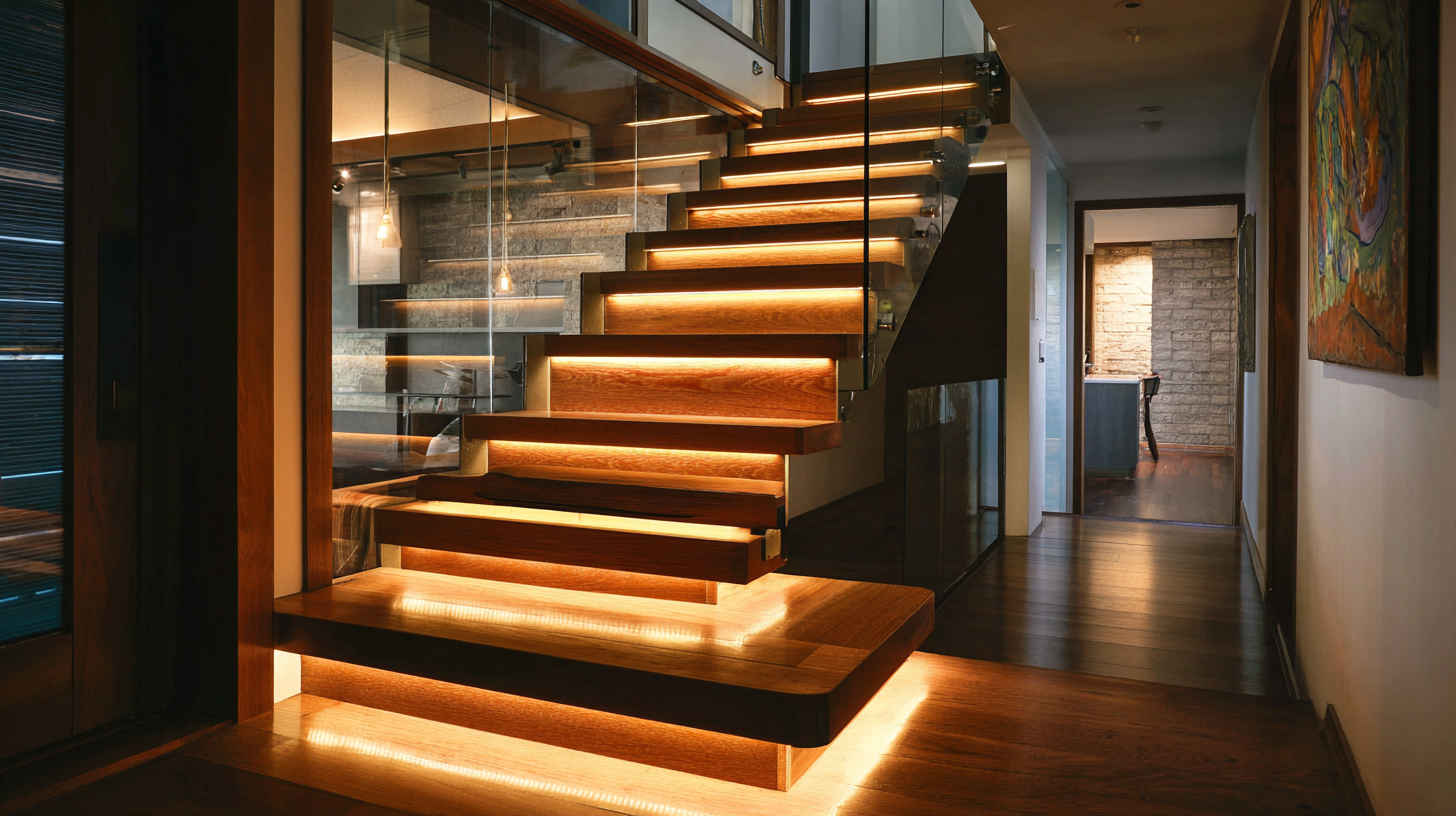
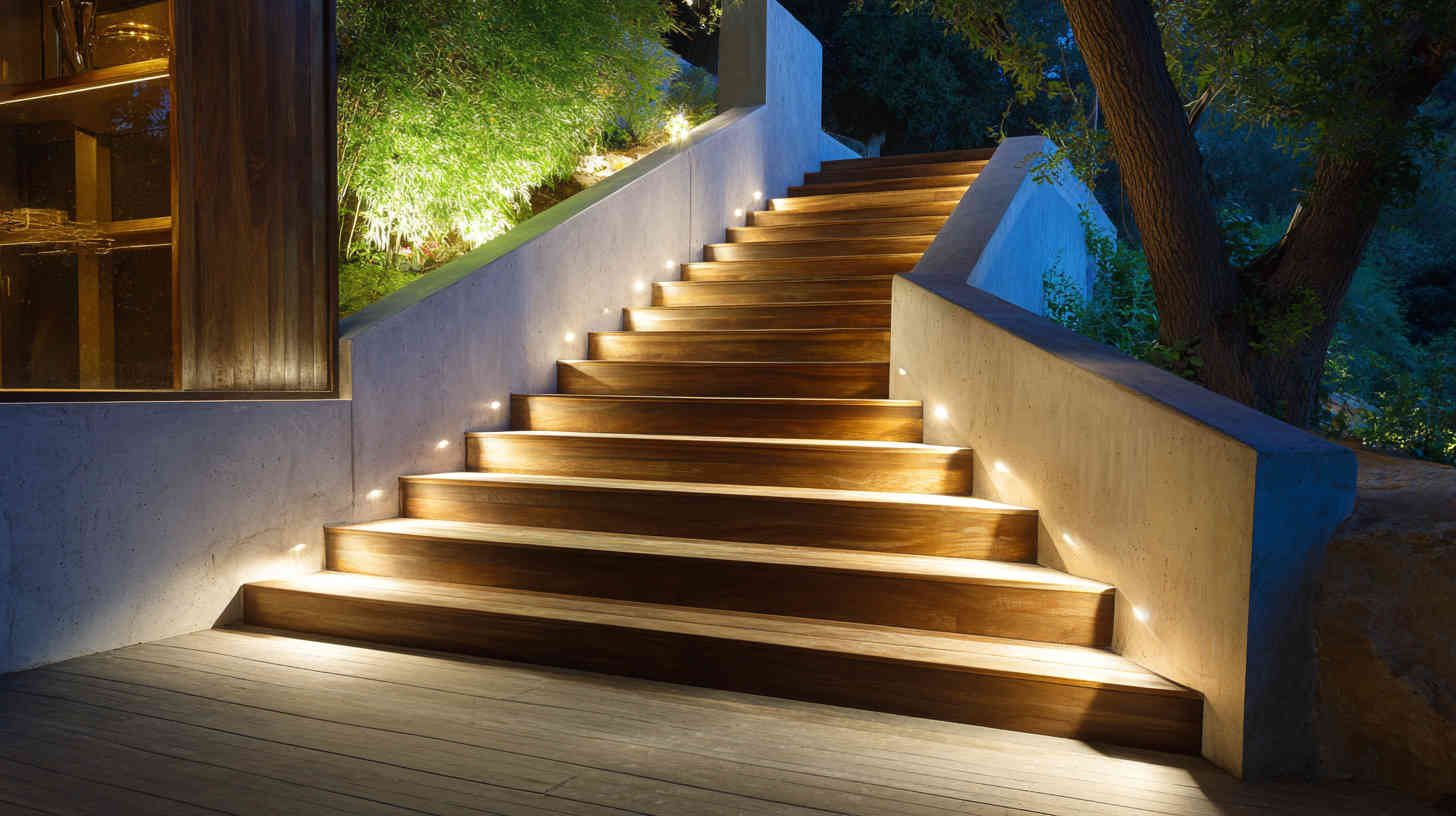
One of the most popular ideas is under tread stair lighting using LED strips. By installing LED strips beneath each step or along the stair nosing, the staircase appears to float. This approach clearly defines every step, eliminates shadows, and creates a striking visual effect, especially in modern homes with open-plan layouts.
Recessed wall step lights are another highly favored option. These fixtures are installed into the wall adjacent to each step or every few steps. With slim trims and soft beam output, they provide focused illumination exactly where needed without cluttering the space. This style works particularly well in minimalist interiors and contemporary commercial buildings.
Motion-activated stair lighting is becoming a standard feature in modern designs. Lights automatically turn on when someone approaches and turn off after a set time. This improves safety at night while reducing energy consumption. Combining motion sensors with warm white LED lighting creates a welcoming and efficient solution for both residential and hospitality spaces.
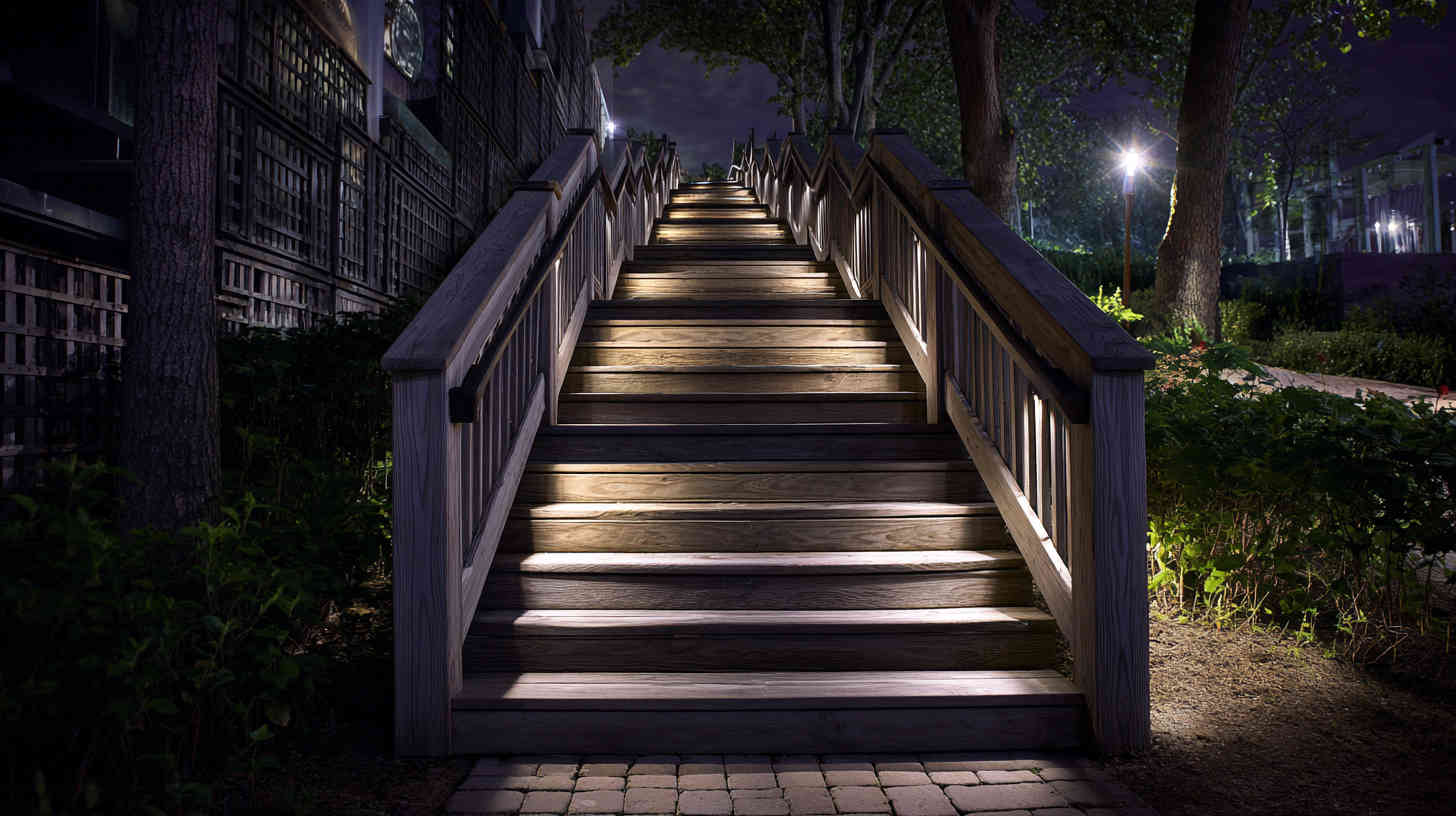
For outdoor staircases, linear LED step lights integrated directly into concrete, stone, or wood steps offer a sleek and durable solution. These fixtures are designed to withstand weather exposure while maintaining a clean, architectural appearance. They are commonly used in gardens, terraces, and building entrances to improve visibility without overpowering the surroundings.
Handrail-integrated LED lighting is another modern idea. Installing LED strips along the underside of handrails provides indirect lighting that softly washes over the steps. This approach reduces glare and adds a refined design detail, especially in staircases with glass or metal railings.
Modern stair lighting is not just about looks—it enhances safety, improves navigation, and adds value to the space. When thoughtfully designed, LED stair lights transform a functional staircase into a key architectural feature.
FAQs about stair lighting?
Which light is best for stairs?
The best lights for stairs are LED step lights, LED strip lights, and LED bulkhead lights. LED step lights are ideal for precise, low-level illumination that clearly defines each step. LED strip lights work well for modern designs, offering continuous lighting under treads or along handrails. LED bulkhead lights are better suited for commercial or outdoor staircases where durability and wider coverage are required. The final choice depends on whether the staircase is residential or commercial, indoor or outdoor, and whether the focus is design, safety, or both.
Which color is best for stairs?
Warm white (2700K–3000K) is best for residential stairs because it creates a comfortable, welcoming atmosphere and blends naturally with home interiors. Neutral white (3500K–4000K) is commonly used in commercial staircases, offices, and public buildings because it improves visibility and contrast. Extremely cool light is usually avoided on stairs because it can feel harsh and increase glare.
How to hide LED lights on stairs?
LED lights can be hidden in several effective ways. LED strip lights are commonly installed under stair treads, beneath nosing edges, or inside aluminum profiles mounted along walls or handrails. Recessed step lights are embedded into stair risers or side walls so only the light output is visible, not the fixture itself. Using diffusers and proper mounting channels ensures the light appears soft and seamless without exposing individual LEDs.
How bright should stair lights be?
Stair lighting should be bright enough to clearly show each step, edge, and landing without causing glare. Low to moderate brightness works best, especially when lights are installed close to the steps. Uniform lighting is more important than high brightness. Overly bright lights can cause discomfort and shadows, while consistent illumination improves safety and visual comfort during movement.
Do I need an electrician to install LED lights?
For battery-powered, plug-in, or adhesive LED stair lights, an electrician may not be necessary. However, for hardwired LED step lights, recessed fixtures, motion sensor systems, or any commercial installation, a licensed electrician is strongly recommended. Professional installation ensures correct wiring, compliance with safety codes, and long-term reliability of the stair lighting system.
Conclusions
Stairway lighting is not just about visibility; it’s about safety, comfort, and design. With the right stair lighting LED solutions, you can transform indoor stair lighting or outdoor stair lighting into a secure and modern feature. From under tread stair lighting to motion sensor systems, LED technology offers unmatched flexibility and efficiency.
If you’re planning a stair lighting project or need customized LED solutions, feel free to contact us directly. We’re happy to help you design the perfect stairway lighting system.
Featured Products

Request A Free Quote Now!
Send us a message if you have any questions or request a quote. We will get back to you ASAP!

Leave a Reply
Your email is safe with us.